How Two Operators Pull Ethiopia’s Digital Map in Different Directions Without Meaning To
Ethiopia’s two-operator contest keeps drifting into the countryside where coverage gaps, handset costs and daily mobile payments tell a more revealing story


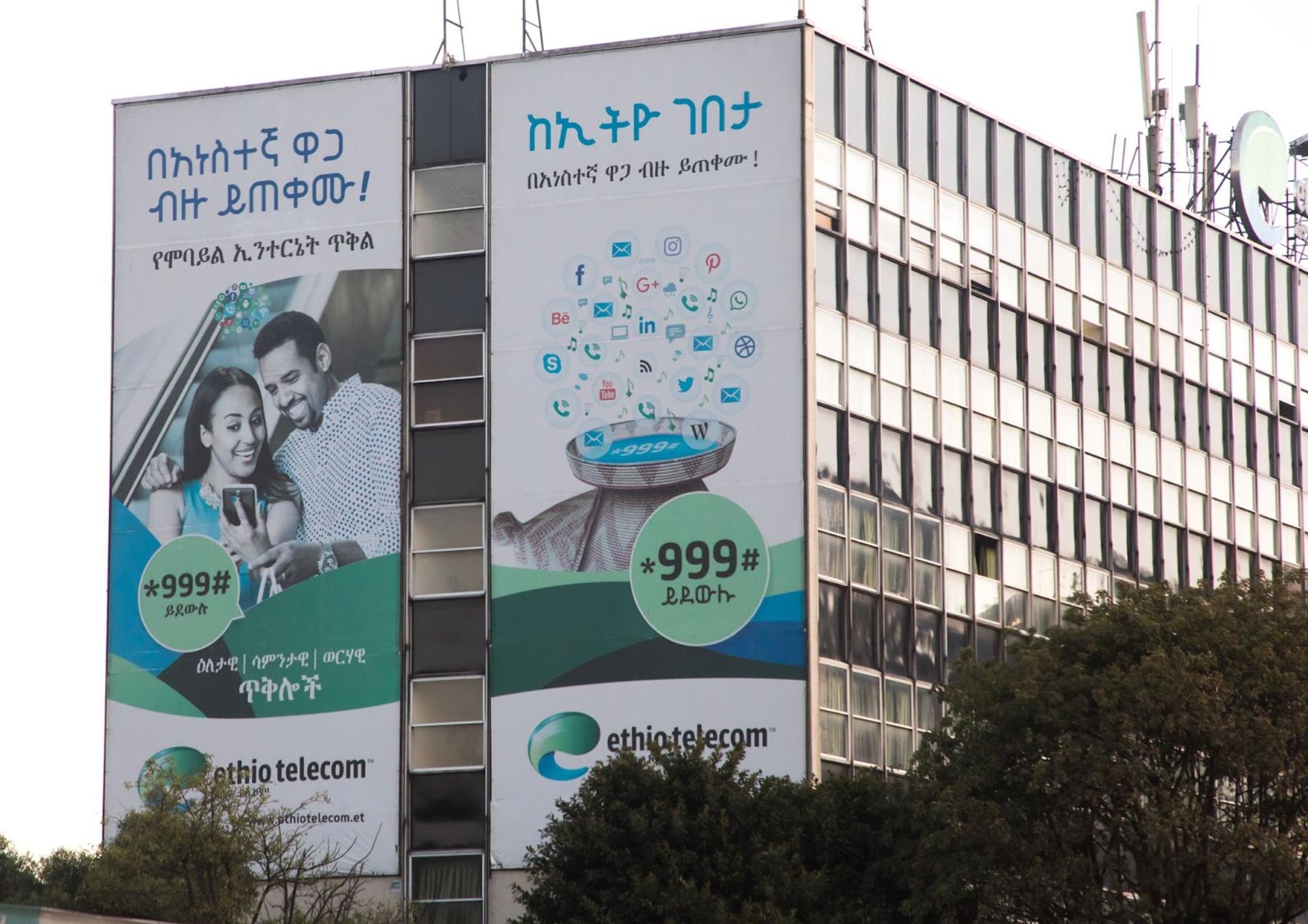
The latest round of rural towers from Ethio Telecom looked at first like a standard infrastructure update. One hundred fifty-two sites placed across remote terrain. Solar kits. Microwave links where fiber would be too costly. A routine announcement on the surface. Beneath it, the move plays into a broader contest that has reshaped Ethiopia’s telecom market over the past three years. For the first time in its long history, the incumbent now faces a real competitor with scale.

Safaricom Ethiopia entered commercially in late 2022 under a multinational consortium. It arrived with a familiar playbook that had already reshaped Kenya’s mobile sector. Millions of new subscribers followed. Town after town moved onto its coverage grid. Ethiopia shifted from a single-operator system into a duopoly that still feels new and still unsettles years of habits.
Ethio Telecom retains size and reach that Safaricom cannot match yet. Rural coverage remains its strongest asset. Telebirr anchors its digital finance system deep into government payments. The current rural buildout extends that footprint into counties where phone ownership often precedes formal banking. Yet coverage is no longer the only story. Pricing, mobile money and device access now sit at the center of daily competition.
A rural push that shapes more than a map
Ethio Telecom has connected more than one hundred low-density districts using modular ZTE platforms that rely on solar power and simplified assembly. The approach cuts building time and allows installations in locations where transport is unpredictable. A site that might once have demanded weeks of heavy machinery can now be set up with fewer personnel and lighter equipment. Local technicians trained on these kits form a growing workforce, a detail often overlooked in the more dramatic national narratives.


The rural penetration rate, rising each quarter, folds directly into the growth of Telebirr. More than 57 million people now use the platform. It handles bill payments, airtime purchases, personal transfers and even loan products. The ecosystem encourages deeper adoption of mobile data since financial interactions pull users online more often. A curious pattern emerges here. Connectivity enables financial access. Financial access pulls demand for more connectivity. The same cycle pushes handset upgrades as well, particularly where older phones limit functionality.
Safaricom enters with a different playbook
Safaricom’s strategy relies less on wide-area dominance and more on speed, handset financing and data packages designed to reduce the anxiety of running out. It has also leaned into M-Pesa’s international profile. Remittances can arrive directly in a mobile wallet. Cross-border payments with Kenya work with familiar ease. These features appeal to urban and peri-urban customers, particularly younger users who grew up with mobile-first habits.
By late 2025, Safaricom had drawn more than ten million subscribers. It still depends heavily on Ethio Telecom’s towers and fiber for coverage in many regions, yet the balance is slowly changing as its own infrastructure grows. The government once planned for a third operator. Tenders were issued then paused after limited interest. For now, the battle remains a two-operator contest with distinct styles that rarely align.
Where competition has grown the sharpest
Three fronts now define the contest.
First comes mobile data. Ethio Telecom responds with broad coverage and aggressive pricing for mass-market bundles. Safaricom counters with speed and reliability in key urban zones. It has introduced data plans that come without abrupt expiry pressure, although they still follow fair-use thresholds. These plans influence market expectations. Customers switch quickly when they sense better value, and both operators adjust prices faster than in the past.
Second lies mobile money. Telebirr’s head start gave it a near-embedded role in daily life. Fuel purchases, utility bills, airtime, government fees. Safaricom spent its early years catching up. That gap narrowed in November 2025 when M-Pesa enabled fuel payments at select stations, beginning with TotalEnergies locations in Addis Ababa. It was a small rollout at first but significant since it challenged Telebirr’s near-monopoly in that category. International remittances already favored M-Pesa for many families with ties across borders. Fuel payments extend that momentum into an area long dominated by the incumbent.
Third is infrastructure. Ethio Telecom owns the national backbone and leases tower space to Safaricom. Safaricom is building steadily, yet the country’s geography complicates fast progress. Steep terrain. Long distances. Seasonal transport stoppages. The incumbent’s head start remains a heavy factor, especially in rural districts.
Data, devices and a new consumer landscape
Safaricom has also rolled out device-installment programs aimed at customers moving from basic phones to entry-level smartphones. The model resembles Kenya’s long-running structure where a small deposit opens access to a handset followed by daily or weekly payments. Ethiopia’s market fits this strategy well. Millions still rely on non-smartphones. Many rural residents cannot pay upfront for devices that support modern apps. As these installment plans take root, both operators could see a rise in mobile data usage that outpaces earlier projections.
Telebirr has its own version of device financing under the Tila platform with Awash Bank. Combined, the two operators have entered a strange alignment without planning it. Both want to lift smartphone penetration. Both need more data users to sustain revenue. Their solutions differ in branding and credit scoring, yet the outcome may be similar. More people with capable devices. More activity flowing through networks. More pressure placed on remaining coverage gaps.
Ethio Telecom’s financial puzzle
Ethio Telecom’s FY2025 numbers showed rapid revenue growth. Subscriber additions continued. Mobile broadband expanded. Telebirr climbed. Pre-tax profit rose. Then the audit revealed hefty foreign exchange losses that wiped out much of the momentum. It created a contrast that complicates the company’s positioning. Strong demand sits on one side. Unstable currency on the other. The operator can expand rural coverage and deepen financial services, yet the macroeconomic environment still dictates large parts of its bottom line.
Safaricom has not escaped financial strain either. Infrastructure leasing costs, licensing fees and capital expenditure weigh on its early years. Yet its revenue trajectory appears steadier since it entered without legacy constraints.
Ethiopia’s duopoly and the next ten million customers
The market is still settling. Many customers carry two SIM cards. Coverage and mobile money preferences vary by region. Rural households often rely on Ethio Telecom out of necessity since Safaricom’s footprint remains city-centered. Younger urban users often split their usage, using Safaricom for speed while keeping Telebirr active for government-linked payments. Every quarter shifts the balance slightly.
Fresh features add new layers. Fuel payments on M-Pesa. Expanded remittance channels. Telebirr’s credit-based device plans. Safaricom’s broad data packages. Ethio Telecom’s rural expansion. Taken together, they point to a country where digital life now grows faster than the networks built to support it.
Where the story may turn next
Several developments feel likely. Ethio Telecom’s modular deployments could accelerate once technicians in more regions master local assembly. Safaricom’s device-financing model could draw basic-phone users into smartphone ownership at a rate neither operator has seen before. M-Pesa’s integration into retail and fuel stations may spread quicker than expected as merchants recognise the traffic benefits. Telebirr, already at national scale, may respond with new categories of services that deepen engagement rather than widen it.
A third license could eventually reappear, though the timing remains uncertain. Investors will watch how the duopoly stabilizes. Ethiopia’s population keeps rising. Mobile data usage keeps climbing. A new entrant would need deep pockets and patience to catch up.
For the moment, the story rests with the two operators that hold the entire country’s digital life between them. Ethio Telecom rural expansion anchors one side of the contest. Safaricom’s urban drive anchors the other. The distance between those strategies narrows with every new tower, every new data bundle and every small feature that changes how people move money or manage their phones.
Ethiopia’s connectivity landscape is evolving in real time. Not through sudden leaps but through steady advances that alter how information flows, how people pay, how communities engage with services once locked behind distance. The map is being reshaped one district at a time as the duopoly settles into its own unpredictable rhythm.
Go to TECHTRENDSKE.co.ke for more tech and business news from the African continent.
Follow us on WhatsApp, Telegram, Twitter, and Facebook, or subscribe to our weekly newsletter to ensure you don’t miss out on any future updates. Send tips to editorial@techtrendsmedia.co.ke

