
Siri’s Second Life Begins Under Google’s Watch, and Apple Knows What That Means
A partnership once unthinkable is now steering Apple’s intelligence, as the company leans on Google’s Gemini to give Siri new life while trying to keep its grip on what makes the iPhone feel its own.

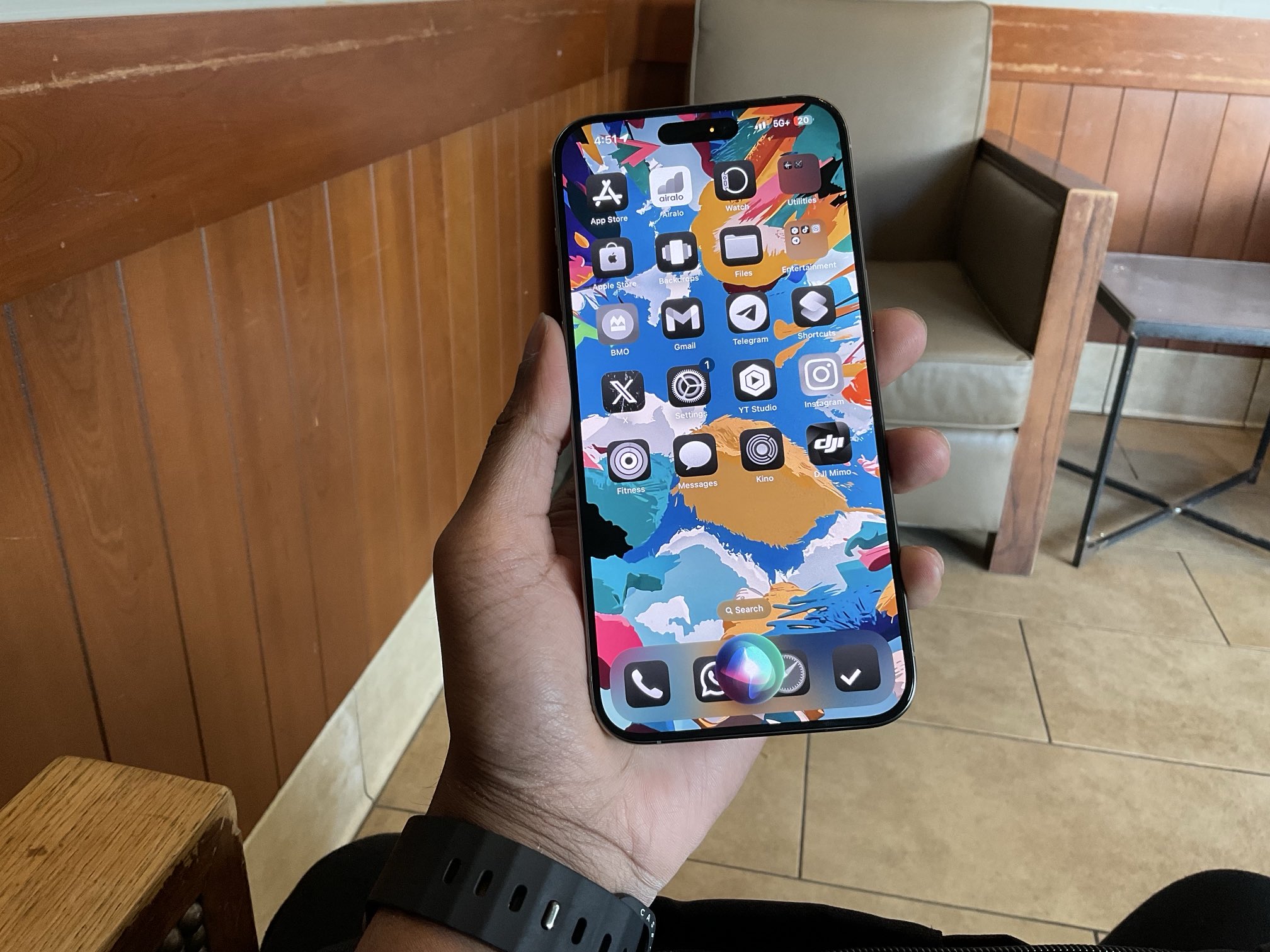
Apple’s plan to pay roughly $1 billion a year for access to Google’s Gemini model is more than a technical arrangement. It’s a quiet reordering of power in the AI hierarchy, one that places Google at the center of Apple’s next wave of intelligence-driven devices. For a company defined by control, this marks a rare dependency — and a public concession that its internal AI work still trails the field.
Gemini, Google’s 1.2-trillion-parameter model, will power the planning and summarizing engines inside Siri’s upcoming redesign. It will run on Apple’s own servers, sealed off from Google’s systems, yet its reasoning remains Google’s creation. For Apple, the arrangement is both a stopgap and a gamble: a temporary lift for Siri and a wager that its own trillion-parameter model, still in training, can eventually compete on equal terms.
That choice carries strategic consequences far beyond voice assistance. For the first time since the iPhone launched, the most visible layer of Apple’s user experience — the voice through which people interact with their devices — will depend on a rival’s neural infrastructure.
A Long Pattern of Control Meets Its Exception
Apple’s power has always come from vertical control: its chips, operating systems, and design language forming a closed circuit of hardware and software. Siri has long stood apart from that coherence. Introduced early, but updated slowly, it became the company’s most dated product line. Its intent-based command system lagged behind the conversational engines that now define consumer AI.
Internally, Apple recognized the gap. Engineers struggled to modernize Siri without breaking compatibility across languages, apps, and devices. Then the generative AI boom changed the stakes. Models capable of reasoning, summarizing, and planning began to reset expectations for what “assistance” means.
Apple tested every major contender. Trials with OpenAI’s ChatGPT, Anthropic’s Claude, and Google’s Gemini convinced leadership that Gemini offered the most stable integration for large-scale, cloud-supported reasoning. The choice became the foundation of a project code-named Glenwood, led by Mike Rockwell and Craig Federighi, to rebuild Siri around external intelligence. The resulting assistant, known internally as Linwood, is scheduled for launch with iOS 26.4.
The irony is that Apple had already opened the door to outside AI through another route. Its 2024 deal with OpenAI brought ChatGPT into iOS, iPadOS, and macOS as an optional tool for writing and system-wide assistance. That integration, though highly visible, involved no large payment. Reports indicated that Apple wasn’t paying OpenAI for usage rights, relying instead on a mutually beneficial arrangement to expose ChatGPT to millions of new users. The Google partnership, by contrast, carries a real price tag — around $1 billion annually — signaling how seriously Apple views the gap in its AI stack.
The Balance of Power Between Rivals
For Google, the Siri deal isn’t just a revenue stream. It positions Gemini as the unseen engine behind one of the world’s most used software ecosystems. Even without public credit, the scale alone reinforces Google’s leadership in applied AI infrastructure.
For Apple, the optics are more delicate. It’s already under regulatory scrutiny for its search-engine partnership with Google, and another deep tie between the two could invite new questions about dependency and competition. Yet Apple has built technical safeguards around the collaboration: Gemini will run on Apple’s Private Cloud Compute servers, ensuring user data remains isolated. The company insists it is licensing reasoning capability, not handing over access. Still, the symbolism remains clear — Apple’s new Siri will think with a mind not entirely its own.
This dependency highlights a deeper tension in Apple’s identity. Its brand rests on sovereignty, yet its AI momentum now leans on external sources: Google’s model, OpenAI’s ChatGPT for optional features, and potentially others in development. Reports earlier this year revealed that Apple had also held internal discussions about acquiring Perplexity AI, a fast-growing search and conversational startup. Those talks were exploratory, and no acquisition emerged, but they underscore Apple’s awareness that intelligence — once a design problem — has become an infrastructure race.
The Architecture Beneath Siri’s Comeback
The scale of Gemini’s model makes the upgrade to Siri profound. Apple’s current cloud-based model operates at roughly 150 billion parameters. Jumping to 1.2 trillion expands its ability to reason across layers of context and plan multi-step actions. Siri’s previous system could recognize intent but not interpret nuance. The new hybrid design links Apple’s on-device models with Gemini’s deeper logic, enabling cross-app coordination, contextual understanding, and memory across interactions.
This architecture signals a shift in Apple’s philosophy of intelligence. Where it once insisted that meaningful AI must live entirely on-device, it’s now embracing a layered approach — local models for privacy-sensitive tasks, cloud models for complex reasoning. That balance allows Apple to preserve its privacy narrative while scaling capability.
Insiders describe the decision as pragmatic. Apple’s in-house AI group has faced turnover, losing senior talent to Meta and other rivals. Its own trillion-parameter model, still in training, won’t reach consumers before next year. Partnering with Google buys time and credibility while those internal efforts mature.
The Wider Contest Over AI Ecosystems
Apple’s reliance on Gemini fits within a broader restructuring of the consumer AI landscape. Samsung already integrates Gemini into its phones. Snap builds on Google’s Vertex AI. Across the industry, companies that once competed on hardware design now compete on access to cognitive infrastructure.
For Apple, the long game remains self-reliance. The company continues to invest heavily in its models team, aiming to match or surpass Gemini’s capabilities by 2026. But the terrain is shifting quickly. Google’s Gemini 2.5 Pro still dominates most benchmark leaderboards, and incremental progress may not be enough to close the perception gap.
In China, the challenge is even sharper. With Google’s services banned, Apple plans to deploy localized intelligence using its own models and filters developed with Alibaba and Baidu. That approach will produce regional versions of Siri — a reflection of how geopolitics now dictates the boundaries of machine learning.
A Delicate Future for Apple’s AI Identity
The next Siri isn’t just a software update. It’s a statement about how Apple intends to exist in an era defined by shared intelligence. For years, the company drew strength from its independence. Now it’s negotiating how to stay distinctive in a world where the smartest systems are built collaboratively, not alone.
Google’s Gemini may serve only as a bridge, replaced once Apple’s own models catch up. Or it could become the backbone of a lasting interdependence — one that redefines the rivalry between the two firms. Either way, the new Siri will speak with a voice shaped by both Apple’s design and Google’s intellect. And in that hybrid form, the company’s future in artificial intelligence may finally take shape: not as a fortress of control, but as a platform learning to share power, at least for a while.
Go to TECHTRENDSKE.co.ke for more tech and business news from the African continent.
Follow us on WhatsApp, Telegram, Twitter, and Facebook, or subscribe to our weekly newsletter to ensure you don’t miss out on any future updates. Send tips to editorial@techtrendsmedia.co.ke


