
Kenya’s Load-Shedding Crisis Is the Reckoning of a Power System Stretched Beyond What Policy Can Handle
Years of hesitation and patchwork fixes have caught up with a power system that was already running close to the edge.

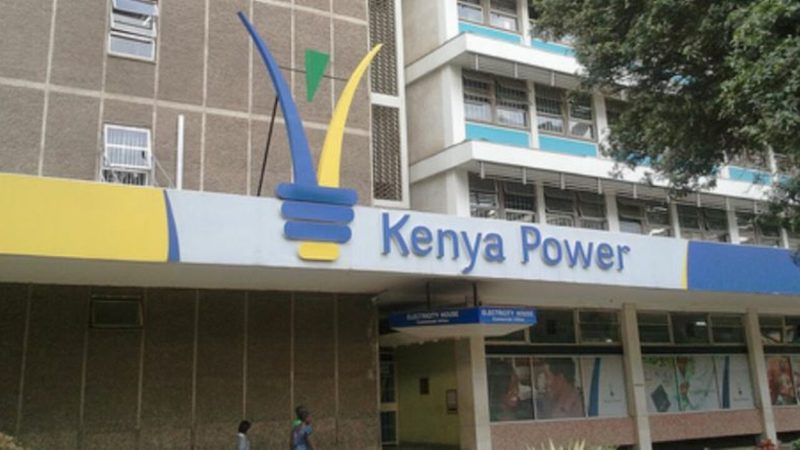
President William Ruto’s recent admission that Kenya will ration electricity between 5 p.m. and 10 p.m. has forced a reckoning. For years, power cuts were treated as weather blips or local faults. Now the government has conceded something larger: the country cannot meet its own evening demand.

Officials have called it a “load management plan,” but that phrase hides what people are experiencing — rolling blackouts with no clear schedule. The Ministry of Energy has yet to release an official list of affected counties, leaving factories, hospitals, and homes in a guessing game. Reports from Rift Valley, Nyanza, and the Coast point to repeated outages that stretch beyond the announced hours.
For businesses that depend on predictable supply, this uncertainty is more than an inconvenience. It reveals a system under strain, one that has been faltering for years behind reassuring public statements.
The long freeze that broke the pipeline
Kenya’s shortage did not begin with a storm or a single technical fault. It began with hesitation. Since 2018, Kenya Power has signed almost no new power purchase agreements. The pause was meant to reassess demand forecasts, but Cabinet later turned it into a full moratorium, citing concerns over costly contracts.

A presidential task force reviewed those agreements and recommended renegotiations. The process dragged on, dampening investor confidence. By the time the freeze lifted in 2023, nearly every planned project was already completed — leaving no new capacity in the pipeline.
Energy Cabinet Secretary Davis Chirchir has acknowledged that this freeze “short-circuited” Kenya’s generation prospects. Most plants with signed deals are already operational, and only three small geothermal projects at Menengai remain under construction. Once they come online, there will be no major new supply before 2027. The grid, in effect, is chasing an expanding economy with tools that stopped growing years ago.
A system running on imports
To fill the gap, Kenya is increasingly buying electricity from its neighbors. Ethiopia now supplies around 200 megawatts under a 2023 power deal, while Uganda exports smaller volumes during off-peak hours. Those imports account for over ten percent of all power bought by Kenya Power this year, a jump from just one percent four years ago.
The Ethiopia-Kenya interconnector, however, has limited capacity. The transmission line can handle only a set amount of flow, meaning imported energy can supplement local generation but not replace it. Hydropower from Ethiopia is cheaper — about Sh8.44 per kilowatt-hour compared to Kenya’s thermal plants — but the dependence highlights how thin the country’s reserve margin has become. Without those imports, engineers say the grid would already be rotating blackouts across regions every night.
The grid’s four fault lines
Kenya’s grid is buckling in multiple ways at once. During peak hours, supply routinely falls short of demand. At off-peak hours, the opposite occurs: the system produces more power than it can use, because there is no large-scale storage or stable industrial base to absorb the surplus.
Substations in major corridors, especially around Nairobi and western Kenya, are overloaded. They now run above safe thresholds to keep up with population growth and industrial load. Transmission failures ripple outward when those substations overheat or trip.
Then there is the matter of quality. Many transmission and distribution lines were built through flawed procurement and poor oversight. Engineers describe transformers that fail under mild stress and cables that cannot handle the voltages they carry. It’s not one isolated defect — it’s a pattern of neglect embedded across the system.
Whatever problems a power grid can have, Kenya’s grid carries most of them at once.
Capacity on paper, not in practice
Official figures show Kenya’s installed capacity at about 3,300 megawatts. Yet the country can reliably dispatch only around 2,600. The rest is either offline for maintenance, lost to inefficiencies, or unavailable because wind and solar output fluctuates.
Meanwhile, peak demand in August reached 2,392 megawatts, leaving almost no reserve. In a healthy system, that margin would stand at fifteen percent or more. Here, it hovers near zero. A single fault at a major plant can tip the balance from stability to blackout.
Kenya Power estimates that nearly a third of generated electricity is lost before reaching consumers, drained by technical faults or outdated lines. Upgrading this infrastructure would cost billions — funds the utility does not currently have. Debt and currency pressure have weakened its balance sheet, making even routine maintenance a financial juggling act.
The fallout of investor fatigue
When government policy stalls, investors read it as risk. The 2021 moratorium left private developers wary of Kenyan projects. Many scaled down operations or exited entirely, unwilling to wait out the uncertainty.
Legal analysts say financiers now attach tougher conditions to new deals, including higher guarantees and longer lead times. Implementation delays in the Energy Act 2019 and the Renewable Energy Auction Policy have only deepened the uncertainty. Without a clear pricing structure or approval process, renewable developers are effectively parked in neutral.
For a sector that depends on long-term certainty, that hesitation has a compounding effect. Projects that should already be breaking ground are still in paperwork.
A policy loop with no exit
Even after the freeze lifted, policy clarity never returned. Developers remain unsure how new projects will be evaluated or how tariffs will be structured. The vacuum has pushed the burden back to existing generators — mostly geothermal and hydropower — which are already stretched thin.
The government’s renewable ambitions remain intact on paper. Kenya still touts its 90 percent renewable mix as a point of pride. But the reality behind the figure is uneven. Geothermal fields at Olkaria and Naivasha deliver consistent output, yet expansion has slowed. Wind projects in Turkana and Kipeto face curtailment when the grid cannot absorb their generation. Solar farms, meanwhile, operate well below potential because transmission capacity cannot evacuate power efficiently.
A fragile equilibrium
All of this leaves Kenya in a fragile equilibrium. The grid functions, but barely. Hydropower depends on rainfall that has grown erratic with climate change. Thermal plants fill short-term gaps, but at high cost. Imports help, but only to a limit. The entire system is balancing on improvisation — rerouted supply here, adjusted frequency there — to keep the lights on.
Officials insist the rationing is temporary. But experts agree that no new project, no matter how fast-tracked, can deliver power to the grid before 2027. For now, the stopgaps are all Kenya has: imports, better water inflows if rains improve, and maintenance cycles stretched to the edge.
The politics of power
Electricity has always been a political issue in Kenya, woven into campaign promises and national pride. The country once marketed itself as the renewable energy hub of Africa. But the structural weakness beneath that image is now plain.
When the President admits to load-shedding, it’s more than a technical confession. It’s an acknowledgment that years of underinvestment, policy hesitation, and bureaucratic stalling have converged. The system didn’t collapse overnight — it was slowly outpaced by the country it was meant to serve.
Kenya’s growth has outstripped its grid. What remains is a balancing act between scarcity and survival, managed through quiet rationing and public reassurance.
The path ahead
Fixing the grid will require more than new plants. It means rethinking how energy planning is done — aligning procurement with industrial growth, restoring investor confidence, and modernizing transmission lines that date back decades.
Kenya has the natural resources to produce clean energy for itself and its neighbors. What it lacks, for now, is the policy agility to match that potential. Until that changes, load-shedding will remain not just a symptom, but a mirror of deeper dysfunction.
Go to TECHTRENDSKE.co.ke for more tech and business news from the African continent.
Follow us on WhatsApp, Telegram, Twitter, and Facebook, or subscribe to our weekly newsletter to ensure you don’t miss out on any future updates. Send tips to editorial@techtrendsmedia.co.ke

