
A Brief Outage, a Long Silence, and the Uneasy Truth About How Kenya’s Most Used Mobile Banking Tool Handles Failure
The M-Shwari outage left users disconnected and uncertain, raising questions about how Kenya’s digital banking systems handle strain.

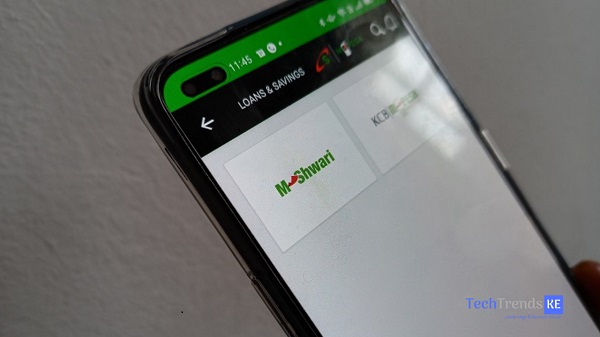
For hours, M-Shwari users found themselves cut off from one of Kenya’s most familiar digital banking tools. The outage didn’t come with alarms or explanations at first, only a quiet halt in transactions.

When service was finally restored, Safaricom confirmed the disruption in a brief statement, leaving users and analysts to weigh what the silence said about how the country’s mobile-money ecosystem manages failure.
The outage lasted through the day. Late that evening, the company announced that the problem had been resolved and that reconciliation was underway. It was a careful choice of words: restored, yet still settling. A reminder that in digital finance, “up and running” doesn’t always mean “fully back.”
A short silence, then the repair
Safaricom’s official timeline shows two distinct tones. The first was operational- acknowledging a disruption and promising a fix. The second, hours later, carried the weight of assurance: funds were safe, services resumed, and reconciliation continued. It’s a small communications arc but one that reveals how the company handles a fault in a system woven into national life.


Publicly, Safaricom didn’t say what went wrong. No mention of hardware, software, or cyber incidents. The phrasing “technical glitch” was meant to contain speculation, though it rarely does. In a country where mobile money doubles as a lifeline, every unexplained outage feeds a sense of unease.
Behind the apology, a glimpse of pressure
The M-Shwari platform runs on shared infrastructure with banks, payment rails, and internal databases that move billions of shillings daily. A hiccup anywhere along that chain can ripple outward. Safaricom’s quick restoration message hinted at competence but also urgency — a company aware of its dependence on uninterrupted service.
For years, Safaricom has built a reputation on reliability. Yet outages like this one expose the strain that comes with scale. Each recovery becomes a public performance of control, each apology a test of credibility. When users find their balances intact the next morning, they exhale and move on. Still, something lingers — a small, accumulating doubt about how much one system should hold.
What the official response reveals
The company’s choice to post openly about the disruption was important. In many markets, mobile providers would have waited until full resolution before acknowledging a problem. Here, transparency came early. Still, there’s a difference between communication and clarity. Safaricom confirmed safety of funds but didn’t unpack why access failed or how similar incidents will be prevented.
That absence leaves room for interpretation. Was this a database freeze, a failed update, an overloaded queue? The company may never say, and perhaps doesn’t need to. But the opacity underscores a tension at the heart of digital banking: convenience has outpaced comprehension. Millions rely on systems they barely see, run by companies that explain just enough to keep confidence intact.
Trust, once shaken, doesn’t vanish but rearranges
A day after the restoration notice, M-Shwari was functioning again. Transactions cleared, balances matched. Yet the conversation it stirred remains unresolved. Trust in digital finance isn’t erased by a single failure, but it’s altered – stretched thinner, tested against lived experience. People adapt; they split their funds, explore alternate channels, keep small cash buffers.
For Safaricom, this kind of outage is both technical and psychological. The repairs are measured in transaction logs, but the recovery of trust takes longer. The company’s messages about safety and reconciliation are part of that process, but the real test comes in what happens next time – and there will be a next time, because no system this large is immune to fault.
The path forward for Kenya’s digital backbone
Kenya’s mobile banking ecosystem has reached a level of integration that leaves little margin for error. A few hours of downtime can stall small businesses, delay salaries, even freeze government payments. Safaricom’s handling of the M-Shwari outage shows progress in responsiveness but also the limits of single-platform dependence.
The future will likely demand structural resilience – mirrored databases, stronger redundancy, perhaps shared responsibility across institutions. It will also demand honesty. The phrase “technical glitch” may calm an audience in the moment, yet sustainable confidence grows from understanding, not reassurance.
A small pause with larger echoes
When a system this embedded falters, the interruption is more than technical. It reveals how deeply technology has merged with daily life, and how fragile that merger can feel. The Safaricom M-Shwari outage lasted only a day, but it opened a window into the quiet tension between convenience and control. For most users, the episode is already behind them. For the companies running the rails of a digital economy, it’s a reminder that reliability isn’t only built in code – it’s built in trust, transaction by transaction
Go to TECHTRENDSKE.co.ke for more tech and business news from the African continent.
Follow us on WhatsApp, Telegram, Twitter, and Facebook, or subscribe to our weekly newsletter to ensure you don’t miss out on any future updates. Send tips to editorial@techtrendsmedia.co.ke

