[Interview] Driving Pan-African Connectivity with CSquared’s Samuel Owusu Yeboah


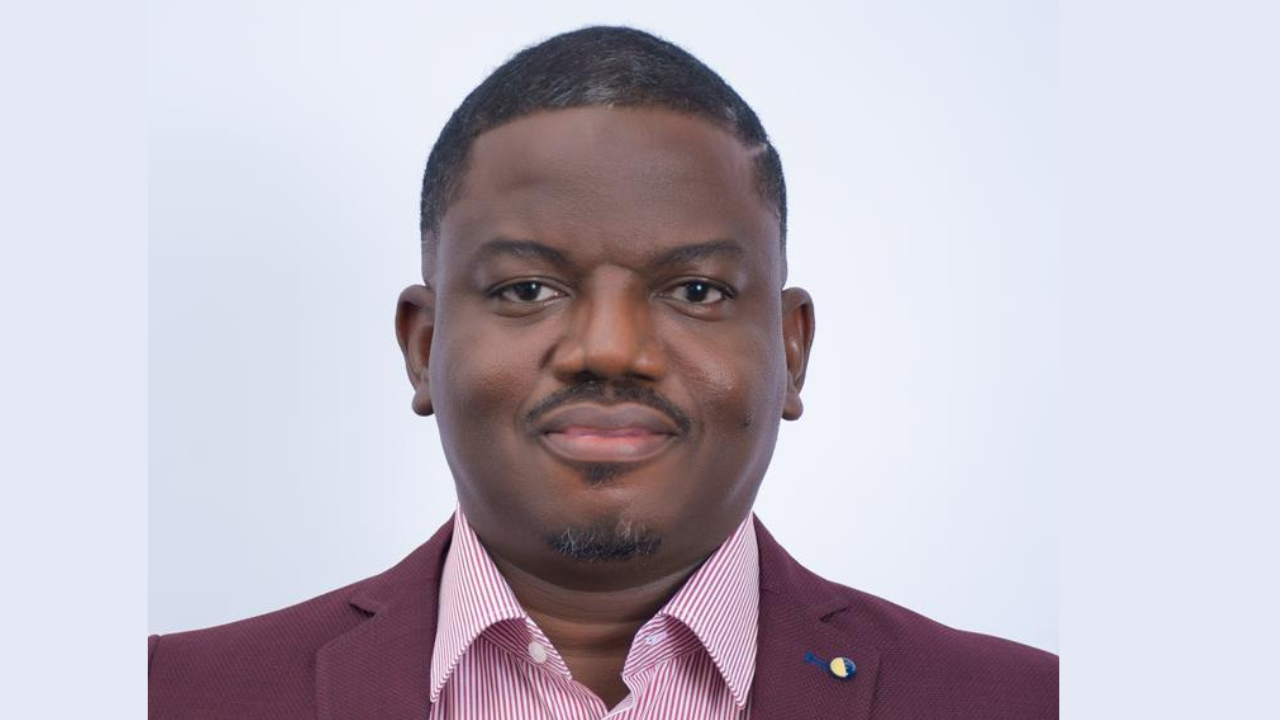
CSquared is building the digital backbone that will connect Africa. In this exclusive TechTrends Media conversation, Samuel Owusu Yeboah, Group Chief Technology Officer, shares the company’s approach to deploying resilient fiber networks, the role of partnerships in expanding access, and how a digitally connected Africa could transform economic growth and regional integration.
Kindly introduce yourself and your role at CSquared
As Group Chief Technology Officer at CSquared, I lead the company’s technological strategy, ensuring our networks and infrastructure are reliable, scalable, and aligned with the needs of our partners and customers across Africa.
You participated in the “Holistic Approaches to Connectivity: One Size Doesn’t Fit All” panel at ITW Africa in Nairobi, Kenya. What key points stood out from the discussion?


The discussion highlighted how diverse connectivity needs are across Africa. Across the continent, factors such as purchasing power, infrastructure readiness, and population distribution mean that solutions must be adapted to different contexts. Even within individual countries, there are differences between urban and rural areas, so a one-size-fits-all approach does not work.
The panel explored a variety of technologies, including fiber, Low Earth Orbit (LEO) satellite systems, and Geostationary Orbit (GEO) satellite systems, each offering unique advantages depending on the scenario. The key takeaway is that achieving widespread, reliable internet access requires a mix of approaches and collaboration across stakeholders. The ultimate goal is to ensure that everyone, regardless of location or sector, can be connected and benefit from digital opportunities.
You’ve recently expanded into West Africa, interconnecting Accra, Abidjan, Lagos, and landlocked countries. How does this project reshape digital integration within ECOWAS?
West Africa has strong economic activity in mining, agriculture, oil, and gas, but weak cross-border connectivity has slowed digital integration. Our expansion interconnecting Accra, Abidjan, Lagos, and landlocked countries tackles this challenge by creating a unified backbone that keeps traffic within the region instead of routing through Europe. For example, today a call from Ghana to Côte d’Ivoire often travels through Europe before reaching its destination. This roundabout process drives up costs and shows the region’s dependence on external infrastructure. With the new system, traffic remains within West Africa, which removes that dependency, reduces costs, and allows data to flow directly between member states. This is what true digital integration within ECOWAS should look like: seamless, affordable, and regionally self-sufficient.
The vision is to make connectivity as seamless as it is elsewhere. Traveling from New York to Boston covers the same distance as crossing three or four countries in West Africa, yet the U.S. enjoys uninterrupted connectivity. That is the standard we want to achieve here. Once realized, businesses will be able to trade and scale more easily, e-commerce will grow, and services such as healthcare and education will be delivered more effectively. In short, this project establishes the digital foundation ECOWAS needs to function as an integrated economic community.
Cross-border fiber deployments often face regulatory and logistical hurdles. What lessons from the West African rollout can be applied as CSquared expands further?
Every deployment comes with unique challenges, even within the same country or city. From the West African rollout, we learned that the key to overcoming regulatory and logistical hurdles is engaging stakeholders early and maintaining ongoing dialogue. By working closely with governments, regulators, and local partners, we build the trust and alignment needed to move projects forward.
Another lesson is that the subregion is increasingly aware of the importance of resilient infrastructure. For instance, an outage on a submarine system a year and a half ago disrupted almost everyone, which pushed digital infrastructure higher on the agenda for policymakers. That awareness has created a stronger environment for collaboration as we expand further.
With subsea cables like Google’s Equiano landing in Africa, how do you see terrestrial backbones complementing these systems to ensure last-mile access?
Google’s Equiano cable has been a major addition to Africa’s connectivity, and it was one of the few if not the only systems that remained operational during a past submarine outage. That event showed how unpredictable disruptions can be and why relying solely on subsea infrastructure leaves the region vulnerable. It highlighted the importance of diversifying connectivity through terrestrial backbones.
What terrestrial networks uniquely provide is much lower latency—the speed at which information is transmitted and acted upon. For example, a subsea route from Lomé to Accra can be 3,000 to 4,000 kilometers, while by land it is only 300 to 400 kilometers. That shorter distance drastically reduces delays. Low latency is critical for modern applications, from sensors in agriculture to connected medical equipment and other Internet of Things (IoT) solutions, where instant communication between devices is essential.
So terrestrial backbones don’t replace subsea systems like Equiano; they complement them by adding resilience and providing the speed and responsiveness required for the next generation of digital services.
Data center growth across the continent is accelerating. How is CSquared enabling this ecosystem to thrive, especially in terms of latency, capacity, and resilience?
From the start, our execution is anchored on high specifications and strict standards. Quality is not just a goal for us; it defines how we build. We serve the public such as mobile network operators (MNOs), internet service providers (ISPs), and other ecosystem players, and we approach every project with durability and reliability in mind.
In practice, this means deploying cables at depths of about 1.2 meters to protect them from civil works, using industry-grade materials that meet global benchmarks, and enforcing rigorous quality control across the entire value chain. For data center connectivity, execution goes beyond construction; it also requires consistent maintenance to ensure resilience. That is why in most metro areas we have built diverse routes to guarantee redundancy, so even when outages occur, connectivity to critical data centers remains intact.
We are now extending this same approach to cross-border builds, delivering infrastructure that not only meets today’s demand but is also designed with the capacity and flexibility to support future growth.
Private investment in fiber often aligns with public-sector goals. How do you balance commercial sustainability with inclusivity and bridging the connectivity gap for underserved communities?
Deploying infrastructure is capital intensive, not only in developing countries but also across borders. At the same time, the industry is evolving as new solutions emerge and costs gradually come down. This requires investors to adapt their business models. Prices drop each year, so if deployment is not cost-efficient, payback becomes impossible and expansion stalls.
Our approach is to deploy smartly. We partner with utilities, power companies, and other players to leverage existing resources, reduce costs, and extend coverage more efficiently. By keeping costs down, we can make pricing more affordable and ensure connectivity reaches not just profitable urban centers but also underserved communities.
Looking at the bigger picture, what does a “Digitally Connected Africa” mean for economic growth, trade, and regional cooperation over the next decade?
A digitally connected Africa has the potential to transform the continent’s future. We are already seeing encouraging progress, but there is still a lot to be done, and no single player can achieve it alone. Collaboration is critical. Many governments already have strong digital visions, but execution depends on private sector investors like CSquared working closely with policymakers, regulators, and development partners. Within the ecosystem, healthy competition also plays an important role. It pushes every player to make wise investment decisions that drive growth, expand coverage, and improve affordability.
A truly connected Africa would unlock enormous opportunities. It would reduce the cost of doing business and give small enterprises access to larger regional markets. Cross-border trade would become more efficient through digital payment systems and real-time supply chain coordination. Startups could scale across multiple countries, e-commerce platforms would thrive, and services in health, finance, and education would reach more communities. From what I have seen through partnerships, I believe that within the next decade, connectivity will transform Africa’s economic landscape and turn regional integration from a political ambition into a lived reality.
Partnerships are clearly critical in this space. Who are CSquared’s most strategic allies today, and what kinds of collaborations are you prioritizing moving forward?
Partnerships are central to our strategy, and we treat every stakeholder as a priority. Even a partner that appears small today can become a major contributor tomorrow, which is why we focus on building strong relationships across the ecosystem. Our approach involves aligning our vision with both public and private partners to ensure everyone is moving toward shared goals.
The pace of change in connectivity is rapid. Less than a decade ago, customers were satisfied with one gigabit of capacity. Today they demand hundreds. To meet this evolving demand, we must bring along everyone, including public agencies, governments, utilities, and private players. Each plays a strategic role in expanding coverage, improving affordability, and maintaining momentum. No partner is de-prioritized because achieving our long-term objectives requires collective effort and collaboration across the entire ecosystem.
Finally, beyond West Africa, where do you see the next big opportunities for CSquared, and what’s your long-term roadmap for transforming Africa’s connectivity landscape?
We are a pan-African company. While our current focus is on West Africa, we are also exploring opportunities across the continent. South Africa and East Africa are more mature markets with many existing players, but there are still opportunities to grow through organic expansion, partnerships, or strategic acquisitions.
Our approach is to identify where we can add value, whether by complementing existing infrastructure, reaching underserved areas, or collaborating with local partners. Our long-term roadmap is to create a pan-African digital backbone that connects every country, enabling economic growth, trade, and regional integration across the continent.
Go to TECHTRENDSKE.co.ke for more tech and business news from the African continent.
Follow us on WhatsApp, Telegram, Twitter, and Facebook, or subscribe to our weekly newsletter to ensure you don’t miss out on any future updates. Send tips to editorial@techtrendsmedia.co.ke

