Apple’s M5 Chip Tests Whether Users Will Sacrifice Battery Life as Laptops Start Competing on AI Throughput and Memory Bandwidth
Most buyers will ignore chip charts and keynote jargon, but they will feel the shift when a laptop runs warmer than expected, the battery gives out sooner or a new AI feature refuses to work unless the hardware is fresh out of the box


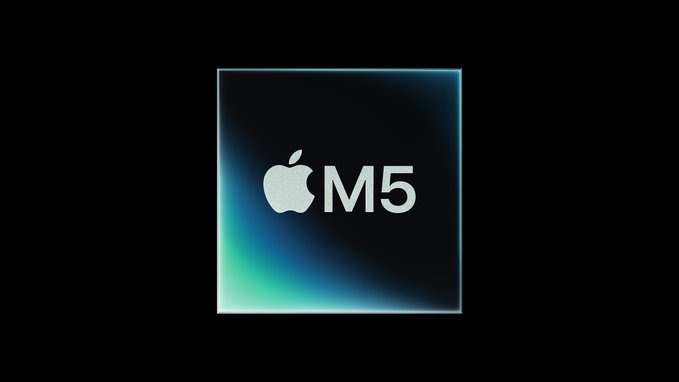
Apple has dropped a chip that asks us to rethink where the heavy lifting of modern computing happens. It is not merely faster in the old sense. The M5 arrives as a device-first answer to a different problem: how much smarts you can pack into a phone-sized thermal envelope, a tablet, or a headset and still call it “local.” That shift matters because it changes who controls the work, who pays for it, and what developers can expect a single machine to do without summoning the cloud.
This is a close read of the announcement, the claims and the frictions it sets up. I stitch together the numbers Apple published with the immediate reactions across forums and developer circles, and I try to trace the practical, near-term consequences that fall out from what looks like an engineering-tightening rather than a theatrical leap.
Apple is selling the M5 as the start of a new tier, but the hierarchy underneath it does not line up cleanly. The chip now anchors the baseline 14-inch MacBook Pro while the M4 Pro and M4 Max still sit above it in raw throughput. It makes the rollout feel out of order. Holding the announcement until the M5 Pro and M5 Max were ready would have produced a cleaner stack, but Apple moved early and left the higher brackets untouched.
Small hardware, big ambition
On paper the M5 is a tidy piece of engineering. A 10-core CPU, arranged as four performance cores and six efficiency cores; a 10-core GPU with neural accelerators embedded inside each GPU core; and a unified memory pipeline that Apple says runs at 153 GB/s. Those are not marketing flourishes, they are the plumbing that defines what a machine can do at once.

Why the neural accelerators on each GPU core? Because it changes the math of latency. Instead of shuttling tensors between a general GPU and a separate neural engine, the work can be routed and finished on the GPU level where raster jobs and geometry already live. Apple’s headline: roughly four times the on-GPU AI performance compared with M4. That is the number everyone will repeat, and for good reason. It repositions the GPU from a graphics co-processor to a hybrid compute unit, optimized for both pixels and models.
Bandwidth also matters. The M5’s roughly 30 percent increase in unified memory bandwidth, to 153 GB/s, is not an incidental spec. More bandwidth reduces the instances where chips idle waiting for memory, and that is precisely the sort of improvement that benefits complex, mixed workloads — think real-time scene reconstruction feeding an inference pipeline at 120 Hz. For Vision Pro, that pacing is essential.
Devices and the choice to update select models first
Apple placed the M5 into three visible products at launch: the baseline 14-inch MacBook Pro, iPad Pro in both sizes, and the Vision Pro. Notably, higher-tier MacBook silicon variants were absent from the initial rollout. That decision is telling. Instead of carving out a Pro or Max version, Apple put a next-gen chip into entry or flagship devices in a way that nudges the product line toward a subtle rebalancing.
For the 14-inch MacBook Pro, the pitch is battery longevity and faster AI workflows, with claims of up to 24 hours of battery life and storage read speeds up to about 6.8 GB/s on the higher end. The baseline model, long the most approachable “Pro” in Apple’s stable, just got a more powerful heart. For the iPad Pro, Apple pairs the M5 with new wireless silicon — the C1X modem and an N1 wireless chip — and updates in RAM on certain SKUs. The Vision Pro receives a spec bump and a new band for comfort. Orders open mid-October and shipping rolls in later the same month, a cadence that suggests Apple wants these upgrades in customers’ hands quickly, not as a slow trickle.
This rollout raises an obvious question: who should buy now and who should wait. Developers who tinker with spatial computing and on-device models will see value immediately in Vision Pro’s tighter integration. Creators who use iPad Pro as a primary editing surface will benefit from faster local editing and live effects. For professionals who rely on Max-class silicon today, the absence of M5-Pro/Max variants signals an interim — a modest, careful upgrade rather than a full generational pivot.
What the M5 rewrites in practical terms
An essential part of interpreting a chip announcement is translating silicon claims into how things will feel on real workflows. Here are some likely, immediate outcomes.
First, AI tasks that require low latency get easier to ship. Local inference for language models, image segmentation or real-time enhancement becomes cheaper in battery and latency terms when GPU cores have dedicated neural accelerators and memory bandwidth is higher. That changes the calculus for apps that today balance between on-device responsiveness and offloading to servers.
Second, developers can expect less variability across devices in functional capability. If Apple standardizes certain AI primitives in GPU hardware, some features that were previously gated by a cloud connection can be implemented locally, with privacy benefits and fewer moving parts. That leaves companies with product decisions: serve a wider base with on-device features or retain cloud-only capabilities that scale differently.
Third, the update nudges Apple further into the posture of vertically integrated AI. It is not the same thing as offering a cloud model or a developer API. Rather, it is an operating assumption: do more on the client, and let the machine shoulder more of the cost. From a business standpoint, that is a bet on lowering friction for users and developers while nudging the industry toward device-centric design.
Tensions and contradictions
There is pushback, predictable and less so. Some users quip that their higher-tier M4 Pro rigs will outpace base M5 machines in certain tasks. That is true in a narrow sense — core count, clock targets and thermal envelopes vary between product tiers. The announcement is not a clean elevation of the entire line, it is a targeted reshuffle. Developers and power users will, as always, compare apples to apples and find edge cases where older silicon still holds advantage.
Another tension sits at the intersection of privacy and capability. Doing more locally means fewer third-party servers holding sensitive data. That is a win for privacy on the surface, but only if the models and processing are truly local. There will be hybrid designs that offload heavier training or large context windows to the cloud while keeping interactive responses local. The lines will blur. Regulation and enterprise procurement teams will notice the nuance and ask for provable boundaries.
Finally, there is the economic angle. Vision Pro remains a premium device at $3,499. Apple can afford to put expensive silicon into niche hardware because margins and perceived value align. But trying to scale that architecture into cheaper devices, at acceptable cost and battery life, is a harder engineering problem. The M5 is a step. It is not a universal solution.
What could follow from here
One possible path is the quiet extension of this chip into Pro and Max tiers built for sustained loads. That would give developers a predictable performance ladder and let the rest of the Mac lineup absorb the upgrade without fanfare. It is the most familiar pattern in Apple’s playbook and would keep the range orderly.
Another direction points toward deeper commitment to on-device AI. If Apple starts tying certain features to newer silicon, especially through OS-level hooks, older hardware will fall behind faster. That kind of move creates tension: fragmentation for developers versus a stronger incentive to buy in early.
A different outcome sits on the consumer side. Price pressure, energy limits and slow enterprise adoption could blunt enthusiasm. In that case, teams building apps might hedge their bets, keeping heavier inference in the cloud and using local processing only when latency demands it. The landscape would feel close to where things are now, just with a few performance ceilings raised.
Reality often pulls from more than one of these directions. Apple will release hardware, let developers poke at it, watch what gains traction and adjust the roadmap accordingly. That rhythm — iterate, observe, respond — is how platforms drift into new norms or revert to familiar habits.
A modest, consequential step
If you strip away marketing language, the M5 is an engineering refinement with strategic intent. It is a deliberate move to make local AI less of an afterthought and more of an assumed baseline. The technical changes — neural accelerators inside GPU cores, higher unified bandwidth, and a 10-core CPU layout — are significant because they change how programmers and product teams allocate work.
This is not an instant revolution in everything people do with their computers. Instead it is a structural nudge, one that will surface in apps over the next year as tools adapt and expectations shift. For early adopters, this is clearly useful. For the rest of us, it is a reminder that the next phase of user experience will depend as much on how silicon and software negotiate resources as on the size of a headline spec.
The specs in plain view
The chip carries a 10-core CPU split between four high-power cores and six efficiency cores. Gains over the previous generation aren’t dramatic on paper, but they shave off enough friction in both single-threaded and multi-threaded work to matter in practice.
On the graphics side, the GPU also runs 10 cores, but the twist sits inside each one — a neural accelerator baked directly into the architecture. Apple is pointing to something close to a fourfold jump in on-GPU AI throughput compared with the M4, which hints at where the company wants future workloads to live.
Memory bandwidth climbs to around 153 GB per second. That’s roughly a third higher than before and reduces the stall time that normally chokes mixed compute and graphics tasks.
At launch, the chip lands in three products: the baseline 14-inch MacBook Pro, both sizes of the iPad Pro, and the Vision Pro headset. The pricing ladder stays predictable — $1,599 for the MacBook Pro, the 11-inch iPad Pro at $999, the 13-inch at $1,299, and the Vision Pro holding its $3,499 tag.
Orders open in the middle of October, with hardware shipping before the month closes. No long wait, no phased rollout — Apple wants these devices in circulation fast.
Go to TECHTRENDSKE.co.ke for more tech and business news from the African continent.
Mark your calendars! The GreenShift Sustainability Forum is back in Nairobi this November. Join innovators, policymakers & sustainability leaders for a breakfast forum as we explore sustainable solutions shaping the continent’s future. Limited slots – Register now – here. Email info@techtrendsmedia.co.ke for partnership requests.
Follow us on WhatsApp, Telegram, Twitter, and Facebook, or subscribe to our weekly newsletter to ensure you don’t miss out on any future updates. Send tips to editorial@techtrendsmedia.co.ke
TechTrends Media Podcasts

