A 740KM Bet on Connectivity, Security and Politics Colliding in the North
The fibre promises access and leverage, but the path it takes runs through places where ambition has a history of stalling in the dust.


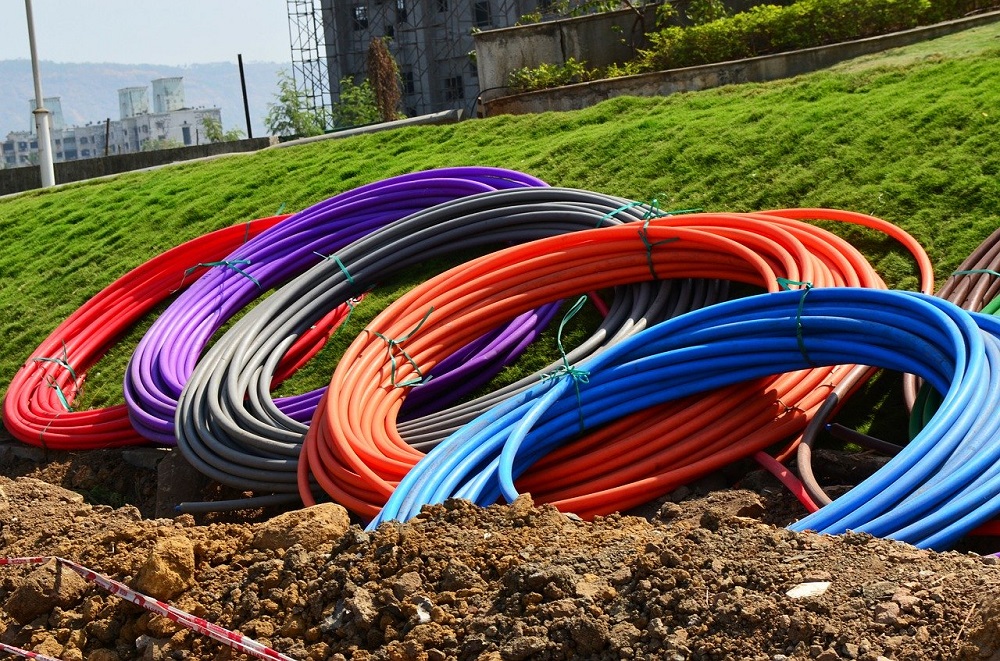
The government has reached a pivotal administrative step on a project that reads like a map of competing ambitions. An environmental and social impact assessment is complete. The line is 740 kilometres and it will thread Isiolo, Garissa, Wajir and Mandera, edging up to the borders with Ethiopia and Somalia. That technical detail matters because it tells you something about scale and intention: this is more than a local upgrade.

Why this matters now
Rural connectivity is rarely just a question of signal. It is about institutions. The assessment lists 341 public facilities slated for direct connection, including schools and hospitals. For those places the change will alter daily operations, not gradually but once a link is active. Telemedicine consultations, live remote lessons and faster access to e-government tools are plausible near-term effects. Investors will look, too; a stable terrestrial path could nudge businesses that avoided satellite costs.
Risks that the paperwork flagged
The report does not sugarcoat trouble. Land disputes sit along parts of the route, and crews will have to navigate fragile vegetation zones. Security is a practical constraint. Contractors must coordinate with county teams and schedule works where stability can be reasonably assured. In plain terms, construction logistics will follow political realities; that is often the slowest variable.
Cost, logistics and the power question
At an estimated Sh3.1 billion, planners say the line will mostly use existing transport corridors and that most of the fibre will be buried alongside the Isiolo–Mandera road. Repeater stations and power nodes will appear at intervals. The assessment notes only one core site currently lacks grid electricity, and solar setups are proposed as a backup. That detail matters because the weakest link in any rural deployment is often power, not cable.


Redundancy and regional leverage
Kenya’s traffic now largely rides coastal submarine cables. Those lines work well until they do not. An inland fibre path offers redundancy and a different routing logic, one that could absorb shock when coastal links fail. It also opens the door to cross-border interconnections with neighbours, a technical step that doubles as geopolitical leverage: greater regional data exchange, and a stronger case for Kenya as a transit node.
Labor, timelines and local economies
The agency overseeing the work prioritises local hiring. Construction is projected to take two years, once approvals clear. Those years will matter. Roadside digs mean short-term jobs but also disruption: markets rerouted, businesses adjusting to construction schedules and a clutch of small contractors learning new trade skills. If county procurement pushes for local subcontracting, that could be a real boon; if not, the economic lift will be uneven.
Institutional contradictions
Here is a tension that does not get air time enough. The broadband plan forms part of a national ambition to lay vast new kilometres of fibre. Yet earlier audits and contract queries have shown gaps in oversight and procurement. Ambitious infrastructure pledges do not guarantee smooth execution. The assessment is a regulatory checkpoint, but the historical pattern in large projects suggests oversight will need sustained pressure to work as intended.
How this could actually play out
One path looks deceptively straightforward. Nema signs off, county security teams stay cooperative, contractors stick to the calendar and the fibre goes into the ground more or less as planned. Institutions connect, the backbone holds, and the story gets filed as a rare case of follow-through.
Another version is slower and uneven. Parts of the route stay open while others stall after a flare-up, a dispute or a reshuffle at county level. Some towns come online early, others lag behind. The line still takes shape, but in fragments that depend on whose local politics stay calm longest.
Then there is the version officials do not voice out loud. A court petition over land, a procurement quarrel that drags into the next budget cycle or a security incident that freezes crews for months. The work limps rather than stops outright, but every pause inflates the bill and drains whatever momentum was there at launch.
Policy choices that matter
Two policy moves will shape which of those scenarios plays out. One, clarity on land rights and faster dispute resolution at county level. Two, transparent procurement and active oversight during contracting. Those are procedural levers but they set the pace. Investors follow predictability; communities follow accountable consultation.
What the line cannot do alone
Remember: a cable is an enabling tool, not a substitute for services. Schools need trained teachers using online resources well. Health clinics require systems and supplies that connect to more than just bandwidth. Digital inclusion will need parallel investment in skills and devices. The most honest assessment may be that the fibre creates possibility; realizing that possibility will be uneven unless complementary steps are taken.
A final note on regional strategy
If the technical plan holds, the Isiolo Mandera fibre could tilt regional dynamics. It offers Kenya an inland corridor that complements coastal routes, and that matters for resilience. It may also redraw how data moves across East Africa. But the most consequential shifts will depend on governance choices that often happen well beyond the digging crews: procurement, security coordination and how benefits are distributed at county level.
Conclusion: a map with questions
The assessment clears an important procedural hurdle. The outline is now concrete: a 740-kilometre line, Sh3.1 billion, 341 public institutions, solar backup at a lone site without grid access and a plan to bury fibre along existing corridors. Those are the coordinates. What is not yet fixed are the social negotiations, the legal wrangles and the everyday politics that will determine whether the map becomes useful travel rather than an elegant plan on paper.
Go to TECHTRENDSKE.co.ke for more tech and business news from the African continent.
Follow us on WhatsApp, Telegram, Twitter, and Facebook, or subscribe to our weekly newsletter to ensure you don’t miss out on any future updates. Send tips to editorial@techtrendsmedia.co.ke
TechTrends Media Podcasts

