If Your M-Pesa Is Drained, Should You Get Your Money Back? CBK Digital Fraud Compensation Policy Says the Answer May Soon Be Yes
A country that mastered digital money now faces an uncomfortable question — who is responsible when that money suddenly disappears?


Kenya’s fintech revolution has long been celebrated for its ingenuity — a country where almost everyone can send money across counties faster than most governments can send mail. But beneath that efficiency sits a toll system few talk about openly: fraud as a recurring user expense.
If your mobile wallet is compromised, or you’re tricked into reversing funds, the experience is rarely treated as a crime. It’s treated like clumsiness. You lose. The system shrugs.
That dynamic may soon be tested.
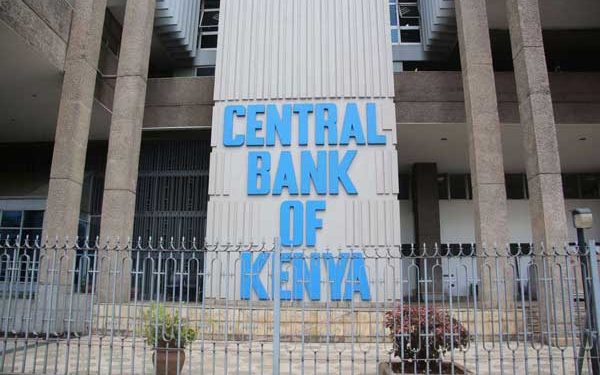
The Central Bank of Kenya (CBK) is laying groundwork for a formal fraud compensation framework within the National Financial Inclusion Strategy 2025–2028, targeting rollout in 2026. The plan promises digital complaint channels, improved transparency — and crucially — structured redress.
But there’s one unresolved issue that will define the entire policy:
Will refunds be optional — or compulsory?
Fraud Isn’t an Edge Case Anymore — It’s the Entry Fee for Digital Convenience
According to the FinAccess 2024 Survey, 9.8% of mobile money users have experienced direct financial loss through fraud — significantly higher than banking channels. In informal systems such as Saccos and pension schemes, internal fraud alone sits shockingly above 70%.
Fraud isn’t just theft through hacking. It’s psychological engineering through impersonation, fake reversals, cloned SMS alerts and faux customer service lines.
Fraud Exposure Across Financial Channels in Kenya
| Financial Channel | % of Users Reporting Fraud or Money Loss | Primary Fraud Type | Typical Recourse Outcome |
|---|---|---|---|
| Mobile Money (e.g., M-Pesa, Airtel Money) | 9.8% | Fake reversals, impersonation calls, mistaken transfers | Refunds rare; users blamed for “carelessness” |
| Banks | 1.5% | Card skimming, phishing | Formal dispute systems, slower but structured |
| Microfinance Institutions | 1.8% | Identity misuse | Limited refund clarity |
| Saccos | 75% (internal fraud exposure) | Internal embezzlement | Almost zero recourse |
| Pension Schemes | 66.1% | Administrative fraud | Long legal processes, refunds near impossible |
The System That Only Works If You Beg
Two real cases — one in Zambia, one in Kenya — show that mobile money reversals depend more on human kindness than institutional protection.
When Airtel was ordered by the Comesa Competition Commission (CCC) to refund $250 (Sh32,300) to a Zambian customer who had sent money to the wrong account back in 2023, it wasn’t because the company willingly helped. The user had spent almost two years roaming between offices in two countries before a regional regulator stepped in.
Around the same time, a Kenyan woman — Nyaguthii — mistyped a single digit while sending money during a casual WhatsApp call. Calls and texts to the unintended recipient went unanswered. So she turned to Facebook, Twitter, and community WhatsApp groups. Strangers investigated. Someone identified the number as belonging to a boda rider in Baringo. A chief got involved. By sunrise, the money was returned.
Not because the system worked — but because people did.
These stories aren’t sentimental. They’re signals. Formal protection is still optional. Community intervention is mandatory. Until CBK steps in decisively, reversals will remain a lottery of luck, shame, and pleading.
The Liability Question: Mistake or Negligence — Who Decides?
If fraud is treated as consumer negligence, compensation frameworks will operate as PR accessories. If treated as platform vulnerability, Kenya could enter a new era of financial accountability.
To understand what direction CBK might take, it helps to look outward.
How Other Countries Handle Digital Fraud Compensation
| Country / Region | Fraud Reimbursement Model | Key Rule | Outcome |
|---|---|---|---|
| United Kingdom | Mandatory refunds for APP scams | Victims refunded even if transfer was “authorised” under deception | Higher reimbursement rates — banks now lobbying for stricter criteria |
| United States | Liability caps under EFTA | Full protection only if reported within 48 hours | Many still lose funds due to reporting delays |
| India | “Zero Liability” if reported in 3 days | Platform absorbs losses for rapid reporting | Enforcement inconsistent — banks often cite “user fault” |
| Singapore | Shared Responsibility Scheme | Telcos + banks co-reimburse scams using spoofed channels | Fraud down after sender verification reforms |
| Kenya (Current) | No obligation to refund | “Case-by-case” assessments | Widespread perception: “Once stolen, gone forever” |
Kenya’s Slow March Toward Fraud Accountability
| Year | Milestone | What Changed | What Didn’t |
|---|---|---|---|
| 2007 | Launch of M-Pesa | Mobile money era begins | No formal fraud liability structure |
| 2014 | First E-Money Regulations | Licensing standards introduced | Refund rules left vague |
| 2016 | Payment Systems Act enhanced | Operational risk standards added | No obligation to compensate victims |
| 2021 | CAK Digital Credit Inquiry exposes scam epidemic | Fraud publicly acknowledged as systemic | No enforcement follow-up |
| 2023 | Data Protection Act enforcement rises | Data misuse rights strengthened | Financial loss still treated separately |
| 2024 | FinAccess Report names fraud as top consumer pain | Public awareness peaks | Still no guaranteed redress |
| 2025 | CBK Inclusion Strategy commits to drafting refund policy | First official promise of compensation framework | Liability rules still undefined |
| 2026 (Projected) | CBK Compensation Guidelines implemented | Legal framework for redress introduced | Impact depends on enforcement teeth |
| 2027 (Speculative Future) | Two Possible Outcomes:
A. Mandatory Refund Era — Trust rebounds, digital usage grows B. Optional Refund Era — Fraud persists, consumer fatigue deepens |
Kenya either becomes protection leader — or stays in limbo |
If CBK Gets Serious, Here’s What a Real Refund System Might Look Like
What a Mandatory Refund Law Could Look Like in Kenya
| Policy Element | Proposed Requirement | Impact |
|---|---|---|
| Automatic Refunds for Verified Scams | Refund within 15 days | Signals protection without begging |
| Shared Liability Model | Costs split between wallet providers & agents | Forces better security collaboration |
| Penalty for Delayed Investigation | Interest or credits owed for lateness | Removes “pending forever” excuses |
| One National Reporting Channel | Single entry point regardless of provider | Ends confusion and deflection |
Kenya’s Digital Finance Era Was Built on Trust. Its Survival Now Depends on Recourse.
Kenya’s digital finance ecosystem has grown rapidly because users trusted platforms like M-Pesa and Airtel Money to be fast, safe, and reliable. But as fraud cases rise and refunds remain uncertain, that trust is starting to weaken.
Fraud will always exist, but what users want is assurance that they won’t be abandoned when something goes wrong. Kenya already proved it can build world-class payment systems — now it must prove it can protect the people using them.
Until compensation becomes a guaranteed right rather than a lucky outcome, every mobile transaction will feel like a personal gamble. CBK’s upcoming policy could change that, but only if it’s enforced strongly and not left to provider discretion.
Go to TECHTRENDSKE.co.ke for more tech and business news from the African continent.
Mark your calendars! The GreenShift Sustainability Forum is back in Nairobi this November. Join innovators, policymakers & sustainability leaders for a breakfast forum as we explore sustainable solutions shaping the continent’s future. Limited slots – Register now – here. Email info@techtrendsmedia.co.ke for partnership requests.
Follow us on WhatsApp, Telegram, Twitter, and Facebook, or subscribe to our weekly newsletter to ensure you don’t miss out on any future updates. Send tips to editorial@techtrendsmedia.co.ke
TechTrends Media Podcasts

