Riders, Riders Everywhere: The Promise and Challenges of Kenya’s Electric Two-Wheelers
As Kenya’s e-bike market expands, startups and established players alike are navigating fierce competition and shifting rider expectations


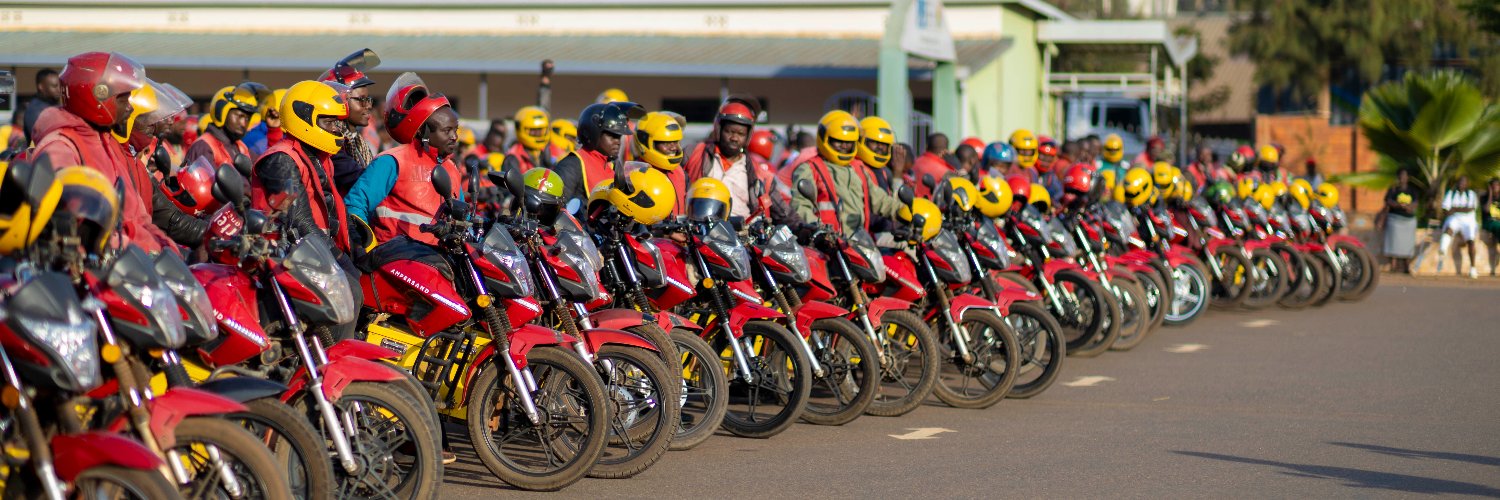
Kenya’s electric bike market has moved beyond pilot projects and token launches. By 2025, the sector has grown into a competitive and strategically important corner of the country’s mobility economy. What was once viewed as a novelty—battery-powered bikes seen at trade fairs or on corporate CSR projects—has now become a serious business, with clear players, defined models, and a stronger policy environment.

Market Drivers
Two forces are shaping demand for e-bikes in Kenya: rising fuel costs and the economics of urban transport. Boda boda riders, who form the backbone of informal transport, remain the main target group. Petrol prices in Nairobi have consistently hovered close to KSh 200 per liter, making the prospect of saving up to 40% on daily operating costs too significant to ignore. For last-mile delivery, particularly for e-commerce and courier services, e-bikes also provide a cleaner and more predictable option.
Infrastructure has improved, albeit unevenly. Battery-swapping networks, pioneered by players like Ampersand (rebranded as Alpha), now exist in Nairobi and are spreading to peri-urban areas. Charging hubs remain sparse, but partnerships with real estate developers and logistics firms are filling some of the gaps.
Market Dynamics and Competition
Competition has intensified, with at least five companies actively pushing electric two-wheelers. Local assembly is slowly gaining traction, although most parts are still imported from China or India.


- eBee Mobility Kenya once promised one million e-bikes across Africa by 2030. Its flagship eBX model and rental programs targeted delivery riders and urban commuters. However, slow adoption and high costs limited uptake, and the company underwent major layoffs in early 2025. Still, eBee remains operational, focusing on after-sales service, rentals, and selective fleet partnerships.
- Alpha (formerly Ampersand) has become a serious contender by scaling its swappable-battery e-motorcycles for boda boda drivers. Their expansion into Kenya from Rwanda has set a standard for durability and quick energy turnaround, with swap stations that cut downtime for riders.
- eWAKA has broadened its range with the Shujaa 2.0 cargo bike, Jasiri e-motorcycle, and the Buga commuter bike, aiming at both delivery fleets and individual riders. Their diversified line reflects the reality that Kenya’s e-mobility market is not one-size-fits-all.
- Moja Ride, though better known for broader e-mobility services, is entering the e-bike space, offering options in partnership with fleet operators and municipal projects.
- Roam and Kiri EV are also notable, with Roam focusing on motorcycles adapted for Kenyan terrain, while Kiri pushes lighter electric bikes and scooters designed for city use.
What sets 2025 apart is that these companies are no longer pitching e-bikes as experiments. Instead, they’re tailoring products to specific niches—delivery, boda bodas, urban commuters—and investing in after-sales service, financing models, and infrastructure.
Each company has its strategy: Alpha relies on swappable batteries and durability, eWAKA emphasizes cargo capacity and flexibility, Moja Ride focuses on affordability for fleet operators, while eBee emphasizes rentals and after-sales support.
Roadblocks and Challenges
Despite growth, obstacles remain. The upfront cost of e-bikes is still a barrier, especially for riders who rely on informal credit systems. Financing partnerships with microfinance institutions have eased access, but adoption is uneven outside Nairobi and Mombasa.
Power reliability is another issue. While e-bikes consume a fraction of grid electricity, Kenya’s patchy power supply creates uncertainty for large-scale deployment. Battery-swapping networks offer a workaround, but they require heavy upfront investment.
Policy support has improved, with government incentives reducing import duties for electric vehicles and parts. Yet, the absence of standardized regulation for battery safety, disposal, and interoperability still leaves the market fragmented.
Outlook
The trajectory is clear: e-bikes are no longer marginal. By late 2025, Kenya’s e-bike ecosystem is at a turning point. The country is becoming a testing ground for African e-mobility strategies, with lessons that will ripple across the region. For boda boda riders and logistics companies, electric bikes are increasingly a matter of economics, not just climate action.
If financing expands, infrastructure scales, and regulation catches up, Kenya could emerge as one of Africa’s first major e-bike markets—where sustainability and profit align on two wheels.
Go to TECHTRENDSKE.co.ke for more tech and business news from the African continent.
Mark your calendars! The TechTrends Pulse is back in Nairobi this October. Join innovators, business leaders, policymakers & tech partners for a half-day forum as we explore how AI is transforming industries, driving digital inclusion, and shaping the future of work in Kenya. Limited slots – Register now – here.
Follow us on WhatsApp, Telegram, Twitter, and Facebook, or subscribe to our weekly newsletter to ensure you don’t miss out on any future updates. Send tips to editorial@techtrendsmedia.co.ke
TechTrends Media Podcasts

