
M-Pesa Trading Hits 400,000 Users, Lifts Market Activity to 60%
In a matter of weeks, hundreds of thousands moved from sending money to trading it, pushing Kenya’s market into unfamiliar territory where access is no longer the constraint

At some point, a payments tool stops being just a payments tool. It becomes the place where money sits, moves, and now, increasingly, grows. That is the position M-Pesa appears to be settling into, not through a sudden leap, but by layering one function over another until the distinction starts to blur.

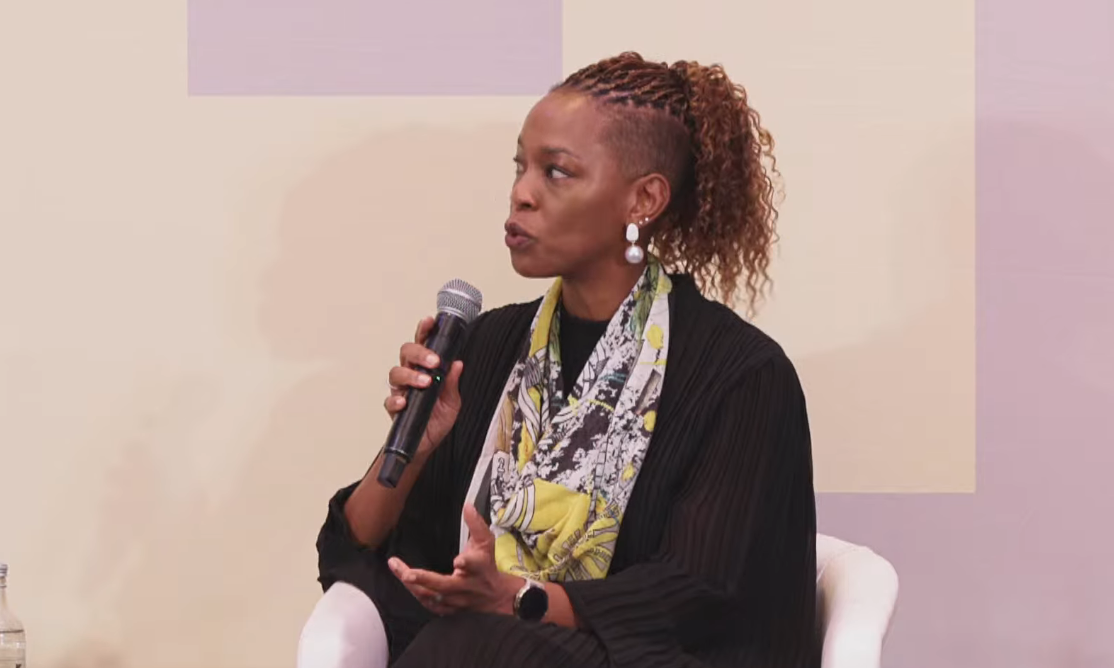
Esther Waititu, Safaricom’s Chief Financial Services Officer, who is also CEO of M-Pesa Kenya, frames it in plain terms. Payments came first. Then credit, so transactions would not stall at the point of need. Savings followed, partly as a buffer against shocks, partly as a way to keep users within the system. Now comes retail trading, folded into the same interface that handles everyday transactions. The logic is sequential. Each layer answers a gap left by the previous one.
What stands out is not the ambition alone, but the order in which it unfolds. The platform is not moving outward in search of new users. It is moving inward, asking more of the users it already has.
A Market That Doubled Before It Could React
The early numbers are blunt. Retail trading on M-Pesa went live on 10 February. Within about 45 days, 400,000 users had opted in. Before that, the Nairobi Securities Exchange had around 200,000 retail participants, a figure that had barely moved for 9 years.


In practical terms, the base doubled in under 2 months.
Volume tells a different story. M-Pesa accounts for about 60% of trades by activity, but only 4% to 5% by value. That gap is not surprising. Institutional capital still dominates in size. What has changed is who shows up, and how often.

There is a familiar pattern here. Lower the friction, widen access, and participation rises before value catches up. The question is whether that gap narrows over time or becomes a permanent feature of a more fragmented market.
A retail-heavy market trades differently. It reacts faster, sometimes less predictably. It also tends to stretch the role of platforms beyond execution into education, nudging, and at times, restraint.
The Long Road to 9 Million Traders
Safaricom’s internal target sits at 9 million retail investors within 5 years. It is a large number, but it reflects the scale M-Pesa already operates at. The service reaches over 38 million users in a 30-day cycle, with 21 million engaging daily.
In that context, 400,000 traders is less an endpoint and more a baseline.
The harder part is not onboarding. It is retention, and beyond that, informed participation. Trading is not the same as sending money home or paying for groceries. The risks are different, the time horizon longer, the feedback less immediate.
There is also the question of behaviour. If access becomes frictionless, does it encourage disciplined investing or short-term speculation? Platforms rarely control that outcome directly, but their design choices tend to influence it.
The ambition to reach 9 million traders suggests a belief that participation can be normalised, that equities can move from a niche activity into something closer to routine. Whether the market infrastructure can absorb that scale without distortion remains open.
The Platform Expands, the Edges Blur
M-Pesa now sits across payments, lending, savings, and trading. Each function feeds the next. Credit supports transactions. Savings stabilises usage. Trading offers upside.
The model starts to resemble a financial operating system rather than a single service.
This layering raises structural questions. At what point does a platform that intermediates payments, extends credit, and facilitates investment begin to concentrate too much influence over financial behaviour? And how should that be supervised?
There is no immediate answer, but the trajectory is clear. The more functions converge, the more the boundaries between sectors begin to dissolve. Telecom, banking, and capital markets no longer sit in clean silos. They overlap in practice, even if regulation still treats them separately.
Ethiopia and the Discipline of Starting Small
The expansion into Ethiopia offers a different kind of test. M-Pesa launched there about 18 months ago and has reached over 4 million users, with just under 50,000 merchants in the network.
The approach is deliberately restrained. Start with a single use case. In Kenya, that use case was sending money home. Everything else followed.
Ethiopia does not replicate Kenya neatly. Banking penetration is higher, and the financial landscape is structured differently. That changes the entry point. Payments still matter, but the emphasis leans toward commerce, merchant integration, and eventually credit and savings.
There is a tendency to assume that successful models travel intact. In practice, they tend to fracture and reassemble around local conditions. The Ethiopian rollout suggests a slower build, one that tests demand before layering complexity.
Scale Is Physical Before It Is Digital
For all the talk of platforms and interfaces, the underlying system still depends on physical presence. Kenya’s M-Pesa network includes over 300,000 agents and around 3 million merchants. On average, an agent is available every 2 kilometers.
That density matters. It anchors trust, enables cash movement, and keeps the system accessible beyond smartphones and data plans.
The digital layer may expand, but the physical network remains a stabiliser. It also shapes how quickly new services can spread. Trading, savings, credit. All of them ride on top of a network that was built for something simpler.
This creates an interesting tension. The more advanced the services become, the more they depend on an infrastructure designed for basic transactions.
AI Enters Through the Back Door
Artificial intelligence does not arrive as a headline feature here. It shows up in places where friction is highest. Fraud detection, dispute resolution, transaction monitoring.
That is the first layer. Reduce losses, improve response times, build confidence.
The next layer is more personal. Product design begins to adapt to individual behaviour. Spending patterns, location data, transaction history. The system starts to anticipate rather than react.
This raises its own set of concerns. Personalisation can improve experience, but it also concentrates informational power. The platform sees more, predicts more, and potentially influences more.
In financial services, that combination carries weight. It can guide users toward better outcomes, or nudge them into riskier territory, depending on how it is applied.
A Market in Motion, Not Yet Settled
What is unfolding around M-Pesa is less a single development than an accumulation. Payments led to credit. Credit led to savings. Savings opened the door to investment.
Retail trading is the latest layer, but not the final one.
The direction is clear enough. More users, more functions, deeper integration into everyday financial life. The uncertainties sit around behaviour, regulation, and market stability.
If participation continues to rise, the character of Kenya’s capital markets will change. More voices, more activity, possibly more volatility. At the same time, access broadens in ways that were difficult to imagine a decade ago.
The platform grows by absorbing functions that once sat elsewhere. The market adjusts, sometimes quickly, sometimes with resistance.
Nothing about this feels settled yet. That may be the point.
Mark your calendars! The GreenShift Sustainability Forum is back in Nairobi this August. Join innovators, policymakers & sustainability leaders for a breakfast forum as we explore sustainable solutions shaping the continent’s future. Limited slots – Get your early bird tickets now – here. Email info@techtrendsmedia.co.ke for partnership requests.
Go to TECHTRENDSKE.co.ke for more tech and business news from the African continent and across the world.
Follow us on WhatsApp, Telegram, Twitter, and Facebook, or subscribe to our weekly newsletter to ensure you don’t miss out on any future updates. Send tips to editorial@techtrendsmedia.co.ke

