
Safaricom Rolls Out M-Pesa Number Masking, Forcing Shift in Payments, Marketing and Proof
A phone number once carried identity, trust, and access; now that link weakens, and every payment leans on consent, proof, and a system that moves with less ease and more control

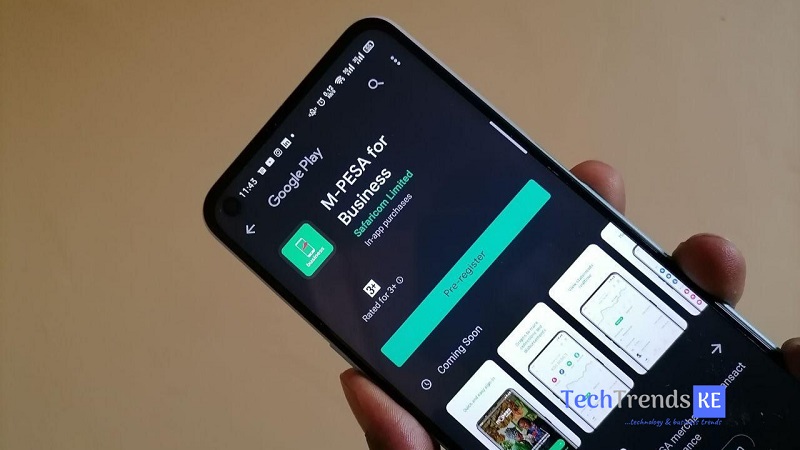
The digital footprints left behind after a simple 500-shilling transfer are about to shrink. Starting Tuesday, 24 March 2026, Safaricom is pulling the curtain over the mobile numbers that have long served as the primary identifier for millions of Kenyans. This is not a minor technical update; it is a fundamental dismantling of a decade-old system where a phone number was both a financial address and a lead for a marketing database.

This week’s rollout follows a February 2026 approval from the Central Bank of Kenya (CBK), ending a long internal process between the operator and financial authorities. For 17 years, the M-Pesa ecosystem operated on a high-visibility model where the phone number was the simplest anchor for a financial account. That transparency built the system, but it also fueled an uncontrolled secondary market of data scraping and social engineering.
The Death of the Accidental Lead
Digital marketers and small-scale vendors are facing a reckoning. The “Buy Goods” and “Paybill” channels have historically been the cheapest way to build a CRM. A roadside vendor or a boutique in Westlands could look at their transaction logs and have a verified list of hundreds of active customers. Under the new framework, these numbers will appear as 0722000*. This effectively kills the practice of harvesting numbers for marketing messages that often turn into promotional spam.
Businesses that relied on this visibility now have to actually ask for permission. The new feature introduces a request mechanism where a merchant can ask the system to reveal the full number of a payer. The customer then decides whether to allow it. This introduces a small friction point in a high-speed economy. Some will adapt by relying more heavily on digital receipts; others will be forced to move customer records into formal e-commerce platforms or point-of-sale software.

Reconciliation and the New Logic of Proof
The operational headache will be felt most by those who manage group finances or bulk payments. A treasurer for a 50-person “chama” or an office manager handling staff lunch contributions will find that a quick scan of the inbox is no longer enough to see who has paid. With only 2 names and a masked number, identity confusion grows, especially for common names.
Safaricom is pointing users toward 334 to request full details, but that requires a 2-way consent process that expires in 24 hours. We should anticipate a behavior change where the Transaction Code becomes the only currency of proof. The era of “I’ve sent it, check your phone” is being replaced by “Here is the screenshot of the code.”

The Backend Logic of Masked Payloads
For developers managing M-Pesa integrations through the Daraja portal, the shift is a mandatory transition toward a restricted data environment. The core tension for engineers lies in the shift from using a phone number as a primary key to treating it as a volatile, masked attribute. Historically, the MSISDN field in a C2B or STK Push callback was a reliable 12-digit string. Under the new protocol, data is trimmed at the source.
If a database schema relies on matching a full phone number to a user profile, the incoming masked strings will cause immediate failures. Developers must pivot to a Transaction ID first architecture. The TransID is now the only immutable anchor for reconciliation. Any system still trying to “look up” a user by their incoming phone number in a callback will find itself looking at a partial, non-unique string that cannot be indexed.
The Infrastructure of Selective Privacy
There is a curious tension in this rollout. While the move protects the consumer from the prying eyes of a random merchant, it does nothing to hide the user from the platform or the state. The data still exists; it is just being restricted at the edge of the network. This aligns with the Data Protection Act 2019, which established that organizations should collect only information required for a service.
As bank transfers and merchant payments join the masking protocol later in 2026, the traditional phone number will lose its status as the universal ID for Kenyan commerce. This rollout is the first step toward a future where a financial identity and a telecommunications identity are finally decoupled. The architecture of privacy has finally become part of the infrastructure itself.
Mark your calendars! The GreenShift Sustainability Forum is back in Nairobi this August. Join innovators, policymakers & sustainability leaders for a breakfast forum as we explore sustainable solutions shaping the continent’s future. Limited slots – Get your early bird tickets now – here. Email info@techtrendsmedia.co.ke for partnership requests.
Go to TECHTRENDSKE.co.ke for more tech and business news from the African continent and across the world.
Follow us on WhatsApp, Telegram, Twitter, and Facebook, or subscribe to our weekly newsletter to ensure you don’t miss out on any future updates. Send tips to editorial@techtrendsmedia.co.ke


