
BasiGo Heads Onto Kenya’s Highways, Its Electric Bus Expansion Now Outgrowing the City
The buses are moving out of Nairobi into longer routes where distance, road conditions, and charging gaps start to shape what is actually possible

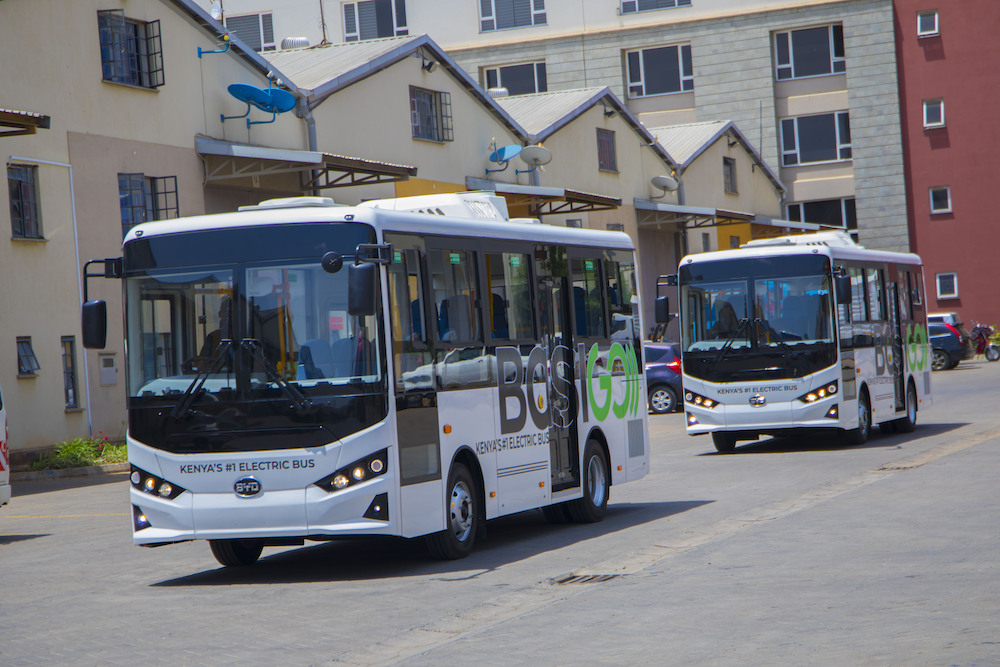
For a while, the logic held inside Nairobi. Dense routes. Predictable passenger flows. Charging points within reach. An electric bus could circulate, return, plug in, and go again without much drama.
That containment is ending.
BasiGo is pushing toward inter-city operations, with attention settling on corridors that already carry the country’s heaviest passenger volumes. The likely routes are not obscure. Nairobi to Mombasa along the coast. Nairobi to Kisumu across the western belt. Nairobi to Nakuru through the Rift Valley. These are the lines where demand is established, where operators already run full loads, and where any efficiency gain translates quickly into revenue.
The move is not framed as a formal route rollout. It sits in early-stage planning tied to charging coverage. But the geography is predictable. Electric buses will follow the same corridors that diesel fleets have worked for decades.
What looks like expansion is closer to a stress test. Once buses leave Nairobi, the system loses its safety net. Charging stops are sparse. Road conditions vary. Turnaround times stretch. The model has to survive outside a controlled environment.
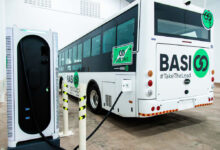
Charging points move from depots to forecourts
The company is in talks with fuel retailers to install charging stations along these corridors. That places infrastructure at familiar stopping points, where drivers already refuel, rest, and manage schedules.

On a route like Nairobi to Mombasa, distance stretches past 480 km. A single charge cycle does not comfortably cover that journey under real conditions. Buses will need mid-route charging, likely in towns that already act as logistical pauses. The same applies on the Nairobi to Kisumu axis, where terrain and road quality vary enough to affect battery performance.
This is where the plan tightens. Charging cannot be an afterthought. It has to be placed with precision, matching route economics and travel patterns. Too few stations, and buses stall. Too many, and capital sits idle.
At present, BasiGo operates 11 charging stations, 10 of them within the Nairobi metropolitan area. Extending into inter-city service requires building out a corridor network, not just adding isolated points.
Demand is already mapped onto these routes
There are 134 buses already in operation, carrying about 20,000 passengers daily. Nearly 500 additional units are on order, backed by deposits. That demand is not abstract. It comes from operators who already run inter-city services and understand where passengers are.
Routes like Nairobi to Nakuru are short enough to test range limits without full infrastructure build-out. Nairobi to Mombasa presents a different case, longer distance, heavier logistics, higher stakes. Nairobi to Kisumu sits somewhere in between, shaped by terrain and regional traffic flows.
These corridors are not chosen at random. They are where fleet utilization is highest, where turnaround time matters, and where fuel costs have always defined margins. Electric buses enter that equation with a different cost structure. Lower running costs over time, but higher dependence on infrastructure.
Production has scaled to 20 buses per month. It is still behind demand. Orders accumulate faster than assembly lines can respond.
Kenya’s EV growth meets the reality of distance
Electric vehicle registrations in Kenya reached 35,000 in 2025, up from 796 in 2022. Most of that growth sits in two-wheelers, where range anxiety is less pronounced and charging can be improvised.
Inter-city buses do not have that flexibility.
Government targets aim for 5% of new vehicle registrations to be electric by 2027. There is also a plan to invest KES 6.12 billion in 10,000 charging stations by 2030. The numbers point in one direction. The timeline raises questions.
A corridor like Nairobi to Mombasa cannot rely on a future network. It needs working infrastructure now, placed at intervals that match real-world performance, not ideal conditions.
Roads complicate the equation
Electric buses react to terrain and road quality in ways that are not always visible at first glance. A rough section of highway does more than slow a vehicle. It affects energy consumption, increases wear, and alters scheduling.
On the Nairobi to Kisumu route, elevation changes and road conditions can vary enough to influence range calculations. On the Nairobi to Mombasa highway, heat and distance introduce their own constraints.
Operators already price these variables into diesel operations. Electric fleets bring them into sharper focus. Efficiency gains depend on consistency. The less predictable the road, the harder it is to maintain that efficiency.
| Variable | Diesel Impact | Electric Impact |
| Terrain | Higher fuel consumption on climbs. | Significant energy drain on climbs; energy recovery on descents. |
| Heat | Negligible on engine performance. | High ambient temperatures (Mombasa road) require active battery cooling. |
| Turnaround | 10–15 mins to refuel. | 1.5–2 hours for a DC fast charge (160kW). |
| Road Quality | Mechanical wear and tear. | Vibrations can affect high-voltage cabling and battery housing. |
Expansion stretches the business model itself
Within Nairobi, BasiGo has begun testing scheduled commuter services with app-based booking. Outside the city, the structure loosens. Inter-city transport follows its own rhythm, shaped by demand peaks, passenger preferences, and informal adjustments along the route.
The company is also exploring electric light trucks for last-mile delivery. That segment fits more neatly into existing infrastructure. Shorter distances. Centralized charging. Predictable cycles.
Inter-city buses are less forgiving. They demand coordination across regions, alignment with multiple operators, and infrastructure that functions without interruption.
Financing sits at the center of the puzzle
BasiGo raised $42.5 million in Series A equity and debt financing. It sounds substantial. It also disappears quickly in a capital-heavy sector.
Each bus represents a significant upfront investment. Charging stations add another layer of cost. Revenue accrues over years, not months. Meanwhile, expansion requires continuous spending.
The gap between capital inflow and deployment creates friction. Orders pile up. Production scales in increments. Infrastructure lags behind demand.
There is a broader pattern here. Electric mobility in emerging markets often relies on blended financing structures, combining equity, debt, and development capital. It works, but it moves at a pace set by financiers as much as by operators.
Regional competition is taking shape
Other countries are moving with their own incentives. Ethiopia has banned the import of internal combustion engine vehicles and allows duty-free EV imports through 2026. South Africa has introduced a 150% tax deduction on qualifying EV investments, with a target of 20% EV share in vehicle sales by 2030.
These approaches differ in method but converge in intent. Each government wants to anchor production and capture value locally.
Kenya’s position sits somewhere in between. It has demand, early movers, and policy support, but its manufacturing base remains limited. Whether it becomes a regional hub depends on how quickly financing, infrastructure, and production capacity align.
Expansion exposes what early success can hide
Even without formal route announcements, the outline is clear. Electric buses will move first along the corridors that define Kenya’s transport economy. Nairobi to Mombasa. Nairobi to Kisumu. Nairobi to Nakuru.
These are not speculative choices. They are the backbone of passenger movement, where any change in cost structure or reliability is felt immediately.
The expansion does not hinge on whether demand exists. It hinges on whether infrastructure can keep pace with it, and whether financing can sustain the build-out long enough for the model to settle.
Outside Nairobi, the margins narrow. The system either holds, or it exposes its limits in real time.
Go to TECHTRENDSKE.co.ke for more tech and business news from the African continent and across the world.
Follow us on WhatsApp, Telegram, Twitter, and Facebook, or subscribe to our weekly newsletter to ensure you don’t miss out on any future updates. Send tips to editorial@techtrendsmedia.co.ke


