
Bolt Emerges as a Central Driver of EV Adoption in Kenya’s Motorbike Economy
The shift to electric motorbikes is being worked out in traffic and in payment schedules, not in policy rooms, and the margin for error is thin

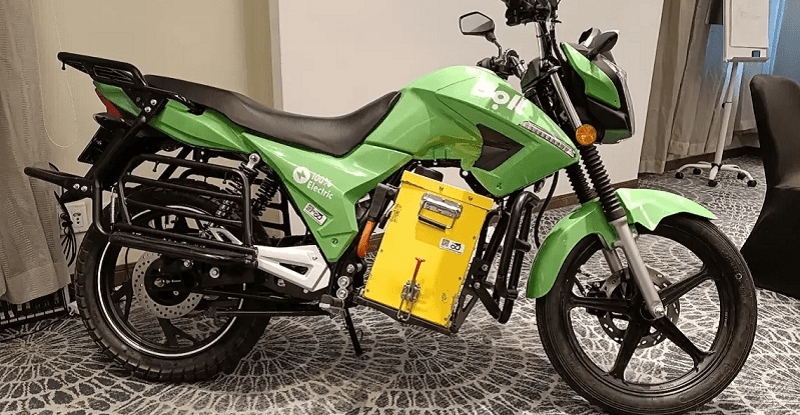
Spend a few minutes at a busy junction in Nairobi and it does not take long for the motorcycle economy to reveal itself. There are riders waiting by the gates of apartments. There are delivery riders waiting by food take-away counters. There are revving engines waiting at lights as matatus inch forward with that familiar Kenyan impatience.
But there is something else in that mix that sounds a little different.
Amongst the revving petrol engines, there is a quieter mechanical whirring. There are electric motorcycles moving around the streets alongside them, often barely distinguishable from a casual glance except for the absence of engine noise and the slightly different riding style of a driver still getting used to instant torque.
This did not come about by national announcement or fanfare. It came about by the economics of a changing ride-hailing market.


At the heart of this is a platform operated by Bolt. By early 2026, electric motorcycles comprise more than 40% of the company’s motorbike riders in Kenya. In total, the platform manages around 24% of the country’s entire EV fleet.
Numbers like those tell one story. The more interesting one sits underneath. Electric vehicles are taking hold inside one of Africa’s most informal transport systems, driven less by environmental messaging and more by the practical arithmetic of a working day.

Bolt’s electric motorbike strategy in Kenya therefore reads less like a sustainability campaign and more like a logistical reconfiguration of urban mobility.
Financing the Transition When Drivers Cannot Wait for Banks
The largest barrier to EV adoption in Kenya was not skepticism or lack of interest. It was the purchase price. Electric motorbikes cost far more upfront than the petrol bikes that dominate the boda boda trade.
Traditional lenders rarely accommodate drivers whose income fluctuates daily. Many riders operate without formal employment records. Conventional loan approvals move slowly, and collateral requirements exclude much of the informal workforce.
The workaround appeared through partnerships with fintech lenders.
One of the most influential collaborations involves M-KOPA, which built its business around pay-as-you-go solar systems before extending the same model to electric vehicles. Under the arrangement, riders begin with an upfront payment between KSh 10,000 and KSh 15,000. The remaining cost converts into small daily payments settled through mobile money.
Ownership arrives gradually rather than through a single large purchase.
By early 2026 more than 1,700 riders had joined Bolt’s electric fleet through this financing channel. The system works because it mirrors the rhythm of the rider’s income. Earnings arrive trip by trip, and payments follow the same cadence.
Once the bikes begin operating, the financial logic becomes difficult to ignore. Fuel disappears from the daily expense list. Engine servicing largely vanishes. Riders report operating costs dropping by roughly 75% once petrol and routine maintenance are removed from the equation.
In practical terms the electric motorcycle moves from an environmental idea to a tool for protecting thin daily margins.
Word spreads quickly in rider circles. One driver brings an electric bike to a stage. Another asks about charging costs. Someone calculates how many trips are needed to cover the daily payment. Before long a small cluster of riders begins considering the same move.
Adoption in this environment behaves less like a consumer trend and more like a collective calculation.
Battery Swapping Turns Downtime Into a Manageable Problem
Global conversations about electric vehicles tend to revolve around charging infrastructure and range anxiety. The calculation for a Kenyan motorcycle rider looks slightly different.
The central concern is time.
A boda boda driver earns money only while the bike is moving. Waiting beside a charger for several hours is not viable. Battery swapping has therefore emerged as the operational backbone of the electric fleet.
Manufacturers such as Roam and Ampersand have built networks of swap stations integrated into ride-hailing routes. Riders arrive with a depleted battery and exchange it for a fully charged unit. The process usually takes less than 2 minutes.
That time frame matters more than the technical details. A rider who can replace a battery almost as quickly as refueling with petrol loses little productive time.
Behind the scenes the swap model requires a different form of infrastructure planning. Each station must maintain a constant rotation of batteries at different stages of charging. Logistics teams track demand patterns across neighborhoods so that stations rarely run out of charged units during peak hours.
Energy demand shifts toward off-peak charging cycles where possible. Batteries replenish at night when electricity demand across the grid falls.
This system converts electricity into a managed inventory rather than a single charging event.
| Feature | Impact on Rider |
| Swap Time | Under 2 minutes (comparable to refueling) |
| Network | Led by partners like Roam and Ampersand |
| Open Access | Ampersand’s swap network is now open to third-party manufacturers, preventing infrastructure duplication |
Policy developments are beginning to support the expansion. Kenya’s National E-Mobility Policy requires 5% of parking capacity in new commercial developments to include charging infrastructure. Buildings in districts such as Westlands and Upper Hill have started integrating those requirements into design plans.
These adjustments seem small at first glance. Over time they place electric vehicles directly into the architecture of new urban spaces.
The Invisible Layer: Data That Keeps Electric Fleets Moving
Electric vehicles introduce new operational questions for ride-hailing platforms. Battery health, charging cycles, and route efficiency all affect how long a bike stays productive during the day.
This is where software begins to matter.
Bolt’s fleet systems analyze trip data to estimate how quickly batteries drain across different routes and traffic conditions. Patterns appear quickly. Dense central districts consume energy faster because riders spend long periods in stop-and-go traffic. Suburban commuter routes often allow smoother travel and slower battery depletion.
Algorithms adapt dispatch patterns accordingly. Riders with lower battery levels may receive shorter trips or routes closer to swap stations. Drivers with fully charged batteries tend to receive longer assignments.
The system also tracks charging behavior across the network. If a particular swap station begins experiencing higher demand during evening hours, the platform can redirect riders toward nearby alternatives before queues appear.
Battery performance monitoring forms another layer. Each swap event generates data on energy levels and charging cycles. Abnormal patterns may indicate declining battery health long before a rider notices performance problems.
These adjustments happen quietly within the software architecture of the platform. Yet they influence how the electric fleet functions day to day.
Electric motorcycles operate differently from petrol bikes. Data becomes part of the maintenance toolkit.
Expansion Beyond the Capital’s Inner Core
Nairobi remains the center of Kenya’s ride-hailing economy, though electric adoption is beginning to stretch outward along the city’s commuter belt.
Towns such as Juja, Thika, and Kiambu have seen rapid residential growth in recent years. Thousands of commuters travel daily between these areas and Nairobi’s business districts.
Motorcycle transport fills the gaps between bus routes, apartment blocks, and industrial parks. The travel patterns often involve short repeated journeys rather than long cross-city trips, making them well suited to electric bikes.
Bolt has begun establishing driver engagement centers in these areas. The facilities provide training on electric bike maintenance, battery management, and platform safety systems. Some riders arrive expecting routine administrative support and leave having learned how to interpret battery diagnostics on a dashboard display.
That education component plays a larger role than expected. Electric motorcycles eliminate many familiar mechanical repairs yet introduce electronics that traditional mechanics rarely encounter.
Drivers who understand those systems keep their bikes on the road longer.
Safety Systems Become Part of Fleet Management
Electric motorcycles carry higher asset value than their petrol counterparts, and ride-hailing companies have responded with expanded safety systems.
Drivers on the Bolt platform can now flag locations they consider risky directly within the app. Reports feed into a database where analysts review trip histories and incident patterns.
The system grows more detailed when paired with dashboard cameras supplied through partnerships with Driver Technologies. Riders can access discounted cameras that document each trip from the driver’s perspective.
Passenger verification has also tightened. Some journeys require riders to complete selfie authentication before a trip begins.
Drivers tend to view these systems with mixed feelings. Cameras and verification procedures can reduce disputes over fares or misconduct. At the same time they introduce a form of oversight that was largely absent in the early days of ride-hailing.
Platforms frame the technology as protection. Drivers sometimes see a different dynamic emerging. The gig economy begins to resemble a monitored fleet operation.
Both interpretations coexist.
An Environmental Advantage That Arrived Almost by Accident
Kenya’s electricity generation mix relies heavily on geothermal and hydroelectric sources. Electric vehicles therefore draw power from a relatively low-carbon grid compared with many countries where coal still dominates electricity production.
That fact changes the environmental calculation.
When an electric motorcycle replaces a petrol bike in Nairobi, the emissions reduction is often greater than observers initially assume. The environmental gain comes not only from removing petrol combustion but also from the cleaner energy feeding the charging network.
This alignment was not engineered specifically for electric transport. Kenya’s geothermal investments began decades earlier. The mobility sector now inherits that energy landscape.
The outcome places the country in an unusual position. Electric motorcycles operate inside a transport ecosystem where the electricity supply already leans toward renewable sources.
A Model Built on Daily Economics
The rapid spread of electric motorcycles within ride-hailing fleets highlights an unusual path for EV adoption.
Private car buyers in many markets weigh environmental motivations alongside fuel savings. Boda boda riders focus on a different calculation. They ask how much money remains at the end of the day.
Electric motorcycles answer that question directly.
Lower operating costs accumulate across dozens of daily trips. Maintenance interruptions decline. Riders who once budgeted for fuel fluctuations discover that electricity prices remain relatively stable.
The technology becomes attractive not because it represents the future of transport but because it stabilizes a fragile livelihood.
Bolt’s electric motorbike strategy in Kenya sits squarely inside that reality. Financing models mirror the daily rhythm of rider income. Battery swapping preserves productive hours. Data systems help ensure bikes remain operational across long working days.
The structure resembles a logistical network rather than a marketing initiative.
Where the Experiment Could Lead
The growth of electric motorcycle fleets in Kenya is drawing attention from mobility companies across Africa. Observers want to know whether the model can travel.
Several ingredients may prove difficult to replicate elsewhere. Kenya’s mobile money ecosystem, anchored by M-Pesa, allows thousands of riders to make small digital payments daily without friction. Other markets lack that financial infrastructure.
Rider density also matters. Nairobi’s boda boda network already moves millions of passengers and deliveries each week. Electric bikes integrate into an existing workforce accustomed to ride-hailing platforms.
Still, the core lesson resonates beyond Kenya. Electric vehicles spread fastest when they solve a concrete operational problem. In this case the problem involves the economics of informal urban transport.
Technology followed that pressure.
The outcome is visible across Nairobi’s roads today. The city still hums with motorcycle traffic. Yet the sound carries a different tone than it did a few years ago.
Electric motors have begun blending into the rhythm of everyday movement. Not as a novelty. As part of the system.
Go to TECHTRENDSKE.co.ke for more tech and business news from the African continent and across the world.
Follow us on WhatsApp, Telegram, Twitter, and Facebook, or subscribe to our weekly newsletter to ensure you don’t miss out on any future updates. Send tips to editorial@techtrendsmedia.co.ke


