
Safaricom and Indosat Build a Telecom Alliance Around AI and Mobile Money Payments
Two telecom operators from very different markets begin trading notes on artificial intelligence, digital payments, and the stubborn operational questions that come with running networks at national scale.

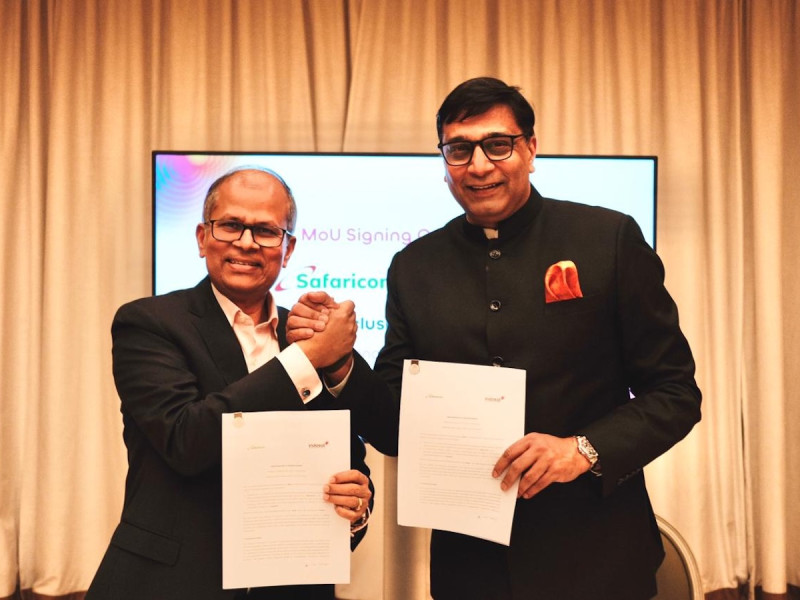
The Safaricom–Indosat partnership brings together two operators that arrived at the digital economy from different directions.

Indosat Ooredoo Hutchison (IOH) operates one of Indonesia’s largest mobile networks, with a customer base of 98.5 million as of early 2026. Its recent strategy has revolved around “AI-native” transformation—specifically an aggressive rollout that saw its 5G stations grow 60-fold to over 6,800 active sites by the start of this year.
Safaricom, by contrast, built its reputation on transforming a telecom operator into a financial infrastructure platform. As of March 2026, M-Pesa has reached a historic milestone of 40 million monthly active users in Kenya alone. This achievement, announced during M-Pesa’s 19th anniversary, solidifies Safaricom’s position as the continent’s fintech leader, particularly with its “Fintech 2.0” push into wealth management via the award-winning Ziidi platform.
Now, the two companies want to exchange playbooks. Safaricom seeks to institutionalize Indosat’s AI-driven operational efficiency, while Indosat aims to replicate the deep economic integration of the M-Pesa model.

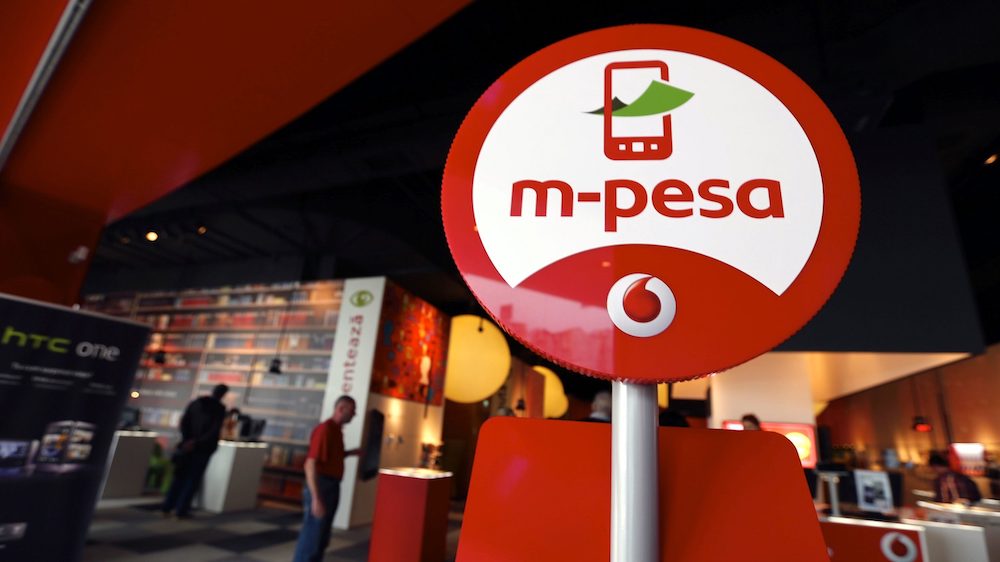
Their agreement covers artificial intelligence deployment, mobile financial services, and network investment planning. On paper it reads like a conventional technology cooperation deal between telecom groups. Yet the subtext is more revealing. Each operator carries a capability the other wants to learn how to institutionalise.
For Indosat, the attraction is obvious. M-Pesa became one of the most successful mobile money systems anywhere, reaching tens of millions of users in Kenya and beyond. For Safaricom, the appeal lies in the growing operational role of AI inside large telecom networks, where automated diagnostics, predictive modelling, and customer analytics are starting to change how operators manage infrastructure.
The arrangement therefore looks less like a vendor contract and more like a peer exchange between two companies that solved different problems first.
Comparative Scale: Safaricom vs. Indosat (March 2026)
| Metric | Safaricom (Kenya + Ethiopia) | Indosat Ooredoo Hutchison |
| Mobile Money Active Users | 40 Million (Kenya Milestone) | N/A (Highly fragmented market) |
| Total Customer Base | ~60 Million | ~98.5 Million |
| 5G Infrastructure | Rapid 5G microwave expansion | 6,800+ active 5G sites |
| Recent Recognition | 2026 GLOMO Award (Ziidi Platform) | 2026 Asian Telecom Award (B2B/Enterprise) |
| Network Footprint | ~6,000 sites (Target for Ethiopia) | 278,000+ total base stations |
The Quiet Convergence of Telecom and Financial Infrastructure
Mobile operators once defined themselves through coverage maps and subscriber counts. That description no longer fits the largest players in emerging markets.
Safaricom built a financial system inside a telecom network. M-Pesa now processes a large share of Kenya’s daily digital payments. The product began as a simple peer-to-peer transfer system and grew into a platform supporting merchants, credit, savings, and government payments.
“From smarter networks and safer transactions to more intuitive digital experiences, this collaboration goes beyond innovation … it is about shaping inclusive digital economies where individuals, businesses, and communities can thrive,” said Safaricom CEO Peter Ndegwa.
For many telecom executives elsewhere, the M-Pesa model remains a case study in how infrastructure businesses can move deeper into economic life.
Indonesia presents a different landscape. The country has several digital wallets and banking apps competing for users. Telecom operators there rarely dominate mobile finance the way Safaricom does in Kenya. Indosat’s interest in Safaricom’s operational experience reflects that structural difference.
Mobile money systems are not built only on software. They depend on fraud monitoring, liquidity management across agents, and the ability to keep payment systems working during periods of heavy traffic. These are operational questions that telecom engineers and financial regulators rarely approach from the same perspective.
Safaricom spent more than a decade solving those problems in real time.
Indosat appears interested in understanding how that machinery actually works.
Artificial Intelligence Moves Inside the Network Core
The Safaricom Indosat partnership also speaks to another change happening across the telecom sector. Artificial intelligence has begun to migrate from consumer applications into the infrastructure layer of mobile networks.
Operators already collect enormous volumes of network telemetry. Every dropped call, congested cell site, and device connection generates data. Until recently most of that information was used for retrospective analysis. Engineers examined patterns after faults occurred.
AI systems alter the workflow.
Predictive maintenance models attempt to identify equipment failure before customers notice a problem. Network optimisation software analyses traffic flows and recommends capacity adjustments. Customer service platforms draw on behavioural data to anticipate support requests.
These tools are not futuristic experiments anymore. They are becoming operational systems embedded in network management.
Indosat has invested heavily in these capabilities as it modernises its infrastructure following the 2022 merger between Indosat Ooredoo and Hutchison 3 Indonesia. Artificial intelligence now plays a role in network diagnostics, planning models, and customer engagement systems.
Safaricom is moving in that direction as well, although its technological reputation historically rested on financial services rather than automation inside the network core.
The collaboration suggests both companies see value in exchanging operational knowledge rather than developing every system independently.
“By combining Indosat’s AI-Native ambitions with Safaricom’s proven fintech and ecosystem expertise, we are focused on delivering innovations that customers can genuinely feel from smarter networks and safer digital transactions to more personal and intuitive experiences,” said Indosat president director and CEO Vikram Sinha.
Customer Data Becomes a Strategic Asset
The agreement includes the development of AI-driven customer engagement tools. Telecom operators have long attempted to personalise services using usage data, but the scale of available information has grown dramatically.
Prepaid markets such as Kenya and Indonesia generate complex behavioural data. Customers purchase small bundles, move between tariffs, and switch usage patterns depending on price and income cycles.
Traditional segmentation models struggle to capture this fluidity. Artificial intelligence systems promise more dynamic approaches, identifying patterns in consumption that are invisible to conventional analytics.
Operators hope such insights will improve product recommendations and customer support interactions.
The ambition raises an obvious question. Telecom companies already possess vast datasets about their subscribers. AI simply makes it easier to extract behavioural patterns from those records.
That power invites scrutiny.
Regulators across many jurisdictions have begun paying closer attention to how telecom operators handle data collected through mobile services. Financial information adds another layer of sensitivity when mobile money platforms are involved.
The Safaricom Indosat partnership therefore unfolds in an environment where data governance is becoming an increasingly contested field.
Network Investment Under Pressure
Another element of the partnership focuses on using AI to guide capital expenditure (CapEx) decisions. Mobile networks are expensive systems to maintain; for IOH, this meant managing a footprint of over 278,000 base stations across the Indonesian archipelago.
Artificial intelligence promises a more surgical approach to these investment decisions. By analyzing population density and real-time traffic flows, Safaricom and Indosat are moving toward “self-healing” and predictive planning models.
The stakes are particularly high for Safaricom as it expands. In Kenya, 5G subscriptions surged to nearly 1.5 million by early 2026, while in Ethiopia, the operator is racing to double its network to 6,000 sites by the end of this year. By sharing AI-driven analytics, both operators hope to deploy capital where network improvements—like Safaricom’s recent microwave link expansion with Ericsson—will generate the most sustainable returns in rapidly evolving emerging markets.
The Workforce Question
Artificial intelligence rarely enters an organisation without reshaping internal roles.
The agreement between Safaricom and Indosat includes training programmes for executives and technical staff. The companies also plan short-term exchanges intended to expose employees to different operational environments.
Telecom companies face a growing skills challenge. AI systems require data engineers, machine learning specialists, and product teams capable of translating technical models into operational decisions.
Many operators still rely on organisational structures designed around traditional network engineering.
That mismatch is beginning to show.
Building an AI-enabled telecom network is not just a matter of installing new software. It involves integrating analytics into management processes, customer support systems, and investment planning frameworks.
The exchange programmes proposed under the partnership may look modest on paper, yet they reflect a broader industry concern. Telecom companies are trying to retrain themselves.
A Cross-Regional Experiment in Telecom Collaboration
Partnerships between telecom operators across continents are not new. They often involve roaming agreements or infrastructure sharing arrangements.
The Safaricom Indosat partnership is different in character.
Instead of linking networks, it attempts to connect operational knowledge between two companies facing similar pressures in different markets. One operates in East Africa, the other in Southeast Asia. Both regions contain large prepaid user bases, expanding digital economies, and governments pushing for wider financial inclusion.
The companies are effectively comparing notes.
Safaricom wants to deepen its technical capabilities in AI-driven network operations. Indosat wants to understand how mobile money can become an integral part of a telecom ecosystem rather than a separate digital wallet product.
Whether those ambitions translate into tangible products remains uncertain. Technology partnerships often produce more learning than deployment.
Still, the attempt itself reflects something broader within the telecom industry.
Operators are searching for new ways to extract value from the networks they spent decades building. Artificial intelligence, mobile financial services, and data-driven infrastructure planning have become the tools most frequently invoked in that search.
The Safaricom Indosat partnership places those ideas inside a practical collaboration. Two operators, two markets, and a set of shared questions about how telecom networks evolve in the next decade.
Go to TECHTRENDSKE.co.ke for more tech and business news from the African continent and across the world.
Follow us on WhatsApp, Telegram, Twitter, and Facebook, or subscribe to our weekly newsletter to ensure you don’t miss out on any future updates. Send tips to editorial@techtrendsmedia.co.ke


