

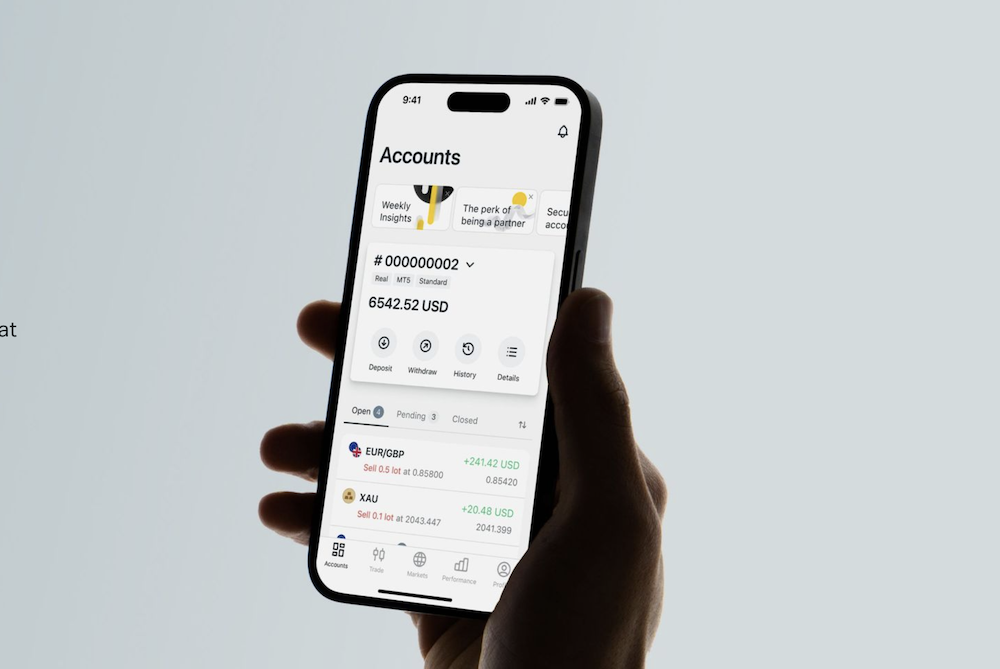
Across Africa’s major economic hubs, the traditional multi-monitor trading desk has been quietly replaced by a six-inch screen. As the first quarter of 2026 closes, industry metrics reflect a stark reality: desktop trading among African retail forex investors has plummeted, while mobile execution now captures the overwhelming majority of retail market volume.
This shift is not merely a change in consumer hardware; it is a fundamental restructuring of financial access. Driven by expanding 5G networks in urban centers, seamless interoperability with local mobile money rails, and a demographic urgently seeking alternative income streams, the smartphone has officially become the undisputed engine of African retail trading.
Data from early 2026 indicates that retail trading demand across Africa has surged past previous pandemic-era peaks, with the continent’s retail forex market projected to see a massive 30 percent year-over-year growth. From Accra to Cape Town, a generation of digital natives is leading the charge. For these investors, mobile-first behavior is no longer just a matter of convenience; it has become the definitive baseline. Industry analysts note that 2026 marks the tipping point where mobile trading stops being a secondary alternative and officially becomes the dominant mode of market participation in Africa.
The Technology Erasing the Desktop
The driving force behind this transition is a dramatic leap in mobile application capabilities coupled with the continent’s rapidly expanding mobile broadband infrastructure. Just a few years ago, mobile trading apps were viewed as companion tools, useful for checking a price or closing an emergency position while away from the desk, but severely lacking in deep analytical power. That compromise has entirely vanished. Today’s iterations of platforms like MetaTrader 5, TradingView, and proprietary broker applications offer institutional-grade charting, custom technical indicators, and seamless execution directly on iOS and Android devices.

Furthermore, the integration of investment infrastructure with everyday digital life has never been tighter. The seamless connection between trading platforms and pan-African payment gateways like Flutterwave and Paystack, alongside ubiquitous mobile money networks like MTN MoMo, Airtel Money, and Safaricom’s M-PESA, has bridged the final gap. When a trader in Ghana or Uganda can fund an account via a mobile wallet, execute a trade based on a real-time push notification, and withdraw the profits back to their phone in a matter of seconds, being tethered to a physical workstation completely loses its appeal. Absolute flexibility has become the ultimate trading asset.
An Economic Reality
The surge in mobile trading is deeply tied to the continent’s demographic and economic realities. Africa boasts the youngest population globally, yet formal employment sectors consistently struggle to absorb the millions of new job seekers entering the market annually. In this environment, digital income streams are a major draw. Mobile forex trading offers a highly appealing low barrier to entry, requiring little more than a smartphone, an affordable data bundle, and micro-deposits. It allows entrepreneurs to manage positions while running their physical businesses, and university students to analyze markets between lectures.

“Mobile trading in Africa is no longer an emerging trend, it is the new standard. The convergence of high-speed connectivity, advanced mobile trading platforms, and seamless integration with local payment ecosystems has fundamentally lowered the barrier to market participation”, says Terence Hove, Senior Financial Markets Strategist at Exness. “What we are witnessing is a structural transformation where access, speed, and flexibility define competitiveness. As retail engagement continues to expand, brokers must prioritize mobile-first infrastructure, localized funding solutions, and intuitive user experience to remain relevant in 2026 and beyond.”
Redefining Market Participation
As 2026 unfolds, the pan-African trading ecosystem is noticeably maturing. The industry focus is shifting from simply providing raw market access to ensuring that traders have the educational resources and secure environments needed to survive in a market that now processes nearly ten trillion dollars globally each day. The push to professionalize the retail sector is evident, with local expos and broker-led seminars from Nairobi to Dar es Salaam emphasizing that forex is a skill-based endeavor, not a game of chance.
What is undeniably clear is that the barrier between the everyday African and the global currency market has been permanently removed. Mobile technology has democratized access at an unprecedented scale, turning the smartphone from a basic communication device into a fully fledged financial terminal.
Go to TECHTRENDSKE.co.ke for more tech and business news from the African continent and across the world.
Follow us on WhatsApp, Telegram, Twitter, and Facebook, or subscribe to our weekly newsletter to ensure you don’t miss out on any future updates. Send tips to editorial@techtrendsmedia.co.ke


