
Airtel Uganda’s Dividend Rise Comes as Data Finally Overtakes Voice and the 95 Percent Payout Holds
Investors see rising payouts, regulators see local ownership, and somewhere in between the infrastructure bill keeps growing

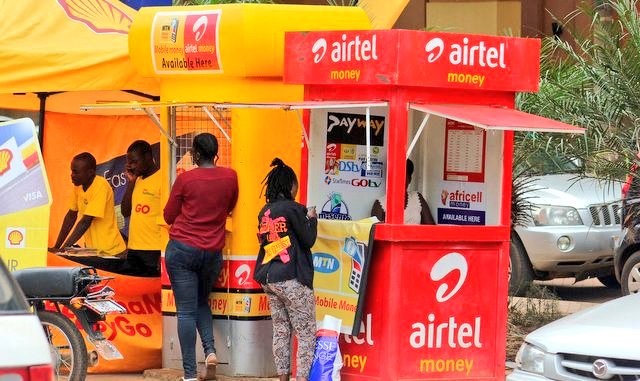
The Airtel Uganda dividend rise is not a marginal adjustment. The company has lifted its total payout to Sh0.41 per share, up 41.5% from Sh0.28 a year earlier. In Uganda shilling terms, that amounts to USh11.15 per share for the year ended December 2025. Net profit climbed 41% to Sh16 billion, or USh466.86 billion. Revenue rose 13.3% to Sh80.75 billion, equivalent to USh2.25 trillion.

The arithmetic lines up neatly. Profit up by roughly 41%. Dividend up by roughly 41%. The company maintains a policy of distributing a minimum of 95% of net profit, paid quarterly. For 2025, the board recommended a final dividend of USh142 billion, or Sh5.09 billion, bringing the total distribution to USh446 billion, or Sh16 billion.
That ratio tells its own story. A 95% payout leaves little retained earnings for aggressive capital expenditure beyond what operating cash flow already supports. Telecom is a capital-heavy business. Spectrum fees, tower expansion, fibre backhaul, energy costs in off-grid sites, and now satellite integrations do not come cheap. Choosing to return almost all earnings to shareholders is not a neutral stance. It embeds a certain model of growth: steady, yield-driven, disciplined.
In markets where inflation, currency pressure, and political cycles can unsettle valuations, high cash returns carry weight. The dividend becomes a stabiliser. It also becomes a constraint.


Data overtakes voice, and the revenue base tilts
The topline increase of 13.3% masks a more consequential internal development. Data revenue grew 22.4% year-on-year to Sh36.2 billion, or USh1.01 trillion, overtaking voice as the largest revenue stream.
That crossing point has been coming for years across East Africa. Voice remains foundational, but its elasticity is limited. Tariffs are visible, competition is tight, and regulators monitor pricing. Data, by contrast, feeds on behavioural change. Streaming, short-form video, social commerce, fintech interfaces, remote work, digital government portals. Once usage patterns settle in, they rarely reverse.

Airtel Uganda’s numbers show that the future revenue engine is already installed. Yet data margins are not identical to legacy voice margins. Network load rises, spectrum efficiency becomes critical, and customer expectations escalate. When a user pays for data, they expect speed and uptime. Churn follows quickly if performance slips.
This is where the 95% payout policy intersects with network investment. To keep data growth compounding at 22.4% or above, the company must sustain infrastructure upgrades. 4G densification, possible 5G expansion, fibre extension. That capital must come from somewhere. Either operating cash flow remains strong enough to cover both dividends and investment, or leverage creeps upward. There is no third path.
Cross-border investors and the hunt for yield
Airtel Uganda is listed on the Uganda Securities Exchange. Kenyan investors are among its shareholders. The pattern is not isolated. Recent years have seen increased cross-border participation in Ugandan counters, especially those with predictable dividend flows.
The Uganda Communications Commission required foreign-owned telecoms to float at least 20% of their shares to locals and East Africans. The listings of Airtel Uganda in November 2023 and MTN Uganda in 2021 followed that directive. Local ownership was not framed as a symbolic gesture. It was a structural intervention in capital markets.
Since then, the attraction has been straightforward. Telecom revenues are recurring. Mobile money ecosystems deepen customer stickiness. Cash distributions can be modelled with some confidence. In an environment where government securities compete aggressively for funds, equities must offer either growth or income. Airtel Uganda is clearly leaning into income.
The question is whether the income story remains compelling if growth moderates. A 41% jump in net profit is strong. Replicating that annually is another matter. Telecom penetration in urban Uganda is already high. Rural expansion carries cost. Data growth will continue, but at what marginal return?
Regulation as architecture, not backdrop
The 20% local shareholding rule imposed by the Uganda Communications Commission was not cosmetic. It altered capital structure. It required foreign parents to dilute and allowed regional investors entry into a sector once tightly held.
This regulatory architecture shapes corporate behaviour long after listing day. A widely held company with a retail shareholder base faces pressure to demonstrate tangible returns. A 95% payout policy speaks to that constituency.
At the same time, regulators maintain oversight on tariffs, quality of service, and financial transparency. Telecom is infrastructure. It sits at the intersection of commerce, politics, and national security. High dividend distributions can draw scrutiny if network quality falters or if capital expenditure appears constrained.
There is also the matter of currency. Earnings are generated in Uganda shillings. Many investors, particularly institutional ones, benchmark returns in harder currencies. If the Uganda shilling depreciates, dividend growth in local terms may not translate cleanly into real returns. The payout policy cannot hedge that risk.
The regional telecom template under strain
Across East Africa, telecom operators have followed similar arcs. Public listing under regulatory pressure. Expansion of mobile money platforms. Data overtaking voice. Increasing scrutiny over pricing and service standards.
Airtel Uganda became the fourth publicly listed telco in the region, joining MTN Uganda, Safaricom on the Nairobi Securities Exchange since 2008, and Vodacom Tanzania on the Dar es Salaam Stock Exchange since 2017. Each operates in a distinct regulatory and competitive landscape, yet the structural pressures converge.
Investors have begun to treat telecom stocks as income plays rather than high-growth tech proxies. That reframing has consequences. Management teams calibrate capital allocation accordingly. Expansion becomes measured. Risk appetite narrows.
There is a tension here. Telecom networks underpin digital economies. Governments push digital tax systems, e-health platforms, online education. Data demand rises as policy drives digitisation. Yet if operators prioritise distributing 95% of net profit, the capacity to front-load investment into next-generation infrastructure tightens.
The balance can hold for now because cash flows are solid. Revenue at Sh80.75 billion and profit at Sh16 billion provide headroom. But telecom cycles are not static. Spectrum auctions, new entrants, or policy changes can alter cost structures rapidly.
A dividend story with a longer shadow
The Airtel Uganda dividend rise lands well with shareholders. It reinforces the company’s identity as a reliable income counter on the Uganda Securities Exchange. It also reflects a business that has successfully pivoted toward data-driven revenue.
Still, a payout ratio of 95% is a strong commitment. It presumes that earnings will remain resilient and that capital requirements can be met without eroding financial flexibility. If data growth slows from 22.4% to a lower trajectory, or if competitive pricing intensifies, the buffer narrows.
Telecom in East Africa has matured. The era of explosive subscriber acquisition is largely over. What remains is optimisation, monetisation of data, and deeper integration into daily economic life. Dividends are part of that maturity. They reward patience.
Whether they also limit ambition will become clearer in the next investment cycle.
Go to TECHTRENDSKE.co.ke for more tech and business news from the African continent and across the world.
Follow us on WhatsApp, Telegram, Twitter, and Facebook, or subscribe to our weekly newsletter to ensure you don’t miss out on any future updates. Send tips to editorial@techtrendsmedia.co.ke


