
As Uganda Scales Up Electric Cooking, Kenya Tightens Control Over the Carbon Credits That Funded Its Stove Boom
Uganda is trying to turn surplus megawatts into dinner on the table while Kenya wrestles with the aftertaste of a carbon boom

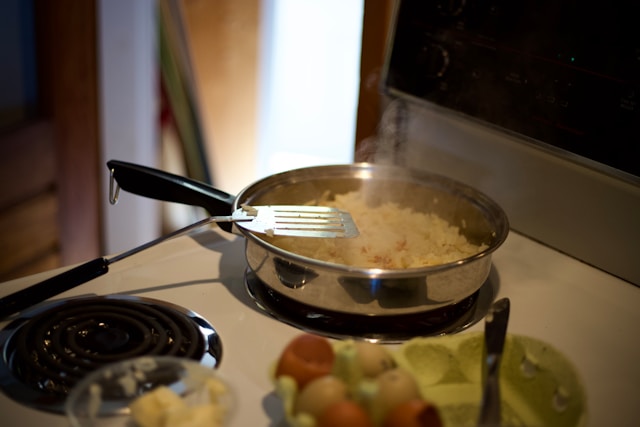
Uganda’s electric cooking conversation starts with a number that rarely makes headlines. Adoption is estimated at 2%. The government wants that figure between 18% and 20% by 2030. That is not incremental growth. It is a structural reorientation of how households prepare meals.

Behind the ambition sits infrastructure that already exists. Generation capacity expanded rapidly after projects such as Karuma Dam and Isimba Dam came online. Installed capacity moved past 1,000 MW while peak demand lagged for several years. The turbines were ready. The sockets were not.
Electric cooking became a demand strategy dressed in energy transition language. Every additional appliance plugged in during evening hours helps spread fixed generation costs across more kilowatt-hours. In that sense, dinner is tied directly to debt servicing and utility balance sheets.
The national e-cooking strategy adds deadlines to the ambition. Biomass reliance is to fall to 50% by 2027. Access to clean cooking solutions is to reach 50% by 2030. These are hard targets with political weight attached.


The Fumba Tariff and the price of persuasion
Policy support has moved beyond messaging. In 2021, the Electricity Regulatory Authority introduced the so-called Fumba Tariff. Electricity consumed between the 81st and 150th unit per month is charged at Shs412 per kWh. The structure nudges households that already use power for lighting toward cooking with it.
That pricing window matters. It acknowledges that cooking sits above basic lighting consumption. Rather than lowering tariffs across the board, regulators carved out a band designed to change behaviour without destabilising utility revenue.

Fiscal policy has followed the same logic. Import duty on finished electric stoves was reduced from 25% to 10%. Import taxes on components for local assembly were removed. VAT waivers remain in place for LPG and ethanol, reflecting a pragmatic recognition that transition rarely moves in straight lines. High-efficiency appliances are being folded into the incentive framework.
None of this guarantees uptake. Appliance cost still bites. Grid reliability varies outside major urban centres. Yet the tools are on the table, and they are specific.
UKAID money and institutional muscle
The push is not funded by domestic policy alone. The United Kingdom, through UKAID, committed Shs2.6b to support the Ministry of Energy’s clean cooking unit. The funding is earmarked for coordination capacity, standards development, and market support.
Part of the programme involves working with the Uganda National Bureau of Standards to develop labelling and performance benchmarks for electric cooking appliances. That may sound bureaucratic, but standards often determine whether a market matures or fragments.
There is also a hardware component. Government-backed pilots are distributing 1,000 electric pressure cookers, with plans to scale to 77,000 devices in partnership with the African Development Bank. Training programmes for technicians are intended to reduce the fear that a faulty appliance becomes an expensive paperweight.
This blend of public finance, donor backing, and regulatory fine-tuning complicates any claim that Uganda’s model is purely organic. It is engineered. The difference lies in where the revenue ultimately circulates. When a household pays for electricity used to cook, the payment flows into a national utility system anchored by domestic generation assets.
Kenya’s carbon model meets the registry era
Across the border, clean cooking evolved under a different financial architecture. Companies such as KOKO Networks distributed ethanol stoves at subsidised prices, counting on voluntary carbon credits to make the numbers add up. LPG distributors including Circle Gas leaned on similar calculations.
Carbon revenues filled the affordability gap. As long as credits sold at viable prices, the model scaled. When scrutiny of voluntary carbon markets intensified and credit prices softened in parts of the market, the strain surfaced quickly. KOKO’s collapse in 2026 crystallised the vulnerability.
Kenya’s response has been institutional rather than rhetorical. The Kenya National Carbon Registry is now operational. It centralises project approval, records credit issuance, and ties authorisation to national climate reporting. Credits authorised for international transfer intersect with Kenya’s emissions inventory under Article 6 rules.
Approval is no longer simply about satisfying a private standard. It requires government clearance that carries diplomatic implications. Timelines have lengthened. Documentation requirements have expanded. Developers face a narrower administrative pathway, even if that pathway promises greater credibility.
Two funding logics under pressure
Uganda’s electric cooking rests on domestic electrons seeking demand. The risks are familiar: hydrological variability, tariff politics, grid stability. If rainfall falters or maintenance lags, the model strains from within.
Kenya’s carbon-backed cooking rests partly on global demand for offsets. A corporate buyer retreat in Europe or North America can ripple into subsidy structures in Nairobi. Add the registry’s tighter authorisation regime, and the revenue chain becomes more layered.
Both countries are pursuing lower charcoal dependence. The exposure points differ.
If voluntary carbon prices recover and remain above levels that sustain subsidy flows, Kenya’s disciplined registry framework could stabilise investor confidence. If prices remain volatile or authorisation delays stretch beyond commercial tolerance, developers will search for alternative buffers. That may include deeper integration with domestic energy planning, an area Uganda already occupies.
Uganda faces its own proving ground. Moving from 2% to near 20% adoption by 2030 requires more than tariffs and pilot distributions. It demands behaviour change at scale. Government campaigns targeting schools, religious institutions, and public spaces are part of that effort. Whether households shift from charcoal to induction cookers will depend as much on habit and trust as on price per kWh.
The dinner table as energy policy
Clean cooking policy rarely reads like macroeconomics, yet the connection is direct. In Uganda, each electric meal inches generation assets closer to financial equilibrium. In Kenya, each ethanol refill or LPG cylinder intersects with a carbon accounting framework now under tighter state supervision.
East Africa’s transition is not moving along a single track. One country is trying to lift electric cooking from 2% to 20% within 6 years through tariff engineering and appliance deployment. The other is recalibrating a carbon market after discovering its fragility.
The outcome will not be decided by rhetoric about sustainability. It will hinge on whether the underlying revenue structures withstand pressure. If they do, households may barely notice the institutional scaffolding behind their kitchens. If they do not, the strain will surface quickly, in tariffs, in subsidy gaps, or in stalled projects.
For now, the region offers a study in how power plants, carbon registries, and stove pricing converge around something as ordinary as boiling water.
Go to TECHTRENDSKE.co.ke for more tech and business news from the African continent and across the world.
Follow us on WhatsApp, Telegram, Twitter, and Facebook, or subscribe to our weekly newsletter to ensure you don’t miss out on any future updates. Send tips to editorial@techtrendsmedia.co.ke


