MWC 2026 Is Where Smartphones, Chips, and Ambition Meet Under One Roof
In Barcelona this year the show floor is alive with foldables, AI demos, and devices that reveal who really holds influence in the mobile world

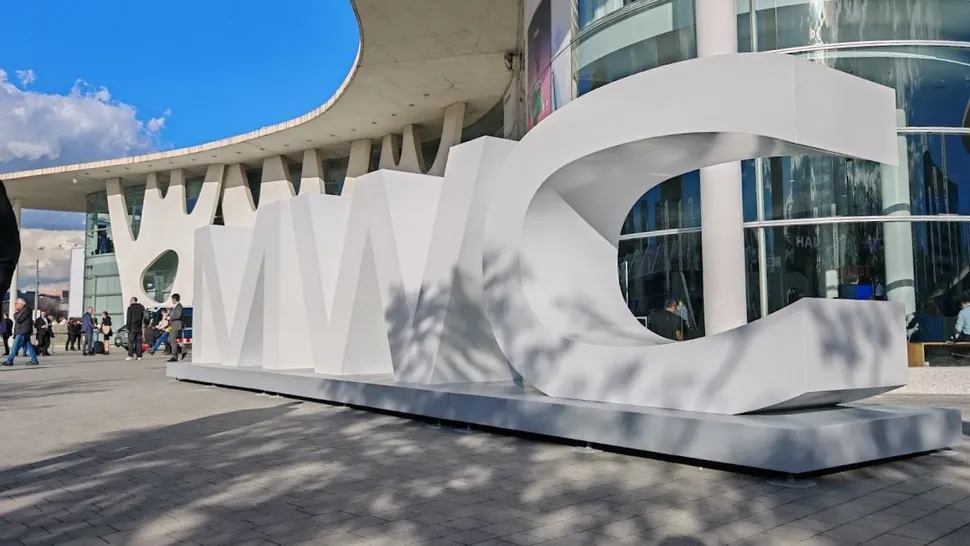
Mobile World Congress has always been a spectacle. But at Fira Gran Via this year, spectacle feels secondary. What hangs in the air is control.

The smartphone market is mature. Replacement cycles in Europe now commonly stretch beyond 36 months. Premium devices in several markets exceed $1,199 at launch. Component costs remain sensitive to geopolitics and fabrication bottlenecks. AI has become the compulsory headline, yet the economics behind it are unsettled.
MWC 2026 is less about who has the flashiest handset and more about who owns the layers beneath it. Silicon. Operating systems. Cloud backends. Developer ecosystems. Distribution.
The phone is still central. The leverage around it is in motion.

Silicon is the first battleground
Any serious reading of this year’s show begins with chips.
Qualcomm arrives in Barcelona ready to demonstrate 6G prototypes alongside its latest Snapdragon platforms. The company’s public emphasis on 6G research is not a distraction. It is an attempt to frame the next decade before the current one has paid off. 5G, commercially launched in 2019, has yet to deliver consistent revenue acceleration for operators. Qualcomm’s position is clear. The roadmap continues.

Meanwhile MediaTek hosts its “AI for Life” keynote on March 4 at 10:30 AM CET. MediaTek’s ascent over the past 5 years has been built on disciplined pricing and volume scale. AI workloads complicate that formula. Larger neural processing units require die space. On device inference draws power. If flagship AI features push bill of materials up by $40 or $60, someone absorbs it.
Hovering behind both companies is Arm. Arm’s architecture underpins most mobile silicon. As AI models migrate onto handsets, Arm’s design decisions ripple through the entire stack. A modest change in core configuration can alter performance envelopes across dozens of brands.
Chips are no longer invisible components. They are strategic anchors.
Platform power and the narrowing of difference
Google maintains a substantial presence at MWC, yet its most consequential announcements are reserved for I/O on May 19, 2026. Android 16 QPR3 is expected in March. The Pixel 10a is already in market.
Google’s advantage lies in the operating system. When it embeds AI capabilities at the platform level, differentiation tightens for every Android manufacturer on the floor in Barcelona. If core AI assistants, translation features, and generative editing tools ship inside stock Android, OEM overlays begin to look ornamental rather than essential.
This tension is structural. Hardware brands need distinct identities. Google needs consistency to support developers and services. AI intensifies the friction.
Across the convention center, Microsoft approaches mobility from a different angle. Windows integration, enterprise security frameworks, and cloud productivity suites position Microsoft as a horizontal layer rather than a handset vendor. The company does not need to dominate the phone market. It needs its services embedded across devices. That is leverage of another kind.
Then there is Meta. Smart glasses and mixed reality prototypes extend the definition of mobile beyond the slab in a pocket. If AI assistants migrate into wearables, the smartphone becomes a hub rather than the sole interface. Meta’s presence at MWC reflects a broader bet that ambient computing will dilute the handset’s primacy over time.
The platform layer is consolidating power, even as hardware brands multiply.
Samsung, Xiaomi, and the global chessboard
Samsung enters Barcelona days after unveiling the Galaxy S26 line on February 25 in San Francisco. By March 2, reviews and benchmarks will already circulate. MWC offers Samsung reinforcement, not revelation.
Yet even Samsung operates within tighter constraints. Premium pricing above $1,199 narrows the addressable market. Foldables have matured technically, but consumer appetite remains selective. The engineering is impressive. The question is scale.
Xiaomi, expected to introduce the Xiaomi 17 Ultra globally in Barcelona, continues to use MWC as its international springboard. A Snapdragon 8 Elite Gen 5 paired with a battery exceeding 6,000 mAh projects technical confidence. The deeper issue is regulatory friction in Europe and supply chain exposure to export controls.
Honor faces a similar balancing act. International expansion demands brand repositioning, sustained software support, and compliance investment. Teasing a device with a motorized camera module may draw attention. Sustained distribution agreements determine longevity.
Huawei remains constrained in Western markets, yet its presence at MWC underscores a parallel ecosystem developing around HarmonyOS and alternative supply chains. Fragmentation at the geopolitical level filters down into product roadmaps.
This is not a uniform global market. It is a patchwork shaped by policy.
The long tail of hardware
MWC’s scale means the spotlight rarely rests on a single category.
Lenovo and Motorola straddle PCs and smartphones, betting on ecosystem continuity. Cross device workflows are no longer optional features. They are retention tools.
Dell approaches mobility through enterprise endpoints. Secure laptops, 5G enabled notebooks, remote management software. For corporate buyers, the phone is one node in a managed network.
Display makers and value brands such as TCL and ZTE compete on cost discipline and carrier partnerships. In a market where consumers hold onto devices for 36 months or more, sub $500 segments carry strategic weight.
Nothing and TECNO represent another path. Distinctive design language, aggressive pricing, selective market entry. These brands test how much identity can offset scale disadvantages.
HMD continues to experiment with accessories and nostalgia infused hardware. The volumes may be modest. The margins can still be meaningful.
Even Adobe has a stake. Creative workflows increasingly begin and end on mobile devices. If generative editing tools become native to handset galleries, Adobe must ensure its subscription model remains indispensable.
The ecosystem is broader than phones. It is layered and interdependent.
Telecom’s unresolved arithmetic
Operators remain central to MWC’s DNA. 5G standalone deployments have expanded, yet revenue per user has not risen in proportion to capital expenditure. Network slicing and edge computing are discussed with technical precision. Investors focus on debt ratios and cash flow.
The industry’s pivot toward 6G research serves both technical and narrative functions. It keeps standards bodies active and frames long term ambition. Whether 6G commercial deployment begins in 2030 or later, the groundwork starts now.
Carriers are also under pressure from over the top services that capture value without owning infrastructure. The tension between connectivity providers and platform companies is old. AI heightens it. If intelligence resides primarily in cloud platforms operated by technology firms, telecom operators risk becoming transport utilities.
That is not a comfortable prospect.
A mature device in an unsettled hierarchy
The smartphone in 2026 is mature hardware. Screen resolutions are ample. Cameras are computationally adept. Batteries push past 5,000 mAh in mainstream models. Performance exceeds most everyday needs.
What changes is hierarchy.
Chipmakers assert influence through integrated AI accelerators. Platform owners consolidate through software defaults. Cloud providers expand through subscriptions. Hardware brands maneuver between them, seeking margin and identity.
By the time MWC 2026 concludes on March 5, no single company will have seized definitive control. The competition is more diffuse. Power is distributed across silicon designers, OS custodians, cloud operators, and manufacturers.
Barcelona does not settle the contest. It exposes it.
Go to TECHTRENDSKE.co.ke for more tech and business news from the African continent and across the world.
Follow us on WhatsApp, Telegram, Twitter, and Facebook, or subscribe to our weekly newsletter to ensure you don’t miss out on any future updates. Send tips to editorial@techtrendsmedia.co.ke

