
ACTS Research Hub at Konza Technopolis Puts Kenya’s Knowledge Economy Ambitions Under a Real Microscope
The building will rise in under a year, but the harder construction job is trust

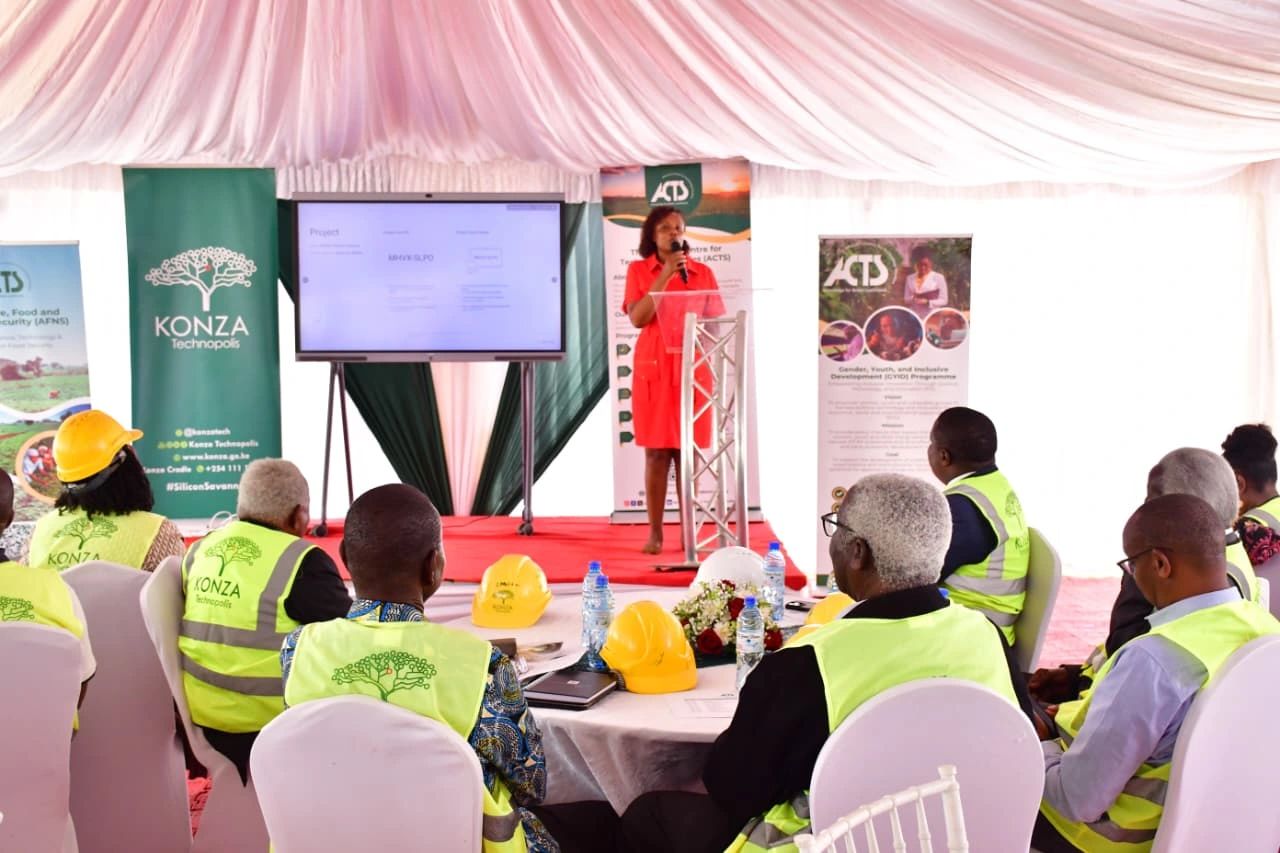
When the African Centre for Technology Studies broke ground on a 2.1-acre parcel inside Konza Technopolis on Friday, the ceremony looked familiar. Officials in hard hats. A ceremonial shovel. The language of knowledge economies. Yet beneath the choreography sits a more interesting question: whether Konza’s long project of becoming Kenya’s science city is entering a phase where institutions, not infrastructure, carry the weight.

The first phase of the ACTS Complex is planned as a 4-storey building, expected to take 45 weeks to complete. Office space, collaboration areas, facilities for research partnerships and commercialisation. On paper, it reads like another brick in a carefully arranged ecosystem. In practice, it places a policy think tank inside a Special Economic Zone designed to host export firms, tech companies, universities and residential developers.
That choice deserves attention.
From Master Plan to Institutional Gravity
Konza Technopolis, spread across 5,000 acres, has long been pitched as the physical centre of Kenya’s digital transformation agenda. It is designed to contribute up to 2% of national GDP when fully operational. Roads are in place. Utilities are installed. High-speed connectivity has been laid. The city operates under a Special Economic Zone framework offering fiscal and non-fiscal incentives meant to attract long-term investors.


For years, the public conversation focused on whether roads would be built, whether water would flow, whether the fibre would actually work. Those were fair concerns. Early scepticism followed missed timelines and stalled construction. The project risked becoming shorthand for grand plans outpacing execution.
The ACTS investment lands in a different chapter. Infrastructure is no longer hypothetical. Phase 1 is largely built out. What Konza needs now is institutional gravity, the kind created when organisations with intellectual weight commit capital and staff to a place.

ACTS, founded in 1988 and long embedded in science, technology and innovation policy across Africa, is not a startup chasing tax incentives. It is a policy and research institution with networks across governments, universities and development agencies. Its arrival complicates the narrative. Konza is not only courting software firms and hardware assemblers. It is courting those who shape the rules and frameworks that govern them.
Policy Inside the Zone
There is an inherent tension in placing a policy research institution inside a Special Economic Zone. SEZs are designed for competitiveness. They rely on tax incentives, streamlined regulation and export orientation. Their language is productivity, jobs and investment.
Research institutions operate differently. Their timelines are longer. Their outputs are less tangible. A policy paper does not show up on an export ledger. A capacity-building programme does not immediately alter GDP figures.
By embedding ACTS in Konza, the state appears to be betting that proximity between research and enterprise will shorten the distance between evidence and implementation. The theory is straightforward: researchers study regulation, innovation and sustainability while companies next door confront those issues in real time. The corridor between them becomes a feedback loop.
Whether that loop forms depends on more than architecture.
Kenya has no shortage of research institutions. What it has often lacked is integration. Reports are written. Recommendations are tabled. Pilot projects emerge. The institutional bridge to market actors is thinner than it should be. Konza offers the possibility of physical co-location. Physical proximity does not guarantee collaboration, but it reduces friction.
Anchor Tenants and Ecosystem Politics
Konza’s leadership has described ACTS as an anchor institution. The term carries weight in urban planning. Anchor institutions stabilise a development by drawing talent, signalling permanence and creating demand for surrounding services. Universities often play this role in research parks.
Konza already hosts or anticipates academic institutions such as the Open University of Kenya, Riara University and the Kenya Advanced Institute of Science and Technology. The clustering logic is clear. Students feed into labs. Labs feed into firms. Firms generate demand for specialised skills.
Yet clusters do not assemble themselves simply because land has been allocated. They require density, both human and intellectual. Kenya’s previous attempts at innovation districts have sometimes stalled at the point where buildings exist but interactions remain thin.
The ACTS Complex could function as connective tissue. Or it could become another well-appointed structure operating in parallel rather than in concert.
The outcome will depend on incentives inside institutions. Will researchers be rewarded for industry engagement? Will firms see value in policy collaboration beyond compliance? These are not architectural questions. They are governance questions.
The 45-Week Clock and the Discipline of Delivery
Construction timelines in Kenya carry symbolic weight. A 45-week schedule is precise enough to invite scrutiny. Konza’s credibility has been shaped by earlier delays in broader infrastructure rollout. Delivery on time will reinforce confidence not only in ACTS but in the Technopolis as a whole.
There is also the matter of cost discipline and occupancy. A 4-storey research facility requires sustained funding streams. ACTS will need to fill offices with staff, programmes and partnerships that justify the investment. Research hubs across the continent have struggled when grant cycles fluctuate or donor priorities change.
Embedding in a Special Economic Zone may provide alternative funding pathways. Consultancy work for resident firms. Joint applied research projects. Training contracts. The integration of revenue models with physical space could determine whether the building hums or merely stands.
Sustainability, Smart Systems and the Reality Check
The ACTS Complex is expected to incorporate sustainability features and smart-building technologies aligned with Konza’s master plan. Solar integration, efficient water systems, digital building management. These elements are no longer optional in high-end developments. They are baseline expectations.
The more substantive question is whether sustainability is treated as an architectural add-on or a research priority. Kenya faces tangible climate pressures, from drought cycles to urban flooding. A research institution inside Konza has the opportunity to interrogate how smart-city systems perform under local constraints rather than imported templates.
Too often, African technology districts mirror global aesthetics without adapting to context. Glass facades in hot climates. Energy-intensive cooling. Imported models of urban design. If ACTS uses its physical presence to study and influence how Konza evolves, the campus could become a living laboratory rather than a showroom.
GDP Ambitions and the Long View
Konza is projected to contribute up to 2% of Kenya’s GDP once fully operational. That figure has floated in policy documents for years. It remains aspirational, tied to occupancy rates, export performance and knowledge spillovers that are difficult to quantify in early stages.
GDP contributions from science parks are rarely immediate. They accrue through firm formation, patent activity, productivity gains and workforce upgrading. These are long arcs. The 5,000-acre footprint suggests ambition measured in decades.
The arrival of ACTS reframes the GDP conversation slightly. It inserts policy capacity into the heart of a development often discussed in construction terms. A knowledge-based economy is not built solely through fibre cables and tax incentives. It requires institutions capable of interrogating regulation, assessing technological risks and training talent at scale.
There is, however, a risk of circular optimism. Institutions cluster because growth is expected. Growth is projected because institutions cluster. Without measurable output, projections can become self-reinforcing rhetoric.
Konza’s next phase will need harder indicators. Occupancy rates. Research-to-market conversion figures. Export volumes from SEZ-based firms. Employment numbers tied directly to on-site activity. If the 2% GDP figure is to remain credible, the data trail must become more visible.
A Science Park or a Symbol?
Kenya’s digital transformation strategy has often been narrated through symbolism. Konza as Silicon Savannah. Innovation as destiny. The rhetoric has power, especially in a region where technology entrepreneurship has produced real gains in fintech and mobile services.
But symbolism can harden into complacency. A science park is not validated by brand alone. It is validated by what moves through it: people, ideas, capital, regulation.
The ACTS move introduces a layer of seriousness. A policy research institution does not relocate for optics. It relocates for access, relevance and proximity to decision-making spaces. By placing itself inside Konza, ACTS is wagering that the Technopolis will become central to Kenya’s science and innovation governance, not peripheral.
If that wager pays off, Konza will look less like a real estate project and more like a policy arena. If it does not, the Complex may join a catalogue of well-intentioned facilities waiting for the density that never quite materialises.
For now, the 2.1-acre site is cleared ground. The 45-week clock has started. The larger test will not be whether the building rises, but whether the conversations inside it alter how Kenya links research, enterprise and the state.
Go to TECHTRENDSKE.co.ke for more tech and business news from the African continent and across the world.
Follow us on WhatsApp, Telegram, Twitter, and Facebook, or subscribe to our weekly newsletter to ensure you don’t miss out on any future updates. Send tips to editorial@techtrendsmedia.co.ke


