

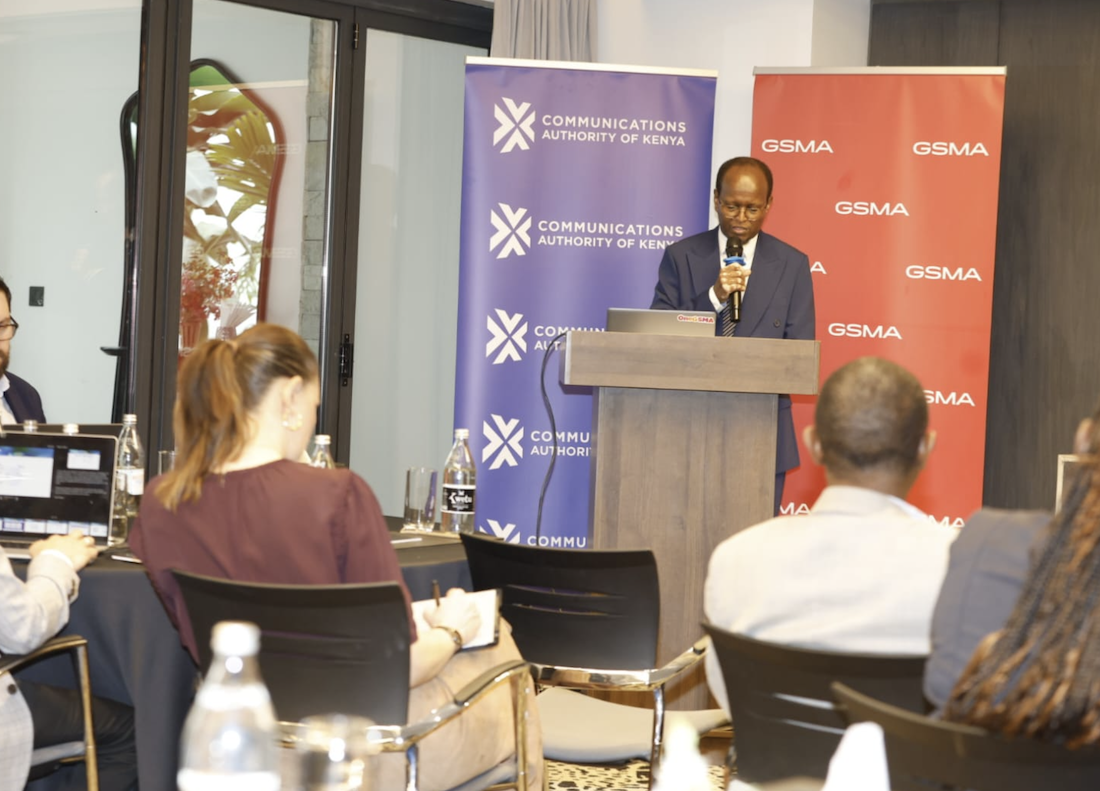
Modernizing spectrum management could inject a massive Ksh 662 billion ($4.2 billion) into Kenya’s GDP by 2028. This is according to a roadmap presented to the country’s ICT Ministry by the Global System for Mobile Communications Association (GSMA) in a high-level meeting held last week.

The delegation, led by GSMA’s Global Head of Spectrum, Luciana Camargos, met with the Principal Secretary for Broadcasting and Telecommunications, Stephen Isaboke, to outline how strategic reforms in frequency allocation could catalyze a new wave of digital investment.
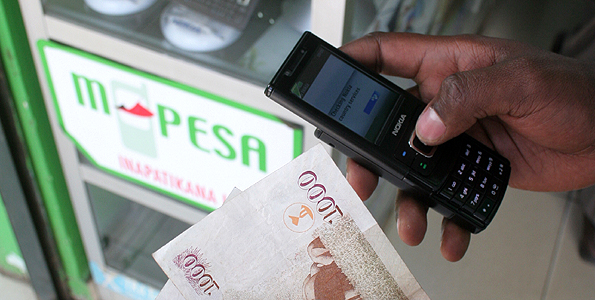
Despite Kenya’s status as a regional tech leader with 98% 4G population coverage, the GSMA report highlights a sobering reality: a 60% usage gap. Millions of Kenyans live within reach of a mobile signal but remain offline due to the high cost of devices and data.
The roadmap suggests that by adopting international best practices in spectrum pricing and licence renewals, the government could not only boost the GDP but also generate an additional Ksh 150 billion in tax revenue.

“If Kenya adopts international best practices in spectrum pricing, transparent roadmaps, and efficient licence renewals, the country could unlock up to Ksh 662 billion ($4.2 billion) in additional GDP by 2028. The potential impact on jobs and tax revenue is significant,” Luciana said.
Communications Authority of Kenya (CA) Director Mr. David Mugonyi noted that Kenya has made significant strides in expanding digital access over the past decade. However, he emphasized that more work is needed to achieve universal and meaningful connectivity.

“The efficient utilization of scarce frequency spectrum resources, coupled with smarter regulatory policies such as predictable licensing frameworks and targeted investments in ICT infrastructure through the Universal Service Fund (USF), are key to igniting the transformative role of ICTs in our nation,” he said.
Mr. Mugonyi highlighted that the Authority operates a technology- and service-neutral licensing regime, allowing operators to deploy optimal technologies, foster innovation, and support service convergence. He added that Kenya’s National Table of Frequency Allocations and Frequency Spectrum Management Guidelines ensure spectrum allocation remains efficient, transparent, and aligned with global regulations and regional harmonization efforts.
According to Mr. Mugonyi, the Authority regularly reviews spectrum pricing and licensing processes to align with global best practices, striking a balance between fairness, predictability, and public interest considerations.
The proposed reforms are a direct response to the digital isolation of Kenya’s northern frontier. While Nairobi thrives as a Silicon Savannah, counties like West Pokot and Turkana have internet penetration rates as low as 9.1% and 12.7%, respectively.
To bridge this, the GSMA is pushing for the prioritized release of low-band spectrum (sub-1 GHz). Unlike higher frequencies used in urban centers, these long-reach waves can cover vast, sparsely populated terrains with fewer base stations, significantly lowering the cost of rural rollout.
Beyond rural reach, the roadmap emphasizes the release of 2GHz of mid-band spectrum. Described as the ‘Goldilocks” frequency, this band is essential for city-wide 5G deployment, providing the necessary balance between high capacity and wide coverage.
Go to TECHTRENDSKE.co.ke for more tech and business news from the African continent and across the world.
Follow us on WhatsApp, Telegram, Twitter, and Facebook, or subscribe to our weekly newsletter to ensure you don’t miss out on any future updates. Send tips to editorial@techtrendsmedia.co.ke