
Arc Ride’s Expansion Plans Now Carry the Weight of Institutional Expectations
Global capital has arrived, but the outcome will be decided in traffic, charging queues, and the price of staying on the road

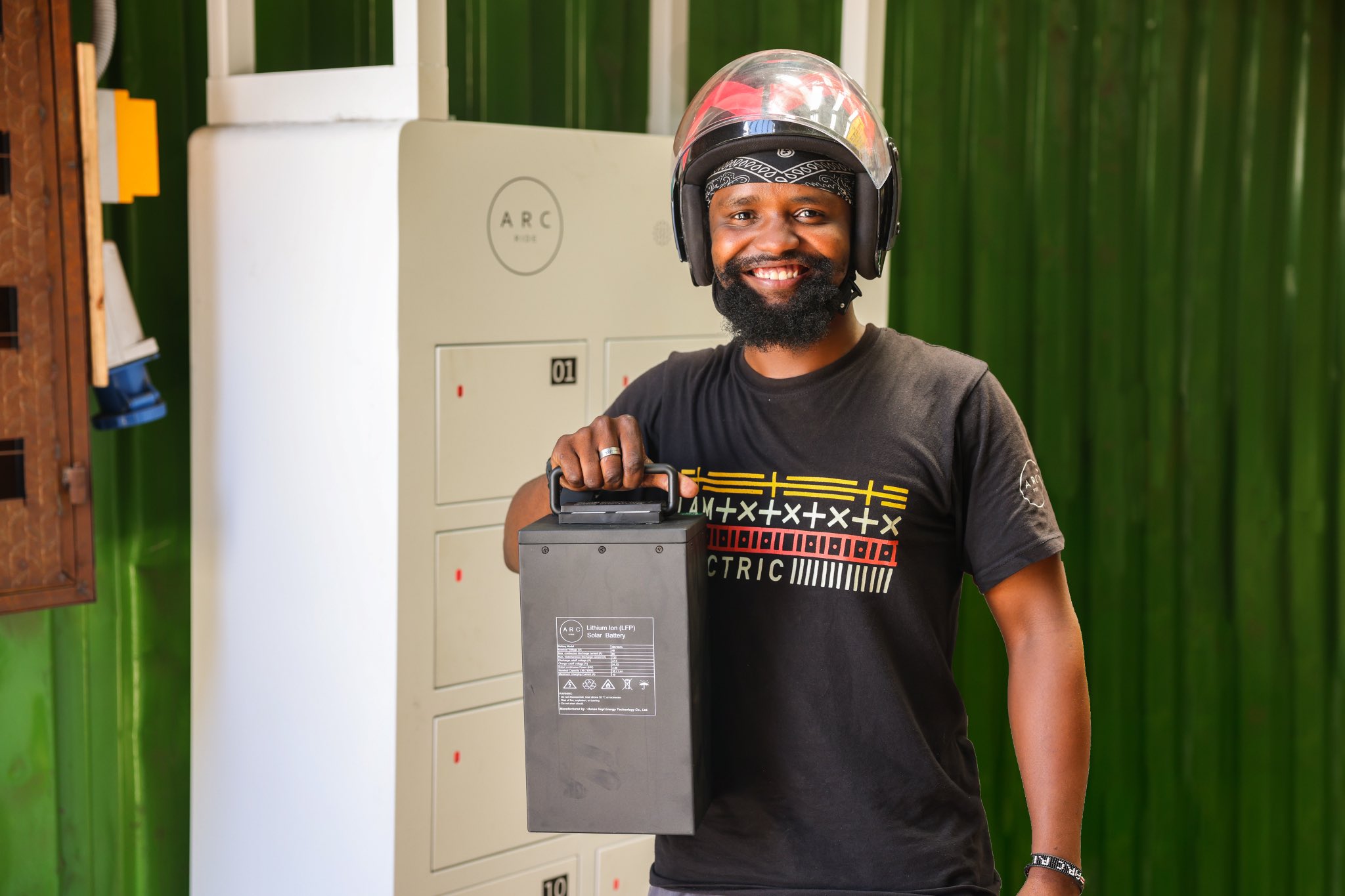
Investment announcements tend to arrive wrapped in optimism, but timing usually tells the real story. When institutional capital enters at the Series A stage, it often means demand has moved beyond early interest and the underlying economics have begun to hold. That context sits behind the proposed equity investment of up to $5 million by the International Finance Corporation in Arc Ride, a move that points less to promise and more to a market beginning to prove itself.
The company, founded in 2020, operates inside a part of the transport economy where adoption has long been constrained by cost rather than awareness. Electric two-wheelers are not unfamiliar in Kenya. The problem has been who absorbs the expensive component sitting inside them.
Battery ownership has been the friction point. Arc Ride’s model removes it from the initial purchase, replacing ownership with access. Riders swap depleted batteries for charged ones at fixed stations, paying for usage instead of carrying the upfront expense. The idea is straightforward. The consequences are less so.
The Battery Question That Never Quite Went Away
For years, conversations around electric mobility in African cities leaned heavily on environmental language. Riders, however, rarely framed the decision that way. Fuel costs determine daily income. A rider’s calculation begins at the end of the day, not in long-term climate projections.
Battery-as-a-Service addresses a narrow but stubborn barrier. By separating the battery from the vehicle purchase, entry costs fall. What remains is whether operating savings consistently outweigh subscription and swap costs. That equation varies across routes, traffic patterns, and electricity reliability. It is not uniform, and investors know it.
The IFC’s involvement suggests that Arc Ride has reached a stage where usage data, not projections, is driving interest. Institutional investors tend to arrive when operational patterns stabilize. The company’s earlier funding from British International Investment and a $10 million senior secured debt facility from Mirova International already pointed in that direction. The new equity interest places emphasis on scale rather than proof of concept.
Nairobi’s Informal Economy Meets Structured Finance
Electric mobility in Kenya sits at an unusual intersection. The boda boda sector operates largely through informal arrangements, yet the capital now entering the space comes with institutional expectations. Environmental standards, governance structures, reporting frameworks. These are not trivial additions. They shape how companies grow.
IFC’s involvement typically brings more than funding. Board participation and compliance expectations tend to formalize operations. For a young company expanding regionally, this can be stabilizing. It can also slow decisions that once depended on speed and improvisation. Expansion across African markets introduces regulatory variation, electricity pricing differences, and local financing realities that do not mirror Nairobi.
The tension is familiar. Development finance institutions pursue scale with safeguards. Startups often pursue scale with flexibility. Somewhere between those approaches lies the workable version.
The E-Mobility Race Is Becoming Crowded
Arc Ride is not entering an empty field. Over the past 12 months, international financing has flowed into multiple electric mobility firms across the continent. Spiro secured $100 million, Enzi Mobility raised $3.5 million, and Roam attracted $24 million. The capital influx suggests investors see transport electrification less as a technology story and more as infrastructure in disguise.
Battery networks resemble fuel distribution systems more than software platforms. They require density before profitability becomes visible. Swap stations must exist where riders actually work, not where maps suggest demand should be. Expansion therefore becomes expensive before it becomes efficient.
This raises a quieter question about market structure. Multiple operators building parallel swap networks risks fragmentation. Standardization could lower costs across the sector, yet competition encourages proprietary systems. The outcome remains unsettled.
Growth, Credibility, and the Weight of Expectation
For Arc Ride, the IFC investment carries symbolic value beyond its dollar amount. Development finance participation often attracts additional investors who interpret it as institutional validation. That can accelerate fundraising. It can also raise expectations around delivery timelines and operational discipline.
The broader bet is that declining battery costs and financing innovation will gradually lower barriers for riders who currently remain tied to petrol motorcycles. That assumption depends on electricity stability, maintenance reliability, and rider income patterns holding steady enough for savings to remain visible week after week.
Electric mobility in Kenya has reached a phase where optimism alone is insufficient. Investors now appear to be studying behavior rather than projections. If Arc Ride succeeds in expanding without losing cost discipline, the model could travel. If margins tighten under infrastructure demands, consolidation across the sector becomes more likely.
Either way, the story has moved past experimentation. The conversation is now about whether the economics of daily transport can carry electrification without subsidies indefinitely. That answer will emerge not in funding announcements, but in whether riders keep coming back to swap batteries the next morning.
Go to TECHTRENDSKE.co.ke for more tech and business news from the African continent and across the world.
Follow us on WhatsApp, Telegram, Twitter, and Facebook, or subscribe to our weekly newsletter to ensure you don’t miss out on any future updates. Send tips to editorial@techtrendsmedia.co.ke


