
Execution and Adoption Dominate Investor Scrutiny at Africa Tech Summit Investment Showcase
Where ambition meets friction and founders confront the harder question of whether innovation can hold up once it leaves the stage and enters everyday African business life

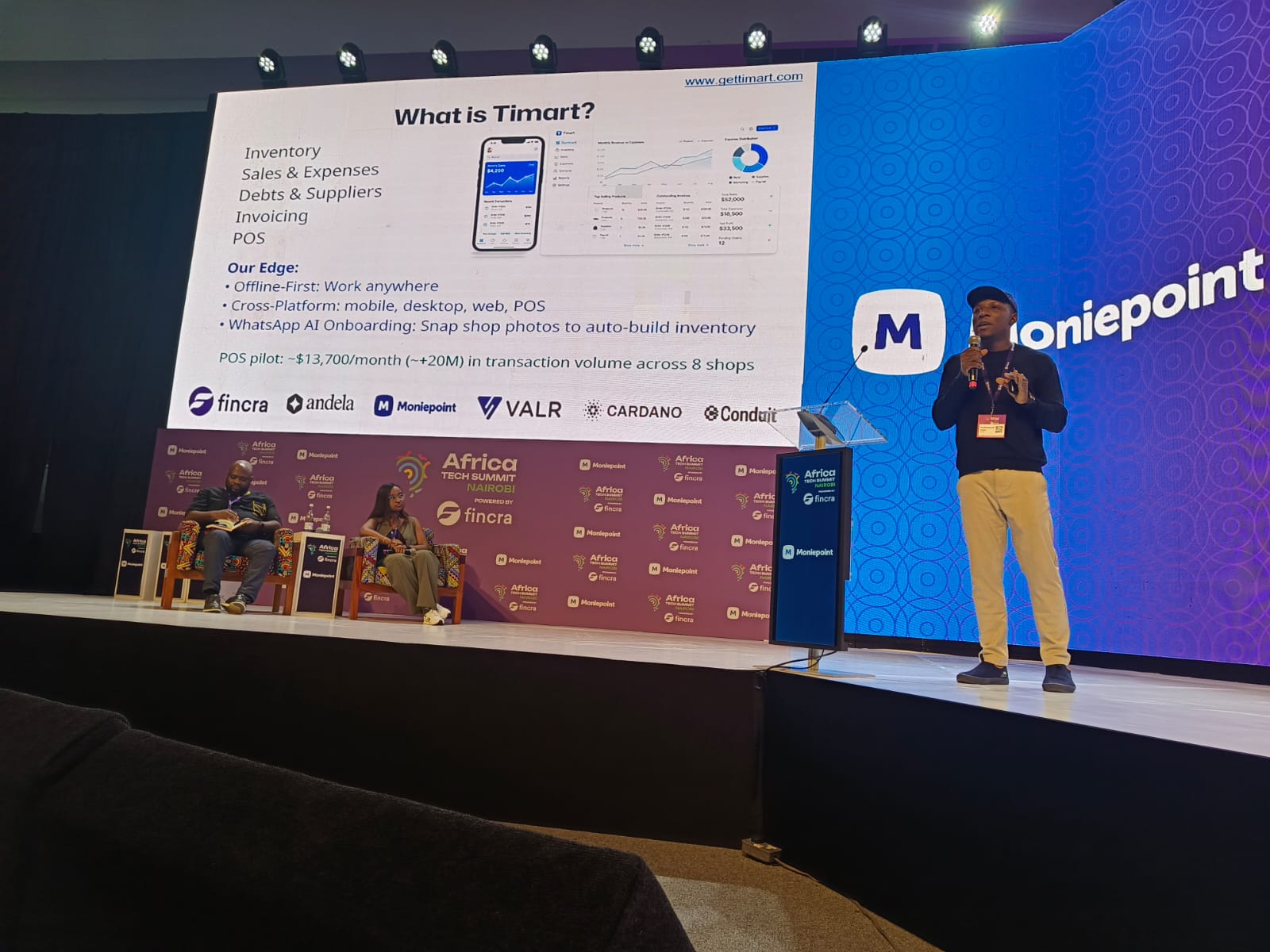
The investment showcase at the Africa Tech Summit did not feel like a parade of polished optimism. It felt closer to a working session. Founders stood before investors who had long since read the headlines about African innovation and were now drilling into something narrower. Can these ideas survive contact with everyday realities on the continent?

That tension hung over the Moniepoint stage throughout the afternoon. The pitches moved from retail software to robotics to agricultural finance, yet the underlying conversation kept circling back to the same friction. Technology in African markets rarely falters for lack of imagination. It runs into infrastructure gaps, entrenched habits, and institutional weak spots that do not bend easily.
The investor panel, chaired by Neanda Salvaterra, brought a deliberate tone. Stanley Mukasa, Associate Director of Entrepreneurship at Carnegie Mellon University Africa, pressed founders on distribution and user behaviour. Cynthia Mwaura, Senior Investment Associate at E3 Capital, focused on retention and revenue logic. The questions were pointed. Who actually uses this product? How does onboarding work where digital literacy varies widely? What happens outside urban networks?
Those lines of inquiry carried through each presentation and revealed something about the current posture of African venture capital. Novelty alone no longer carries weight. Endurance does.


SMEs, paper records, and the cost of invisibility
When Muhammad Zhitsu Ndako presented Timart, the starting point was not technology. It was leakage. Small retail businesses that appear busy yet struggle to account for cash flow, stock losses, or credit extended informally. The problem is familiar across markets where record keeping still lives in notebooks or fragmented apps.
Timart’s argument rests on an offline-first model. The assumption is simple. Connectivity is unreliable, but business activity does not stop when the network drops. The software tracks inventory, sales, and payments locally, synchronizing later. The pitch cited 605,000 subscribers, 3,500 monthly active users, and 95.2% retention, alongside subscription fees between $3 and $15 per month. Numbers that suggest traction, but also expose the scale challenge. Margins in SME software remain thin unless adoption becomes widespread.

The deeper question sits beneath the product itself. African SMEs often operate in semi-formal environments where bookkeeping is less about compliance and more about survival. Digital tools promise visibility, yet visibility can introduce new pressures, from taxation to credit exposure. Adoption therefore depends on trust as much as usability.
Investors seemed aware of this tension. Offline capability alone does not solve behavioural inertia. It only lowers the first barrier.
Assistive robotics and the economics of inclusion
The presentation by Norah Kimathi took the conversation in a different direction. Zerobionic’s robotic systems translate spoken instruction into sign language, targeting classrooms where hearing-impaired students struggle to access STEM education. The pitch referenced engagement with 510,000 students and partnerships involving organisations such as UNDP and NVIDIA Kenya.
The ambition here stretches beyond education technology. It raises a persistent question about African hardware ventures. Can locally developed robotics compete on cost and maintenance against global manufacturers while serving markets with limited purchasing power?
Zerobionic’s answer lies in material choices and distribution logic. Recycled plastics reduce manufacturing costs. The model mixes hardware sales with subscription access to learning platforms. A projected lifespan of 20 years attempts to counter fears about durability and replacement cycles.
Yet inclusion technologies often depend on institutional buyers. Schools, governments, NGOs. Procurement cycles are slow, budgets uneven. Adoption rarely follows the speed imagined in startup decks. The upside, if it works, is longevity rather than rapid expansion. Hardware embedded in education systems tends to stay.
Agriculture, finance, and the long road to formalisation
Agriculture pitches at African tech gatherings often lean on familiar narratives about digitisation. The presentation from Riches Attai of Winich Farms approached the issue from infrastructure rather than apps. The company positions itself as commerce infrastructure connecting farmers, processors, and retailers while layering financial services on top.
The numbers were substantial. Over 103,000 prepaid cards issued to farmers. Presence across 27 states. Gross merchandise volume reaching $8 million in the previous year, with an $8 million Series A raise underway. The objective includes securing a microfinance licence to internalise credit and insurance services.
What stood out was not the scale ambition but the admission that many farmers do not use the application directly. Agents operate the system on their behalf. This reflects a reality often underplayed in digital finance conversations. Technology adoption in rural economies frequently relies on intermediaries rather than direct user interaction.
That approach solves access problems while introducing dependency. Agent networks require constant supervision and incentives. Fraud risks increase as systems expand. Still, the model aligns with how financial inclusion has evolved across parts of Africa, where human infrastructure precedes digital autonomy.
Payments, stablecoins, and the search for cross-border certainty
Later presentations from Oluwagbenga Agunbiade and Faith Kinyua extended the conversation into payments and procurement. Stablecoin-based payment rails and AI-driven procurement platforms share a common motivation. Cross-border commerce remains expensive and fragmented, particularly for smaller businesses that lack access to international banking systems.
The appeal is clear. Digital currencies promise settlement speed and lower transaction costs. Procurement platforms promise access to supply chains traditionally closed to smaller vendors, especially women and youth entrepreneurs.
Yet regulatory ambiguity lingers. Stablecoins exist in a space where policy responses differ across jurisdictions. Procurement automation raises questions about verification and accountability when algorithmic decisions affect credit access or supplier inclusion. Investors appeared less interested in technological elegance than in regulatory survivability.
Beneath the pitches, a more cautious investment mood
Across the showcase, a pattern emerged. Founders spoke about expansion, but investors kept returning to execution. Customer profiles, distribution channels, integration with existing payment systems. The questions sounded less like venture hype and more like operational audits.
That tone reflects broader changes in African venture funding over the past 24 months. Capital has become more selective. Growth narratives alone no longer suffice. Revenue clarity, retention metrics, and realistic deployment plans carry more weight.
The presence of institutions such as CMU-Africa and funds like E3 Capital reinforced another development. Talent pipelines and sector specialisation are becoming part of the investment conversation. Climate tech, inclusive finance, and infrastructure software attract attention not because they are fashionable but because they align with structural needs.
The unfinished argument about scale
What lingered after the session ended was not any single company’s pitch. It was the recurring argument about scale itself. African startups often aim for continental reach, yet markets remain deeply local in regulation, language, and consumer behaviour. Products that succeed tend to adapt slowly, sometimes unevenly, across regions.
Offline-first software acknowledges connectivity limits. Robotics built with recycled materials acknowledges cost sensitivity. Agent-led finance acknowledges digital literacy gaps. None of these approaches promise rapid expansion. They point instead toward incremental adoption.
There is a certain realism in that. The investment showcase revealed founders building around constraints rather than pretending they do not exist. Whether that produces enduring companies depends less on technology than on patience. Investors seemed to understand that. The applause at the end of each pitch felt measured, almost analytical, as if everyone in the room knew the harder work begins after the stage lights fade.
Go to TECHTRENDSKE.co.ke for more tech and business news from the African continent and across the world.
Follow us on WhatsApp, Telegram, Twitter, and Facebook, or subscribe to our weekly newsletter to ensure you don’t miss out on any future updates. Send tips to editorial@techtrendsmedia.co.ke


