
Kenya’s Electric Car Push Runs Into the Stubborn Logic of the Used Car Market
Local production is accelerating even as affordability, charging access, and buyer habits continue to slow adoption on ordinary roads

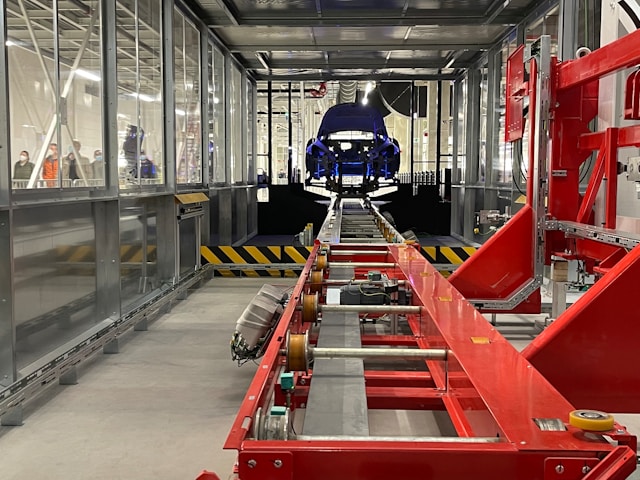
Electric car assembly in Kenya is taking shape in a way that feels slightly out of sequence. Factories are being prepared before the market has fully decided whether it wants the product. Chinese-backed manufacturers and their local partners are committing capital, securing assembly space, and betting that price reductions will eventually draw private buyers into a segment that has struggled for traction.

The logic is straightforward on paper. Importing fully built electric cars carries tax burdens that inflate retail prices. Completely knocked-down kits qualify for incentives that lower the final cost. In a market where price sensitivity determines almost everything, even a modest reduction can alter buying decisions. The expectation is that local assembly will narrow the gap between electric cars and the second-hand petrol vehicles that dominate Kenyan roads.
Yet timing remains awkward. Passenger electric cars still sit at the edge of the market, overshadowed by electric motorcycles and buses whose economics are easier to explain. A boda boda earns income daily. A bus runs predictable routes. A privately owned car rarely generates revenue. The financial case becomes personal rather than commercial, and that changes behaviour.
The Chinese Playbook Meets Kenyan Constraints
The current wave of investment follows a pattern seen elsewhere. Chinese automakers expand into emerging markets by lowering entry costs through local partnerships, semi-knocked-down assembly, and gradual localisation of components. Kenya offers several advantages. It has an established assembly base, a regional logistics network, and policy incentives designed to attract manufacturing activity.
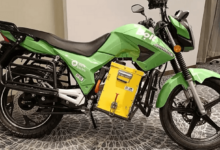

Rideence Africa’s Sh320 million investment in Mombasa reflects this approach. Assembly through Associated Vehicle Assemblers reduces import-related costs and gives the company room to cut prices by as much as 25 percent. Dongfeng’s partnership with local distributor ePureMotion points in the same direction, with compact hatchbacks priced at Sh4 million and Sh4.5 million entering a price band already crowded with used imports.
Tad Motors has gone further by positioning itself as a regional manufacturer operating out of the Naivasha Special Economic Zone. Its $10 million investment and stated ambition to reach 3,000 units annually suggests a belief that East Africa, rather than Kenya alone, provides the scale required to make assembly viable.
There is ambition here, though it sits alongside uncertainty. Local assembly reduces costs, but it does not automatically create demand. The assumption is that affordability will follow production. That assumption has not yet been tested at scale in Kenya’s passenger car segment.
The Used-Car Gravity Problem
Kenya’s car market has long been shaped by policy decisions that unintentionally favour older vehicles. Import taxation relies on depreciation schedules tied to age. Cars between 7 and 8 years old can receive depreciation allowances of up to 65 percent, lowering taxable value and final price. Electric cars, arriving mostly as new units, do not benefit from that structure.
The result is a mismatch. An electric hatchback priced between Sh2.5 million and Sh2.8 million competes against petrol vehicles that cost significantly less after tax adjustments. Buyers compare upfront costs before considering fuel savings or maintenance differences. For many households, the calculation ends there.
By the end of 2024, Kenya had recorded 14,750 registered EVs since 2018, according to Electric Mobility Association of Kenya data, with only 326 of those classified as passenger cars. Industry estimates now place the total EV population closer to 24,000 units by 2025, growth driven largely by electric motorcycles entering ride-hailing and delivery fleets. The pattern has remained consistent. Two-wheelers dominate because their economic return is immediate, while passenger vehicles remain discretionary purchases for most households.
Local assembly attempts to counter this imbalance, but structural incentives still lean toward used imports. Unless taxation evolves to reflect lifecycle emissions or operating costs, electric cars will continue to face structural resistance against older internal combustion models that remain cheaper at the point of purchase.
Policy Arrives as Industry Moves Ahead
The government’s launch of a National E-Mobility Policy in early 2026 adds another layer to the timing. The framework positions electric transport not only as an environmental objective but as part of a broader industrial agenda, linking adoption to local manufacturing, infrastructure expansion, and reduced fuel imports. In policy terms, electric mobility is being treated as an economic sector rather than a niche technology.
That alignment helps explain why assembly investments are appearing now. Manufacturers are responding not just to current demand but to anticipated regulatory direction. Fiscal incentives already favour local assembly through exemptions from the 35 percent import duty on fully built vehicles, reduced import declaration fees and Railway Development Levy rates on CKD parts, a 10 percent excise duty, and zero-rated VAT on EVs.
Still, policy ambition and consumer behaviour do not always move at the same speed. Official and industry figures vary depending on whether they count registered vehicles, deployed fleet assets, or broader estimates that include motorcycles and delivery platforms. What remains consistent across datasets is the imbalance between commercial electric transport and privately owned cars. The latter continues to lag.
Infrastructure That Exists, But Not Everywhere
Charging infrastructure illustrates another contradiction. Kenya is often described as ahead of many African markets in electrification and renewable energy capacity. Yet public charging remains sparse relative to potential demand. Around 300 charging facilities existed by the end of 2024, including swapping stations and slower AC points.
Most electric car owners rely on home charging. That works for early adopters with predictable routines. It becomes less practical once ownership expands beyond a small group of enthusiasts or fleet operators. Fast DC chargers remain limited, and installation costs remain high.
Companies entering the market have adopted different strategies. Rideence plans to expand from just over 16 charging stations to 100 by the end of 2026, largely to support commercial vans. Dongfeng offers faster chargers as optional purchases rather than building extensive public networks. Tad Motors has opted not to invest in charging infrastructure at all, instead relying on compatibility with standard wall sockets.
This fragmented approach reflects uncertainty about where demand will emerge first. Infrastructure typically follows usage. Here, both are waiting on each other.
Scale, Patience, and the Question of Timing
Kenya’s incentives for electric vehicles are significant, but incentives alone do not create volume. Scale remains the central issue. A handful of locally assembled vehicles cannot compete against thousands of imported used cars arriving each year. Without larger production runs, cost reductions plateau.
Industry players increasingly frame the issue around market confidence. Investors want evidence that demand exists before expanding assembly capacity. Buyers wait for prices to fall further before committing. Policy sits between those positions, attempting to encourage both at once.
There is also a regional dimension. If Kenya becomes an export base for East Africa, production volumes could rise enough to lower costs further. That outcome depends on harmonised regulations, cross-border incentives, and infrastructure development beyond Kenya’s borders. None of that is guaranteed, though the direction of travel is becoming clearer.
The arrival of electric car assembly in Kenya reflects optimism, but also patience. Manufacturers appear willing to absorb slow early sales in exchange for long-term positioning. The expectation is that fuel prices, urban congestion, and environmental policy will eventually favour electric drivetrains.
For now, consumer behaviour remains conservative. Buyers trust what they know. Used Japanese imports offer familiarity, established repair networks, and lower entry costs. Electric vehicles offer lower running costs, but savings accumulate slowly and require confidence in infrastructure that is still developing.
The assembly lines in Mombasa and Naivasha represent an early wager on that future. Whether Kenyan drivers follow remains an open question, shaped as much by household economics as by industrial ambition.
[Secure Your Seat at Africa Tech Summit Nairobi 2026 | February 11–12 here] Use code TTRENDS10 at checkout to save 10% on your pass and join the leaders building Africa’s $1 trillion cross-border payment future.
Go to TECHTRENDSKE.co.ke for more tech and business news from the African continent.
Follow us on WhatsApp, Telegram, Twitter, and Facebook, or subscribe to our weekly newsletter to ensure you don’t miss out on any future updates. Send tips to editorial@techtrendsmedia.co.ke

