
Kenya wants a spaceport on its coast, and the tougher question sits with the launch business
The equator offers an advantage, the coastline looks workable, but the global launch market has become crowded, unforgiving, and impatient

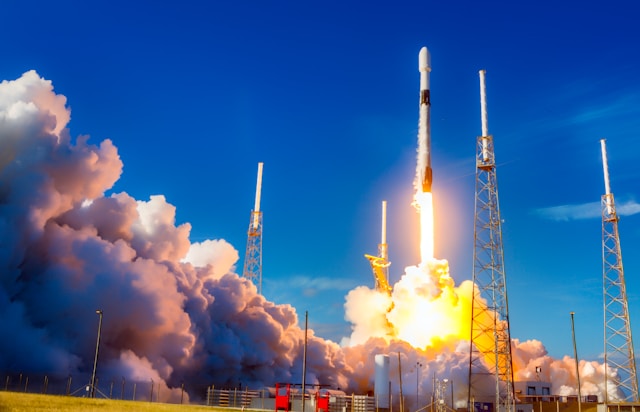
The idea of rockets leaving Kenyan soil is not new. It has circulated for decades, sometimes as ambition, sometimes as nostalgia. What has changed is the paperwork. This time the state has pushed the concept into the machinery of Treasury, procurement notices, and public private structuring. The proposed Kenya spaceport at Kipini, along the Tana River delta, now sits inside a feasibility process that treats launch capability less as romance and more as balance sheet.

That framing matters. Space activity has matured into a business with thin margins, intense regulation, and crowded competition. A launch site is no longer a national trophy by default. It is an asset that must earn its keep. Treasury’s decision to hire a transaction adviser tells its own story. The question is not whether rockets can fly near the equator. The question is whether enough customers will pay to do so.
Kipini and the geography argument that never quite settles
Kipini’s appeal rests on location. Equatorial latitude reduces fuel needs for certain orbits. An east facing coastline allows trajectories over open water rather than populated areas. Weather patterns are relatively stable. None of this is speculative. Launch providers already chase similar conditions elsewhere.
Yet geography alone does not secure bookings. Several equatorial sites around the world remain underused or stalled. Customers choose reliability, regulatory clarity, insurance certainty, and logistics that work on time. Kipini offers physical advantages. It still needs institutional ones.


There is also the local setting. Kipini is not empty. Fishing, farming, mangroves, and transport routes already define daily life. Any launch complex will need to coexist with those systems. Environmental approval will not be a side note. It will shape design, operating windows, and cost.
The economics that rarely look heroic on paper
Spaceports are expensive in uneven ways. Construction costs attract headlines, yet operating costs tend to decide survival. Maintenance, safety staffing, airspace coordination, security, and compliance obligations accumulate year after year. Even busy launch sites rely on long term government backing or anchor clients.

Kenya’s plan leans on a public private partnership. That structure spreads risk but also forces discipline. Private partners will demand revenue visibility. Satellite launch demand has grown, especially for small spacecraft, but price competition has tightened. Reusable rockets and rideshare models have pushed costs down. A new spaceport must fit into that reality, not an older one.
There is a quieter tension here. Kenya already builds and operates satellites. Launch capability would close a loop. Yet satellite ownership does not automatically translate into launch demand. Most national spacecraft fly once every several years. A spaceport needs frequent customers, not occasional ones.
Regulation, airspace, and the unglamorous hurdles
Launch activity intersects with civil aviation, maritime traffic, and international liability law. Each launch closes airspace. Each trajectory carries insurance implications. Each mishap, even a minor one, attracts global scrutiny.
Kenya has begun building a space regulatory framework, but a launch site will test it quickly. Coordination with aviation authorities will need precision. So will cross border notification. These systems take time to harden. Investors will watch how fast and how clearly rules settle.
There is also the question of institutional muscle. Running a launch site is operationally demanding. Delays cost clients money. Cancellations erode confidence. The learning curve can be steep, especially during early years.
A continent that ships its satellites elsewhere
Africa once hosted active launch infrastructure. Today, satellites built or commissioned across the continent travel overseas for launch services. That dependence adds cost and complexity. It also limits timing control.
A Kenya spaceport could challenge that pattern, though not overnight. Regional demand exists, but it is fragmented. Many missions remain price sensitive. Others prefer established launch providers with long track records. Winning that business will require incentives, reliability, and patience.
There is also competition within Africa. Several states have explored similar ideas. Not all will proceed. Those that do will compete for the same narrow slice of the market.
What success would actually look like
If Kipini proceeds, success will likely appear incremental rather than cinematic. A small number of launches each year. Gradual operational confidence. A regulatory system that proves steady under pressure. Over time, ancillary activity could follow. Tracking stations. Assembly work. Training programs.
Failure would probably look dull as well. Cost overruns. Limited bookings. A facility that operates below capacity while maintenance bills persist. The difference between those paths will hinge on early decisions now buried inside feasibility documents.
Kenya’s spaceport plan is neither fantasy nor inevitability. It is a wager placed inside a cautious process. The coast at Kipini offers physics on its side. The rest will depend on economics, governance, and an ability to treat space not as spectacle, but as infrastructure.
Go to TECHTRENDSKE.co.ke for more tech and business news from the African continent.
Follow us on WhatsApp, Telegram, Twitter, and Facebook, or subscribe to our weekly newsletter to ensure you don’t miss out on any future updates. Send tips to editorial@techtrendsmedia.co.ke
TechTrends Media Podcasts


