
The Slim Phone Race Stalled After One Misstep at the Front of the Pack
The promise of a sleek revival has turned into a cautionary turn instead, with brands now weighing how much strain users will tolerate before walking away from the thin ideal

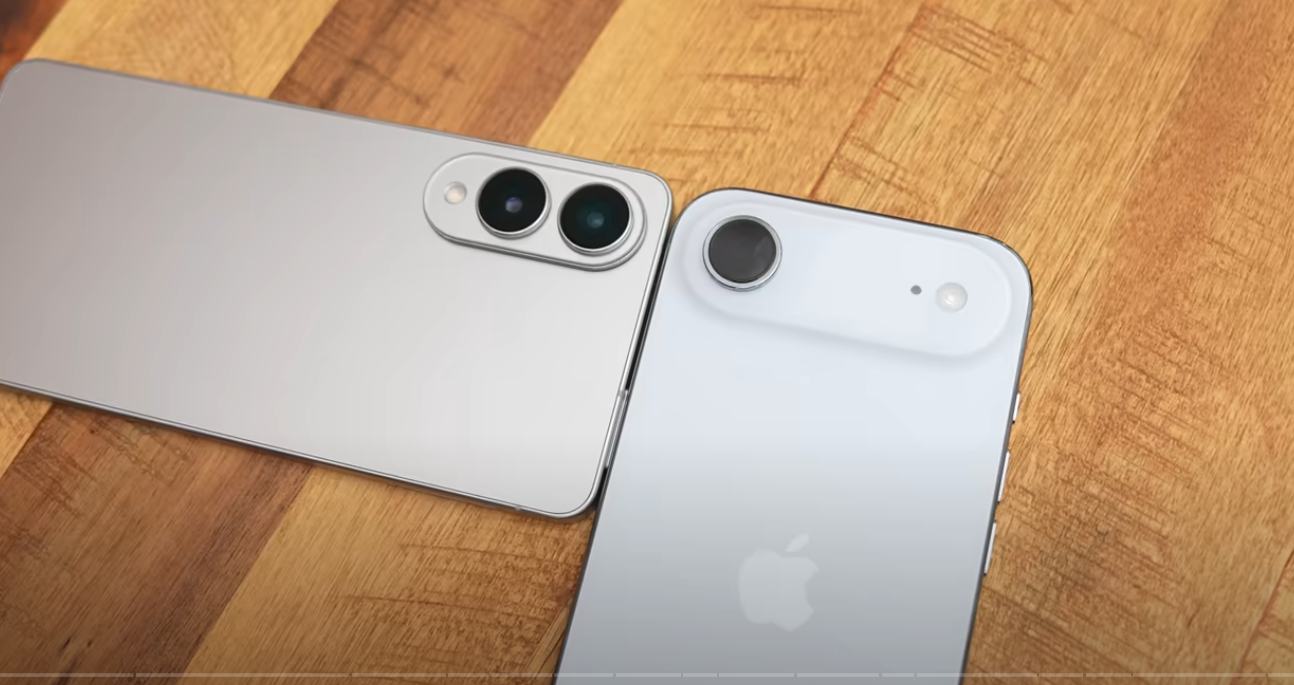
Apple entered this year with a bold bet. The iPhone Air would be its thinnest modern phone, a design flourish that looked like a return to the industry’s long-running fixation with silhouette. For a brief moment, it seemed poised to start a new round of competition. Instead, its early demand has flattened, and that stumble has fed into a wider rethink across the smartphone world. Several Chinese manufacturers have reportedly paused their own ultra thin plans, and Samsung appears to be reconsidering its approach as well. A design idea that once felt certain to return now looks fragile.

The reaction has been unusually swift. Apple’s suppliers have scaled back their Air lines while reports point to delays around its next iteration. Chinese vendors that had explored their own slim layouts, often leaning on eSIM and compact thermal designs, are said to be shelving the work. When a first-mover stumbles, competitors often wait to see whether the downturn is temporary or structural. In this case, the industry seems to be treating it as the latter, at least for now.
The Cost Of Thinness And The Return Of Trade-Offs
Thin phones have always required compromise, but this generation’s approach sharpened those trade-offs. The iPhone Air reached a 5.6 mm profile. Achieving that required a smaller battery and a camera layout trimmed to a single lens. The price barely undercut the more capable iPhone 17 Pro. Consumers noticed. Thinness has an appeal, but not when it collides with fundamentals like endurance, thermal stability, and imaging flexibility.
Several manufacturers appear to have reached a similar conclusion internally. Sources in supply chains have pointed to abandoned prototypes and repurposed research budgets. Xiaomi and Vivo, for instance, had explored concepts built specifically to rival the Air. That work has reportedly been diverted to other programs. It is a reminder that even the most elegant idea still has to survive contact with daily use. Pocketability matters, but so does a device that lasts the day and handles modern workloads without strain.

There is also the question of what thinness actually offers at this stage of the market. Phones have plateaued in many respects. Performance leaps are smaller, and buyers make decisions based on a mix of camera quality, battery reliability, display comfort, and pricing. Thinness sits in that mix, but rarely at the top. It becomes a luxury feature that must justify itself against every other compromise. In a maturing market, that is a hard argument to win.
When Trends Stall And Other Priorities Take Over
The Air’s experience came at a moment when smartphone makers were already reallocating focus. Foldables have taken on more importance, partly because they introduce new use cases rather than refining old ones. Some regional markets are also weighing durability more heavily, particularly after years of complaints about fragile frames and rising repair costs.

Manufacturers have learned that dramatic slimming often pushes structural limits. A device can feel elegant, yet still fail drop tests or bend under stress. No company wants a repeat of past durability controversies. Ultra thin products risk reopening that chapter, especially when margins for reinforcement get razor-tight. It is no surprise that research teams report internal debate over whether a thinner body truly solves a problem for users.
Another factor is regulatory heat. Repairability rules in Europe and parts of Asia are edging toward standards that favor modularity. When phones get thinner, modularity becomes harder. Components must be glued, layered, or miniaturized beyond the point of reuse. Companies understand that committing to extreme thinness could force revisions later if repair regulations harden.
The Foldable Loophole: Thinness Where It Helps
Foldables are the one corner of the market where thinness remains an asset that changes how a product is used. A bulky foldable feels like a brick; a slimmer one feels closer to a tablet that happens to fold. That difference shapes daily behavior. Samsung’s Z Fold 7 showed this effect: when a foldable becomes easier to hold for long periods, new habits form around reading, gaming, and multitasking.
For slab phones, thinness does not transform behavior in the same way. It improves pocket feel but erodes battery life. A foldable, when slimmed down, becomes a different category of device altogether. That distinction might explain why research on ultra thin designs is retreating in one segment while quietly growing in another. Engineers can justify battery density experiments in a foldable because the payoff is clear.
Some companies in China are openly exploring high-density cells such as silicon-carbon blends. These designs allow for larger capacity without bloating thickness. If these cells mature quickly, the ultra thin concept could return with fewer sacrifices. It will depend on chemistry timelines, licensing costs, and thermal management improvements. Nothing is guaranteed, but innovation often returns to ideas that failed earlier rounds.
Where This Leaves The Industry
The slowdown around the iPhone Air and Samsung’s S25 Edge does not close the chapter on thinness. It simply places it on pause while companies reassess market signals. The setback exposes a familiar tension inside the smartphone business. Hardware teams chase purity of form. Consumers chase reliability and value. Those paths run together only occasionally.
For now, brands appear to be letting the idea cool. Research groups that once treated thinness as a pillar of next-generation hardware are focusing on endurance, materials, and new hinge mechanics. Public chatter has tilted toward display advances and camera modules that pull in more light without swelling the device.
There is a plausible route back for ultra thin designs. It would involve improved battery chemistry, stronger frame materials, and pricing strategies that do not punish users for choosing sleekness. If those pieces line up, companies could revive the concept with fewer compromises. The industry has done this before. A design trend recedes, gets re-evaluated, then returns with better engineering beneath it.
For now, though, the market is telling a different story. Consumers want phones that feel balanced. That message is cutting across segments, manufacturers, and regions. Thinness alone no longer carries the weight it once did, and until the fundamentals catch up, the project stays parked.
Go to TECHTRENDSKE.co.ke for more tech and business news from the African continent.
Follow us on WhatsApp, Telegram, Twitter, and Facebook, or subscribe to our weekly newsletter to ensure you don’t miss out on any future updates. Send tips to editorial@techtrendsmedia.co.ke


