
Absa’s Subtle Pivot Toward a Digital Currency Future Takes Shape Ahead of an April Decision
A major bank weighing a move into tokenised finance is forcing a rethink of how money will move in Kenya, and the timeline now feels closer than most expected.

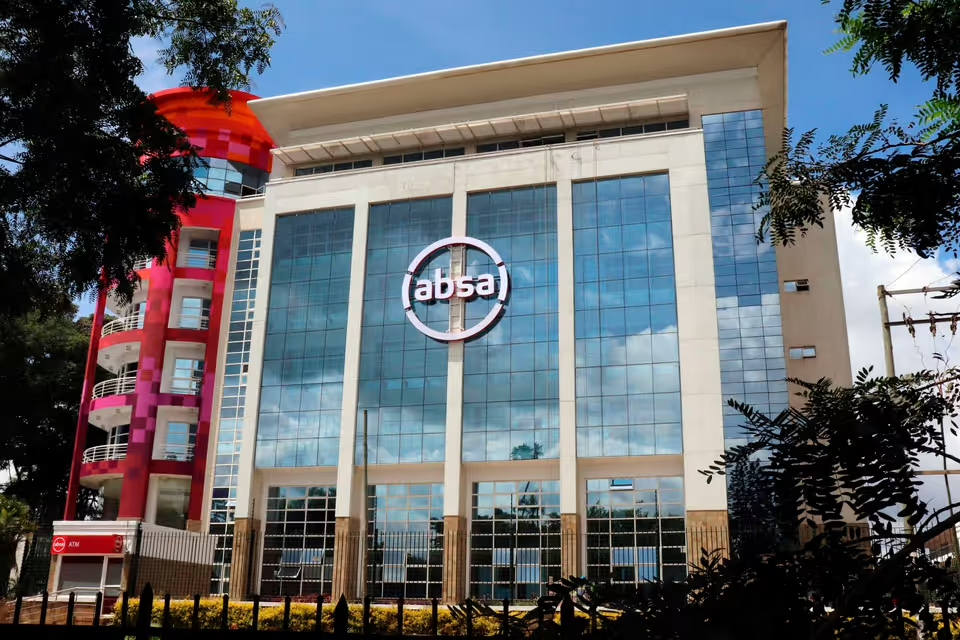
Absa’s digital asset work has reached a point where the next steps depend less on technology and more on Kenya’s regulatory calendar. The bank has already built and tested the operational spine for tokenised instruments in South Africa. Kenya becomes the next frontier once April arrives and the government begins releasing the country’s first formal rules on digital asset custody and tokenised value.

The bank’s teams have been preparing for this moment for months. Internal briefings describe April as the point at which the regulatory environment begins to give shape to what is permissible. The goal is not a speculative crypto product. It is a rail for real transactions that require strong governance, high-grade custody and clear settlement pathways.
Absa’s work with Ripple Custody in South Africa, along with the group’s involvement in ZAR Supercoin, has already shown how the bank handles tokenised value inside regulated walls. The South African model only launched publicly in November, but it has been under development for some time. In that structure, Super Money SA issues the token while Absa holds the reserve funds, giving the token a clear backing structure. The project runs on Solana and moves value across remittance and gaming use cases first.
These details matter for Kenya because they form the blueprint. Absa Kenya would not be starting from zero. It would be adapting an operational framework that already passed regulatory scrutiny in a different jurisdiction.


The Shape of Kenya’s Rules After April
The government’s digital asset consultation closed earlier in the year. The next phase begins after April, when regulators start releasing formal positions on custody, tokenisation and the treatment of stablecoins held by licensed institutions. The Central Bank, Capital Markets Authority and ICT Ministry are expected to share responsibilities. The working assumption inside the market is that custody rules will land first, before the country addresses the use of tokenised money as a regulated payment instrument.
This layered approach matters because custody draws the boundary between banks and unregulated players. If Absa secures the ability to hold tokenised assets for clients, it can then build settlement rails that operate within the bank’s existing compliance structure. Payment tokens may follow later, depending on how the Central Bank defines circulation, convertibility and the role of reserve backing.

Nothing in the draft discussions suggested that Kenya wants free-running private money. The signals point instead to institutional custody, controlled issuance and clear rules on transfer limits. This is the environment in which Absa is preparing to operate.
What Absa Would Launch First
The first product is expected to be digital asset custody for corporate and investment banking clients. That is the function the bank has already operationalised in South Africa. Custody makes sense as the entry point because it fits directly into a bank’s risk framework. It enables tokenised bonds, tokenised deposits and internal liquidity tools long before any consumer token enters the picture.
The next step is planned to be a closed-loop payment system for high-volume corporate flows. In South Africa, these early uses involve remittance corridors and merchant settlements where value moves in predictable volumes. Kenya’s version is expected to follow the same route, especially in sectors that rely on cross-border payrolls, contractor payments, supplier financing and repeat settlement positions.
These controlled environments help banks test settlement speed, liquidity windows and operational resilience without exposing the market to uncontrolled circulation.
Will Absa Issue a Kenya-Based Stablecoin
The bank has not announced one, but the internal logic points in that direction. Kenya’s environment would allow it once custody is authorised and once payment rules are clear. The South African experience with ZAR Supercoin demonstrated the model: an issuer creates the token and Absa holds the reserves. A Kenyan version could follow the same arrangement with a KES-backed token.
Absa is unlikely to issue a token independently. It would partner with a licensed issuer while acting as the reserve bank within the structure. That is the model regulators prefer because it preserves monetary oversight. Several industry insiders expect a KES-anchored token to appear shortly after custody rules settle, though likely in a limited pilot first.
Who Stands to Gain Early
Corporate clients are expected to move first. Many already use dollar, euro or pound custody for trade and treasury activity. A regulated token with instant settlement speed could reduce friction in several areas:
• cross-border supplier payments
• reconciliations across markets
• intra-company treasury flows
• liquidity sweeps for multinational operations
Freelancers and remitters come next. Dollar-based earnings often face delays and high conversion costs. A regulated digital settlement option could shorten that path significantly while still meeting compliance requirements.
Merchants in high-volume ecosystems also stand to gain. The South African model’s early alignment with gaming and betting is not accidental. These sectors process thousands of recurring payments and require settlement certainty.
The model translates easily to Kenya’s digital commerce environment.
The Competitive Question
Absa is not the only lender examining tokenised finance, but it is the first regional bank with a working, regulated stablecoin model in its portfolio. That gives it a head start. Other banks may study tokenisation, but few have crossed into live infrastructure. Absa’s progress with Ripple Custody and the Solana-based token puts the group in a position where launching in Kenya becomes an extension rather than an experiment.
If Kenya’s rules land cleanly after April, Absa could become the first bank to build a regulated token rail in the market.
The Timeline Beyond April
April does not mark a launch. It marks the start of regulatory clarity. The rollout that follows depends on how quickly the government formalises custody, reporting requirements and reserve management rules. Industry expectations point to a pilot window beginning later in the year, followed by a structured opening for corporate clients. Consumer-facing use may come even later.
It is a gradual sequence rather than a single event. The goal is stability rather than speed.
The Larger Economic Question
A regulated stablecoin would not replace the shilling. It would instead operate as a settlement tool inside controlled corridors. Regulators remain cautious about currency substitution and capital leakage. A bank-backed token preserves monetary control and avoids the volatility issues associated with unregulated tokens.
Kenya has reached a point where tokenised finance is no longer an abstract concept. It is becoming part of the formal banking conversation. Absa’s work across the region has turned a technical idea into a near-term operational plan. April’s regulatory releases will determine how quickly that plan moves from internal testing to public deployment.
The coming months will show whether Kenya positions its financial system as one of the first in Africa to anchor digital assets inside mainstream banking.
Go to TECHTRENDSKE.co.ke for more tech and business news from the African continent.
Follow us on WhatsApp, Telegram, Twitter, and Facebook, or subscribe to our weekly newsletter to ensure you don’t miss out on any future updates. Send tips to editorial@techtrendsmedia.co.ke


