
Why the Coolest People Online Are Locking Their Accounts and Disappearing Into Silence
The slow unraveling of a generation that built its identity on being seen and now wants to disappear without apology

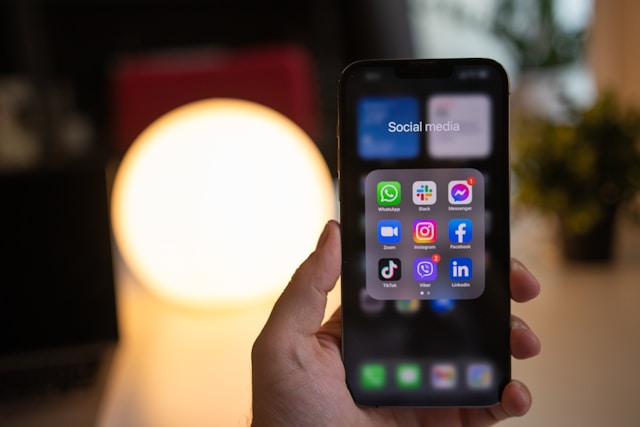
For years, online life was a race toward visibility. Followers, likes, and reach shaped how people understood worth. Now, that chase feels outdated. In certain circles, disappearing online is starting to look like the more refined move. Not in the sense of deleting everything in protest, but of quietly sealing off one’s digital self—posting less, restricting who can see, or stepping away altogether.

It’s not rebellion so much as fatigue. The modern feed is no longer a mirror of real life; it’s an automated blur of sales pitches, synthetic opinions, and generated content designed to mimic emotion. The once-social internet has become a stage without an audience, where algorithms decide what plays and who appears. Against that backdrop, choosing obscurity feels almost like reclaiming authorship.
A New Kind of Prestige
Online invisibility has taken on an aesthetic of its own. Closed profiles, minimal posts, or the absence of a digital footprint suggest restraint in a time of overexposure. Within creative and cultural spaces, it signals something rarer than reach: control. When everyone can be seen, the choice not to be visible becomes a form of self-curation.
This isn’t nostalgia for the early internet. It’s a quiet rejection of the idea that constant presence equals relevance. The act of logging off, or limiting access, now hints at discernment rather than disinterest. In many ways, the new status symbol isn’t attention—it’s autonomy.


The Exhaustion Behind the Aesthetic
The cultural turn toward digital privacy isn’t just about taste. It’s also about survival. Each scroll now carries traces of automation: influencer avatars, AI-generated influencers, and automated commentary that imitate human tone but drain its meaning. What once felt participatory now feels synthetic, like a conversation that loops without anyone listening.
That saturation has consequences. The social web no longer rewards personality; it rewards persistence. And that’s where many users quietly step back. When even authenticity feels engineered, retreat becomes a form of critique.

Technology Without Intimacy
Artificial intelligence hasn’t just automated content—it has automated intimacy. The logic of platforms is now built around prediction: what you might want, who you might follow, how you might react. The result is a feed that knows too much and feels too little.
In that environment, limiting exposure is less about hiding than preserving something human. People still crave connection, but not under surveillance. They want to speak without being quantified, to be present without being archived.
The Return to Smallness
Across private group chats, locked accounts, and invitation-only spaces, a different culture is forming. One that values smallness over spectacle. It’s not about rejecting technology outright—it’s about finding a scale that feels real again.
The web once promised infinite reach. Now, people seem to want the opposite: an internet that ends somewhere, where attention can rest and identities don’t need constant proof.
If earlier generations built digital lives to be seen, this one seems to be learning how to stay unseen on purpose. Not as disappearance, but as design.
Go to TECHTRENDSKE.co.ke for more tech and business news from the African continent.
Follow us on WhatsApp, Telegram, Twitter, and Facebook, or subscribe to our weekly newsletter to ensure you don’t miss out on any future updates. Send tips to editorial@techtrendsmedia.co.ke


