How the TikTok U.S. Deal Turned Into the Defining Contest Over Control, Influence, and the Future of Digital Power Between the Two Giants
The TikTok deal is being sold as closure, yet it feels more like the start of a slow tug-of-war over who really owns the digital present.

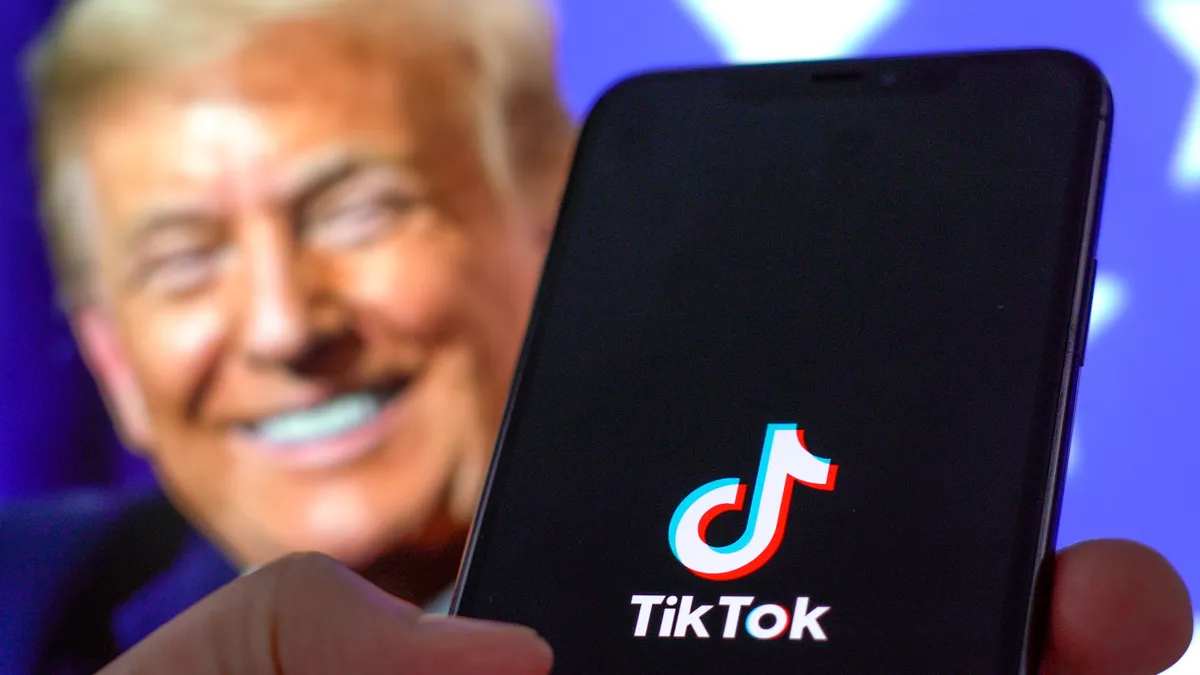
President Donald Trump’s announcement that the United States and China have finalized a TikTok deal might sound like closure. It isn’t. The agreement settles the headline battle, TikTok won’t vanish from American phones, but it opens a deeper one over who truly runs it, and what that leadership represents in a new age of digital geopolitics.

Under the framework, Oracle will handle security operations, Fox Corporation will take a stake, and a new board will oversee TikTok’s U.S. business. On paper, that suggests American control. In practice, it raises old questions with new urgency. The deal is as much a diplomatic instrument as a corporate transaction, crafted to look balanced while keeping both governments satisfied enough not to detonate it.
Inside TikTok, there’s little suspense about who might lead the U.S. venture once it is formalized. The name circulating through internal chats and corporate hallways is Adam Presser, a low-profile operator who already functions as the company’s internal architect.
Presser isn’t the public face — that role belongs to CEO Shou Zi Chew — but he runs the operational grid that defines TikTok’s day-to-day reality: creator relations, ad revenue, policy responses, and moderation frameworks. At WarnerMedia, he helped steer the early years of HBO Max. At TikTok, he became the American hand in a structure that was never quite American.

His rise is less about charisma than calibration. He embodies what both sides need. To Washington, he’s an American-born executive with Hollywood ties. To ByteDance, he’s an insider who understands its systems and instincts. To the people who work with him, he’s the rare figure who can keep both worlds intact without drawing too much attention.
What “American control” actually means
For months, the TikTok fight has been framed around ownership — a legal question that masks a cultural one. Washington wants an American-led company. Beijing wants continuity. The new arrangement tries to promise both, and Presser may become the living compromise that makes it plausible.
If he takes the top role, three outcomes seem likely. The most stable version is that TikTok continues much as before, only under a more formal American wrapper. A second, more political path would elevate Presser as a nominal CEO while major strategic calls still trace back to ByteDance’s global headquarters. A third, less probable route involves a deeper decoupling, with Presser positioned as the figure who could steer an independent American TikTok if regulators ever demand it.
In all three versions, the real power sits somewhere between legal paperwork and cultural code. ByteDance still owns the underlying technology. Oracle secures the servers. The U.S. gets a governance symbol it can present to voters and Congress as proof of sovereignty.
The broader recalibration beneath the surface
The TikTok deal arrives amid wider talks between American and Chinese negotiators on trade, minerals, and technology. Treasury Secretary Scott Bessent confirmed that rare earths were part of the discussions in Kuala Lumpur, a reminder that the app’s fate sits within a larger chessboard of dependencies — semiconductors, batteries, logistics.
Each negotiation, whether over data or metals, circles the same tension: both powers want interdependence to feel like control. The TikTok arrangement captures that paradox in miniature. It’s a data platform that can’t exist without shared code and cross-border cooperation, yet it’s now being sold as a victory for national autonomy.
That framing keeps both governments comfortable, at least for now. It also exposes how fragile this new balance is. Every patch of cooperation is treated as a test of dominance. Every concession carries an implicit dare, how much dependence is acceptable before it becomes surrender?
A mirror of the moment
If Adam Presser does take charge, he will inherit a near-impossible task: convincing regulators that TikTok is American enough, Beijing that it remains commercially loyal, and users that nothing has changed. That tension defines the deal more than any executive order or shareholder list.
TikTok’s future won’t be settled by one signature in Seoul or one name on a board. It will unfold in a gray zone where power, perception, and technology constantly blur. The TikTok U.S. deal, in the end, is not just about ownership. It’s a live experiment in how two rival superpowers try to coexist inside the same app.
Go to TECHTRENDSKE.co.ke for more tech and business news from the African continent.
Follow us on WhatsApp, Telegram, Twitter, and Facebook, or subscribe to our weekly newsletter to ensure you don’t miss out on any future updates. Send tips to editorial@techtrendsmedia.co.ke


