
The Canal Plus Africa Diversification Gamble: Can Local Markets Carry a Global Brand?
Follin, who previously served as Chief Transformation, Data & AI Officer at Canal Plus, will now lead the company’s diversification strategy across the African continent. His new role comes as Canal Plus consolidates operations with DStv owner MultiChoice, expanding its reach in one of the world’s fastest-growing media markets.


When Canal Plus completed the deal that folds MultiChoice into its orbit, the company bought more than a pay-TV business. It took on a tangled marketplace: varied payment habits, opaque distribution networks, regulators with local priorities, and viewers who use a dozen little hacks to get the channels and services they want. Thomas Follin arrives to run Canal Plus Africa diversification at a time when strategy will be less about rolling out a single product and more about reconciling a dozen different commercial logics.

This is not a victory lap story. It is a management problem writ large. The task is institutional: align legacy broadcast DNA with the agility of streaming, map revenue lines across very different economies, and decide what to hold and what to redeploy. Those are easy to say. Harder to do.
How a transformation executive ends up on the commercial front
Follin’s résumé follows a pattern seen across European media leadership — technical grounding, digital fluency, and later strategic oversight. His early years at M6 Group led to digital operations, new media channels, and eventually, the Executive Committee. Running Salto between 2019 and 2023 exposed him to the messy economics of local streaming: joint ventures, uncertain markets, unpredictable partners.
When he joined Canal Plus in 2023 as Chief Transformation, Data & AI Officer, his work centered on internal realignment. The decision to move him now into a commercial role implies that Canal Plus believes structure and diversification are linked. This isn’t about adding new revenue lines for their own sake; it’s about creating an organization that can handle volatility.

The contradiction at the heart of the deal
MultiChoice was built on proximity — regional anchors, local languages, content tied to national life. Canal Plus, by contrast, developed through centralized models and economies of scale. The merger joins two opposing logics: decentralization and control.
Inside the new setup, those tensions will play out in small but telling ways. Programming calendars. Price segmentation. Product bundling. Some regions might cling to legacy packages, others will move to hybrid streaming offers. The contradictions are not flaws; they are features of scale. Whether they produce cohesion or friction depends on how autonomy is managed.
Where data meets old habits
Follin’s data background will help, but algorithms alone can’t fix payment friction or informal viewing. Africa’s media ecosystem runs on hybrid systems — satellite, mobile, and shared access through devices not built for streaming. A “diversification” officer here will have to learn to treat workarounds as market data, not as anomalies.
The goal is not just digitization; it’s adaptation. Canal Plus Africa diversification must figure out how to monetize viewing cultures that don’t follow textbook consumer paths. The path forward will likely involve local partnerships, flexible billing, and pricing tests that respect household budgets rather than corporate spreadsheets.
Possible turns the story could take
One version of the future looks careful and procedural. The teams streamline operations, merge overlapping systems, trim duplication, and push for steadier margins. Nothing headline-grabbing, but the company grows more predictable. Investors like predictability, even if viewers rarely notice it happening.
Another take leans into experimentation. Local markets test their own subscription bundles, pricing models, and regional streaming add-ons. Some catch on; others flop. The company starts to resemble a constellation rather than a single structure. It is untidy but alive.
A bolder path sits in the background — the platform ambition. Instead of relying on subscriptions alone, the group could turn its user base into a marketplace for advertising, micro-transactions, and data-driven services. It’s risky, capital-intensive, and politically tricky in certain countries, but it would change what Canal Plus Africa is.
There’s also the less glamorous outcome that executives rarely name aloud: consolidation under pressure. Costs tighten, decisions slow, innovation defers to regulatory compliance. The business continues, but the pulse flattens.
Each direction holds a different idea of success. The hard part will not be choosing one, but managing the friction between them — staying wide enough to learn without drifting so far apart that the company loses its shape.
The numbers behind the landscape
The merger creates a subscriber base of about 40 million across nearly 70 markets, making Canal Plus Africa the largest pay-TV and streaming player on the continent. By contrast, Netflix commands about 2.6 million subscribers across Africa, Showmax roughly 2 to 3 million, Amazon Prime Video around 800,000, and Disney+ about 650,000. Smaller services such as Apple TV+ and BritBox remain confined to narrow, urban audiences.
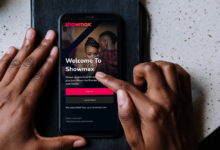
MultiChoice’s pay-TV base has thinned in recent years, losing nearly 2.8 million users before the Canal Plus takeover. Showmax, its streaming counterpart, has moved in the opposite direction, expanding steadily since its 2024–2025 overhaul. That divergence captures the market’s underlying shift: growth sits in digital tiers, decline in legacy models.
StarTimes and other low-cost operators still dominate mass and rural segments, where hardware and free-to-air options matter more than subscription apps. The result is a layered landscape — a few urban households juggling multiple platforms and millions more sharing one DStv connection.
The numbers confirm an old rule: scale is not value. Average revenue per user in Africa remains a fraction of that in Europe or Asia. Profitability depends not on signing up more people, but on turning existing reach into stable, higher-yield engagement.
What success might look like in practice
Progress will not appear as a single surge in subscriber counts. It will show up in smaller, compound gains — smoother onboarding, localized pricing, more efficient ad networks, and payment systems that work with informal economies rather than against them.
The challenge is cultural as much as operational. If the integration focuses only on short-term margins, creativity will narrow. If it tolerates uneven outcomes while learning what sticks, it may build the flexibility these markets require.
The governance test
Reporting to David Mignot keeps Follin inside the African command chain, not folded back into Paris. That decision matters. The continent’s growth potential depends on giving local teams autonomy with real tools: analytics, shared infrastructure, and authority to test pricing without bureaucratic drag. Coordination will determine whether diversity becomes strength or inefficiency.
This next phase will test whether Canal Plus Africa can hold unity and variety in the same frame. That tension, properly managed, is not a flaw. It’s a model.
The open calculus of value
The combined Canal Plus–MultiChoice group now carries the largest reach on the continent, but the merger’s success will rest on a quieter number — ARPU. A higher-paying, retained customer is worth far more than five fleeting sign-ups. The company’s challenge is to close the distance between its wide footprint and its shallow wallet share.
The real pivot ahead isn’t about chasing Netflix. It’s about deepening the relationship with African households that already watch, pay, and share within the Canal Plus ecosystem. Follin’s task is to build a structure that values consistency over spectacle — a business that grows not by counting heads, but by understanding habits.
If he manages that, Canal Plus Africa won’t just be the biggest player in the market. It will be the first to prove that scale, on its own, isn’t the point — sustainability is.
Go to TECHTRENDSKE.co.ke for more tech and business news from the African continent.
Mark your calendars! The GreenShift Sustainability Forum is back in Nairobi this November. Join innovators, policymakers & sustainability leaders for a breakfast forum as we explore sustainable solutions shaping the continent’s future. Limited slots – Register now – here. Email info@techtrendsmedia.co.ke for partnership requests.
Follow us on WhatsApp, Telegram, Twitter, and Facebook, or subscribe to our weekly newsletter to ensure you don’t miss out on any future updates. Send tips to editorial@techtrendsmedia.co.ke
TechTrends Media Podcasts


