
Apple Slashes iPhone Air Production as Thinness Turns Into a Liability Instead of a Breakthrough in Design
The iPhone Air promised elegance and ended up revealing how fragile ambition can be when it meets the market.


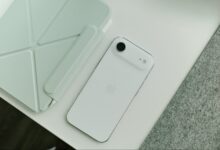
The iPhone Air was supposed to be a tidy demonstration of craft: a phone you barely notice until you notice how well it disappears into a pocket. For a few days in the hands of early buyers it worked. The silhouette, the lightness, the first compliment from a friend, all of that reads like design success.

Then the novelty wears off and a different ledger opens. People begin to judge devices by how they behave when real life turns up: a long commute, a day of mapping, an overdue podcast, a noisy kitchen. On those terms the Air asks too much of its owners. Suppliers have already begun to react. Production plans were slashed; capacity shifted back to the iPhone 17 family. Those moves turn a design debate into a business problem. The question is not whether Apple can make a thinner phone. The question is whether it can make one that does not ask everyday life to change around it.
Where design trimmed more than fat
To reach the Air’s featherweight profile Apple made explicit trade-offs. The battery is smaller than most flagship buyers expect. Thermal headroom is tight, so sustained workloads throttle sooner. The camera array was simplified; in some markets there is effectively one dominant lens. The speaker system is, plainly, a single driver.
Those are technical choices presented as aesthetic ones. But they add up. People do not purchase a phone for a single pleasing gesture; they purchase it for the next 18 months of habits. A lighter frame is pleasant. A short battery window is not. A single speaker in 2025 is not a design statement. It is a daily nuisance.
Samsung’s thinness, built with better math
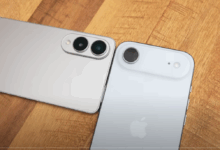
Contrast helps. The Galaxy S25 Edge sits near the same thinness, yet it manages to sustain battery and audio standards many find non-negotiable. Samsung gave itself a marginally larger battery and a vapor chamber for heat management. It installed two stereo drivers and pushed charging speed a little higher. The result is not a miracle. It is a different distribution of compromise.
That comparison matters because it proves a point: the limitations the Air faces are not pure physics. They are a set of design decisions. Both engineering teams dealt with the same constraints. Samsung chose to spend some of its allowance on recovery and steady performance; Apple chose to spend it on reduction. Which choice consumers prefer depends on how they live with the device, not how it photographs on a table.

A speaker so small it breaks the spell
Of all the Air’s concessions the mono speaker is the least defensible. Phones are not luxury audio devices, but they are daily communication tools. People call outdoors, they follow step-by-step directions, and they watch quick videos without wired headphones. A single driver undermines those mundane uses. It turns an otherwise elegant device into an object that performs poorly when simple conditions exist. That gap is not something a marketing line can fix.
Heat as a matter of philosophy, not physics
Under the case the Air carries Apple’s latest silicon and healthy RAM. Benchmarks, on paper, look strong. But performance under prolonged load tells a different story. Thermal throttling shows up fast; the phone preserves surface feel at the expense of continuous power. Samsung’s vapor chamber approach is not showy. It is work to keep chips honest for longer stretches, which for many users is the true measure of a phone.
Apple’s choice here reads like a philosophical preference: prefer brief peaks delivered with polish rather than sustained output that looks more utilitarian. That preference has a place. It just looks out of sync when the market expects both flair and stamina.
Battery life without breathing room
Apple’s software-level frugality is impressive. The Air will carry a light user through a day. But most people are not light users. When navigation, social video and calls stack up, the lack of quick recovery becomes a liability. Samsung’s slightly faster charging and larger reserve provide users a behavioral margin; a quick five-minute top-up feels meaningful rather than symbolic.
The engineering fixes are known. Stacked-cell batteries can increase density without adding profile. Faster MagSafe charging would let small bursts restore useful capacity. Software can learn routine behaviour and pre-buffer power. These are concrete remedies that do not require abandoning the Air’s design intent.
A camera built for restraint, not range
Apple bet on a simpler camera system in the Air, reasoning that most people use one lens most of the time. That is defensible in a narrow reading. But flexibility matters in practice. Samsung’s high-resolution sensor and computational zoom give users options for travel snaps and social media crops. Optical versatility is one thing; perceived capability is another. The Air can close that gap with stronger computational zoom and better image-stacking, or with a hardware puck that extends range for occasional needs. Both routes would preserve the thin body while expanding what the camera can do.
When suppliers pay for the experiment
Apple has experimented with form before: small phones, larger inexpensive models, and now the Air. Each experiment yields lessons — and friction. Supply chains tune to rhythm and scale. When demand fails to match forecasts, smaller suppliers feel the squeeze first. Lines are repurposed, orders renegotiated, and capital spending deferred. That is precisely what is happening now. The production cuts are not merely about inventory. They are a signal to partners about which bets the market will support.
If Apple intends to keep experimenting, suppliers will demand clearer commitments or higher premiums for flexibility. The ecosystem will reward manufacturers that can move quickly between product mixes without dramatic cost.
Three paths forward, none without risk
Apple effectively has a short menu of choices. First, it can keep the Air as a boutique model: low volume, high design prestige, and limited impact on the wider lineup. That reduces supplier exposure but also limits the Air’s influence.
Second, Apple can integrate the best of the Air into the main roster: lighter frames with restored battery and audio baseline. That simplifies logistics and returns the focus to everyday utility.
Third, it can accelerate a larger gamble: foldable devices that offer clear, functional gains. Foldables demand new suppliers, fresh testing, and different price architectures. They offer a more obvious reason for users to move away from existing habits. Each path reshapes the supply map, the margin calculus and the public story Apple tells about hardware progress.
How thin could still feel complete
There is a pragmatic list of fixes that would retain the Air’s aesthetic while restoring utility. Stereo sound must return. Thermal design needs to be intentional, not minimal. Charging should be elastic: short bursts that restore meaningful capacity. Camera constraints require either computational uplift or modular hardware. And iOS should treat Air users as a special case: thermal-aware behaviour, audio amplification options, and contextual battery tips that do not feel punitive.
These are not fantasy engineering proposals. They are practical strategies grounded in what other makers have already shown is possible.
Lessons for buyers and builders alike
For buyers the lesson is direct: evaluate devices by the life you live, not the novelty they bring to the first week. If you prize lightness above all, the Air delivers. If you need durable day-to-day performance and clear audio, look elsewhere.
For the industry the signal is structural. As devices mature, the margin for purely cosmetic innovation narrows. Engineers and product managers must trade in honest terms: what is the everyday cost of a design? Firms that can articulate and deliver value across months of use will win. Suppliers that build flexibility into lines will be hired again.
The reckoning for thinness
Apple made the iPhone Air and proved it could push the envelope of lightness. Samsung showed that the same envelope can be pushed without giving up the basics. The market is not punishing minimalism; it is asking for completeness. The Air can be more than a beautiful experiment if Apple chooses to rebalance its trade-offs. The coming months will tell whether this moment becomes a footnote or a turning point in how phone makers think about what users actually need.
Go to TECHTRENDSKE.co.ke for more tech and business news from the African continent.
Mark your calendars! The GreenShift Sustainability Forum is back in Nairobi this November. Join innovators, policymakers & sustainability leaders for a breakfast forum as we explore sustainable solutions shaping the continent’s future. Limited slots – Register now – here. Email info@techtrendsmedia.co.ke for partnership requests.
Follow us on WhatsApp, Telegram, Twitter, and Facebook, or subscribe to our weekly newsletter to ensure you don’t miss out on any future updates. Send tips to editorial@techtrendsmedia.co.ke
TechTrends Media Podcasts


