
Can Airtel Africa’s 2030 Vision Deliver? A Closer Look At The Foundation’s Plan To Impact 10 Million Lives
Why Airtel Africa Foundation is betting on education, digital inclusion, and sustainability to reach 10 million lives by 2030

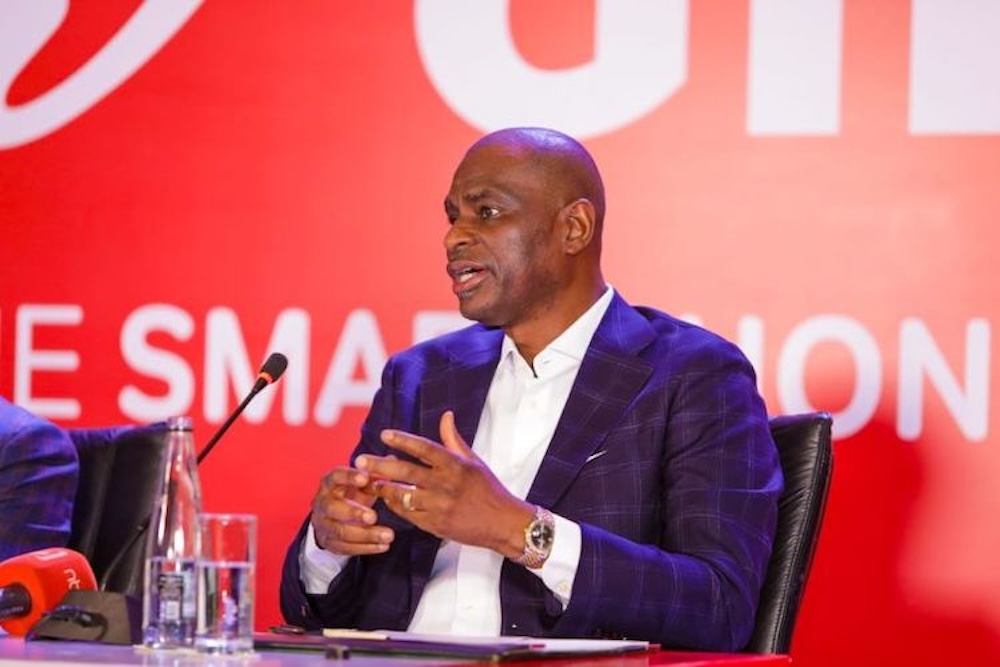
When Airtel Africa Foundation announced its ambition to transform 10 million lives by 2030, it sounded like the sort of sweeping corporate pledge that’s easy to cheer but harder to measure. Numbers impress. They also conceal complexity. What does “improved” really mean when applied to millions of people across 14 very different African markets?

The foundation has mapped its work onto four pillars—Financial Empowerment, Education, Environmental Protection, and Digital Inclusion. Taken together, they’re designed to show breadth. Yet breadth can dilute depth. The risk is ending up with plenty of touchpoints but few enduring shifts in how communities live, learn, or work.
The digital inclusion promise: more than just SIM cards
Telecoms like Airtel have an obvious entry point into social good: connecting people. Digital inclusion feels intuitive, almost inevitable. But history shows that handing out SIM cards, data packages, or even smartphones doesn’t automatically translate into opportunity.
In Rwanda, Airtel partnered with government programs to distribute LTE devices, helping push smartphone penetration up dramatically. That’s an achievement on paper. But inclusion is not only about access—it’s also about what people can do once they’re online. Without local content, affordable data bundles, and meaningful training, connectivity risks becoming a hollow metric.


Speculative scenario: by 2028, imagine a teenager in rural Malawi who gets a subsidized device through an Airtel initiative. If her school isn’t integrated into the same digital ecosystem, and her family struggles with data costs once free bundles expire, that “connection” might fade into a brick of unused hardware. Airtel will need to prove that its inclusion programs avoid this fate.
Education interventions: the classroom meets the cloud
The Foundation highlights its UNICEF partnership: 1,800 schools connected, a million students reached, 17,000 teachers trained. These numbers are real. But the tougher question is whether digital access leads to better educational outcomes.

A laptop in a classroom does not guarantee literacy gains. Teacher capacity, electricity supply, curriculum alignment—all of these matter as much as the hardware. Airtel’s ambition to expand zero-rated educational platforms could be transformative if paired with strong national policy backing. Otherwise, digital tools risk becoming bolt-ons, celebrated in press releases but underused in practice.
Consider Nigeria, where Airtel and UNICEF reached nearly 600,000 children with online learning platforms. By some accounts, students in connected schools still rely heavily on traditional chalk-and-talk methods. Teachers, despite training, struggle with integration. This suggests that the road from device distribution to genuine classroom transformation remains longer than Airtel admits.
When empowerment blurs the line between freedom and dependency
Mobile money is Airtel’s bread and butter, and financial empowerment is baked into the foundation’s DNA. Expanding digital wallets to underserved populations sounds like a clear positive. But here’s where nuance creeps in.
Financial empowerment can quickly slide into digital indebtedness. In markets where microloans and instant airtime credits proliferate, customers often find themselves in cycles of borrowing that are difficult to escape. Unless Airtel’s programs emphasize financial literacy, savings, and access to fair credit, the empowerment pillar could morph into dependency disguised as progress.
A plausible future: by 2027, Airtel reports a doubling of mobile money penetration in Zambia under its foundation initiatives. Yet if most users are primarily taking small digital loans at high effective interest, the “empowerment” story looks less heroic. Will Airtel commit to transparency on the quality—not just quantity—of financial participation?
Climate commitments: the diesel paradox
Telecoms run on infrastructure, and infrastructure in much of Africa still runs on diesel. Airtel’s partnership with the Carbon Trust acknowledges the contradiction: driving digital inclusion while pumping carbon into the atmosphere.
The Foundation says environmental protection is a core pillar. But clarity is lacking. Will Airtel finance solarization of rural towers? Will it invest in community microgrids that both power its infrastructure and serve local populations? Or will climate responsibility be reduced to token tree-planting exercises?
Here lies a deeper narrative: the very networks Airtel uses to connect millions can also entrench fossil-fuel dependency if the transition isn’t managed aggressively. Unless environmental targets are made specific and measurable, the climate pillar risks being the weakest leg of the table.
Scaling ambition across 14 markets
From Nigeria to Kenya, Zambia to the DRC, Airtel operates in territories with wildly different regulatory frameworks, political climates, and infrastructure baselines. Scaling a unified social mission across them is daunting.
One unresolved question: how much autonomy will each country office have in tailoring projects? Airtel has set expansion targets for 2025/26, but the governance model isn’t yet clear. If strategies are overly centralized, programs may fail to resonate locally. If too decentralized, accountability for the 10 million figure could fragment.
Speculative outcome: by 2030, Airtel may well tally millions of “lives touched,” but the distribution could be uneven—robust progress in smaller, more cooperative markets like Rwanda, but stalling impact in Nigeria where bureaucracy and scale present formidable hurdles.
Measuring “improved lives”: the slipperiest metric
Perhaps the biggest unresolved issue is the very definition of success. A connected school counts as progress, but if dropout rates remain unchanged, has a life been improved? A mobile wallet account adds to the numbers, but if it becomes a gateway to unmanageable debt, what then?
Airtel has tied some of its financing to sustainability-linked metrics, which suggests external auditing could enforce rigor. Still, the Foundation hasn’t disclosed how it will measure intangible outcomes: empowerment, resilience, transformation. Without that, the “10 million lives” claim risks becoming a branding device rather than a social contract.
The bigger picture: telecoms as social actors
What Airtel is attempting reflects a larger pattern: telecoms moving beyond connectivity to position themselves as social architects. MTN Foundation, Safaricom Foundation, and others are following similar arcs. The difference may lie in scale and framing. Airtel’s promise is audacious, but so too is the skepticism it must overcome.
If executed well, AAF could redefine how corporate social responsibility operates on the continent—integrated with core business but not captive to it. If executed poorly, it could reinforce cynicism about “impact washing,” where lofty numbers mask modest realities.
The story still waiting to be written
The Airtel Africa Foundation 10 million lives pledge is both visionary and fraught. Its pillars align neatly with pressing African challenges. Its partnerships give it credibility. Yet its metrics, governance, and long-term sustainability remain underdeveloped.
What will determine success isn’t the headline number. It’s the lived experience of a student in Dodoma, a farmer in rural Nigeria, a young entrepreneur in Lusaka. If their stories in 2030 reflect real change—better education, fairer access to finance, cleaner energy, usable connectivity—then Airtel’s pledge will feel less like corporate branding and more like genuine transformation.
Until then, the number hangs in the balance: a promise waiting for proof.
Go to TECHTRENDSKE.co.ke for more tech and business news from the African continent.
Mark your calendars! The TechTrends Pulse is back in Nairobi this October. Join innovators, business leaders, policymakers & tech partners for a half-day forum as we explore how AI is transforming industries, driving digital inclusion, and shaping the future of work in Kenya. Limited slots – Register now – here.
Follow us on WhatsApp, Telegram, Twitter, and Facebook, or subscribe to our weekly newsletter to ensure you don’t miss out on any future updates. Send tips to editorial@techtrendsmedia.co.ke
TechTrends Media Podcasts


