

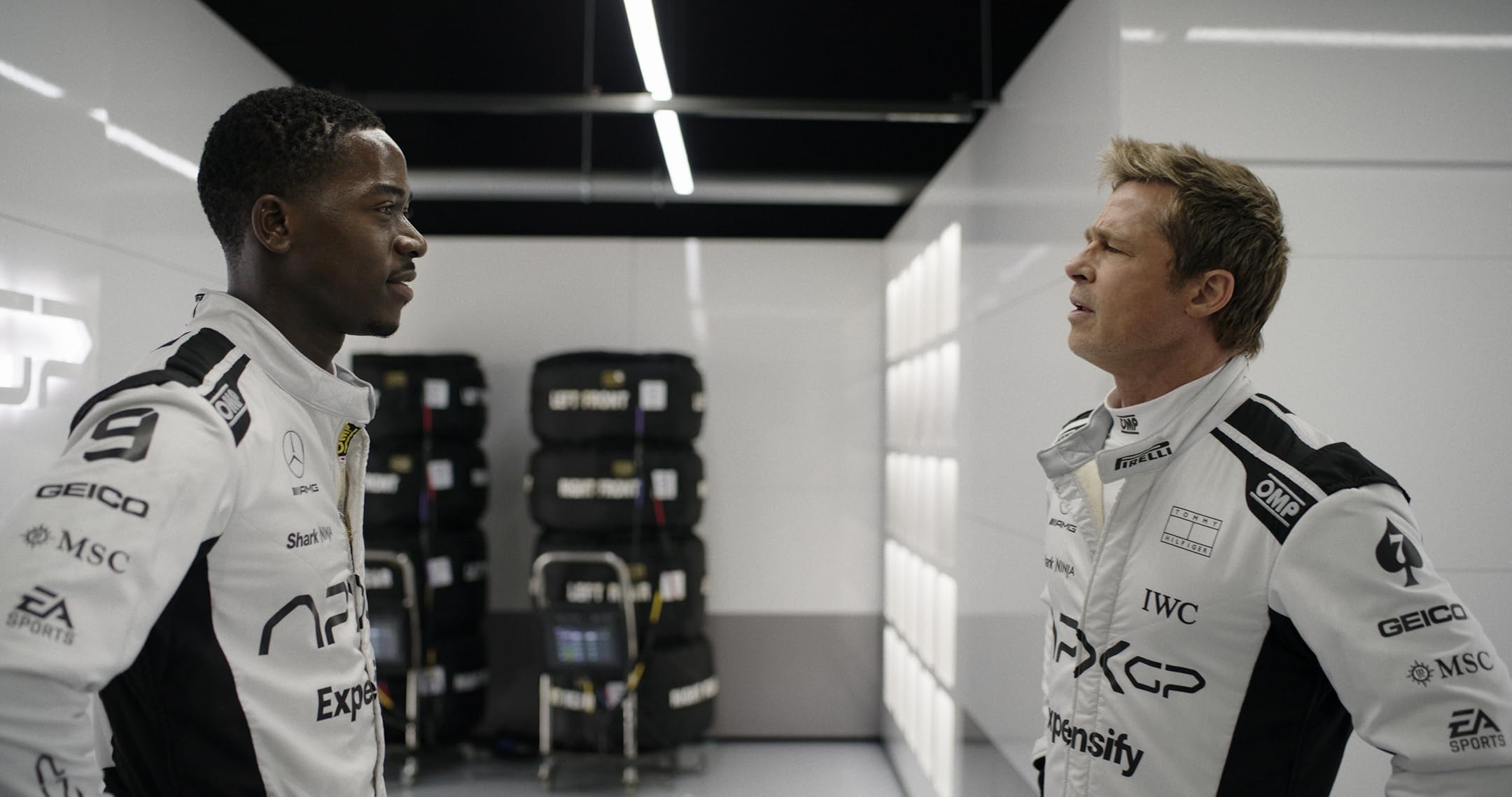
When F1: The Movie hits theaters this weekend (Premiers today at Century Cinemax), it won’t just be testing the limits of box office expectations. Backed by Apple Original Films and featuring Brad Pitt and Damson Idris, the $300 million production also doubles as a cinematic vehicle for Formula 1’s next chapter—one that could accelerate its fanbase across untapped markets, especially Africa.
The sport has already seen remarkable global growth. As of 2024, Formula 1 boasts a global fanbase of 826.5 million, up 90 million from the previous year, according to Nielsen Sports. But amid soaring digital engagement, packed grandstands, and rising media rights fees, Formula 1’s growth in Africa remains a glaring gap—and a compelling opportunity.
Hollywood Meets the Paddock
Shot during real Grand Prix weekends, the film pushed Apple to invent a custom camera system. Engineers repurposed iPhone 15 Pro components—including its A-series chip and ProRes log video codec—to create a compact rig able to withstand the extreme speeds and vibrations of an F1 car. The result? Authentic racing POVs that blend seamlessly with high-budget cinema.
This high-tech commitment is not just about storytelling. It’s part of a larger push to make F1 accessible and exciting to a younger, more global audience—and nowhere is this mission more urgent than in Africa.


The Netflix and Social Media Effect
Just as Netflix’s Drive to Survive catalyzed interest across the U.S., it has also played a key role in Formula 1’s growth in Africa. In Kenya, influencer Joy Jeptoo turned her fandom into a lifestyle, flying to Bahrain and Abu Dhabi to attend races and later hosting F1 viewing parties in Nairobi that attract hundreds.
Kenya’s Paddock Experience community, for instance, draws as many as 1,400 fans per race weekend to local venues, transforming F1 races into social spectacles. These events—filled with giveaways, trivia, and music—reveal a passionate, engaged audience ready for the next step: a home race.
“This isn’t just about glamor,” says Jeptoo. “People here know the sport. They know the drivers, the strategies, the engineering.”
Why Africa Still Has No Grand Prix
Despite F1’s aggressive expansion into new territories—racing in Las Vegas, Qatar, and Saudi Arabia—Africa remains the only inhabited continent without a Grand Prix.
South Africa’s Kyalami circuit remains the most viable candidate, recently securing FIA approval for Grade One upgrades. But those upgrades hinge on whether F1 awards them a race. Cape Town is also in contention with a proposed street circuit, though financial support remains uncertain.
Rwanda, once considered a contender thanks to a new track under development near its airport, has seen momentum stall. Morocco’s Tangier project lacks government backing. In every case, money and politics have slowed progress.
Still, F1 leadership acknowledges the need. As Kyalami’s Toby Venter puts it: “F1 is not a true world championship without Africa.”
The Numbers Behind the Movement
The audience is ready. Across North Africa, TV viewership has more than tripled. In Sub-Saharan Africa, platforms like F1 TV and DStv’s Motorsport channel have made races more accessible than ever.
Globally, 41% of F1 fans are women, up from just 10% in 2017, with young African women like Ghana’s Baaba Jenkins and Queendela Adu-Poku launching podcasts and traveling the globe to attend races.
Meanwhile, Africa’s fan-led communities have become regional engines of growth. Whether it’s Ghana’s viewing parties, Nigeria’s F1 Naija content hub, or South Africa’slong-suffering Grand Prix loyalists, Formula 1’s growth in Africa is no longer speculative—it’s already in motion.
Looking Ahead: Media Rights and Market Stakes
Apple’s interest in F1 isn’t limited to cinema. Analysts expect bidding wars over U.S. media rights next year. With ESPN hesitant to raise its $85 million annual fee, streaming platforms like Apple TV+ or Amazon Prime Video could step in, especially if they see value in courting international audiences.
If Apple leverages its growing footprint in African tech markets—via hardware, content, or entertainment—the next chapter of F1 might look a lot more Pan-African.
Final Lap
From Nairobi to Lagos to Johannesburg, fans are racing ahead of the sport itself. What’s missing is infrastructure and institutional commitment. But the passion is already there. With the right partners—and maybe a little box office magic—Formula 1’s growth in Africa could go from potential to pole position.
Follow us on WhatsApp, Telegram, Twitter, and Facebook, or subscribe to our weekly newsletter to ensure you don’t miss out on any future updates. Send tips to editorial@techtrendsmedia.co.ke


