
Why the IFC Is Writing Cheques Again While Most Global Investors Are Still Sitting on Their Hands
Global capital has learned how to wait, but Kenyan businesses rarely have that luxury

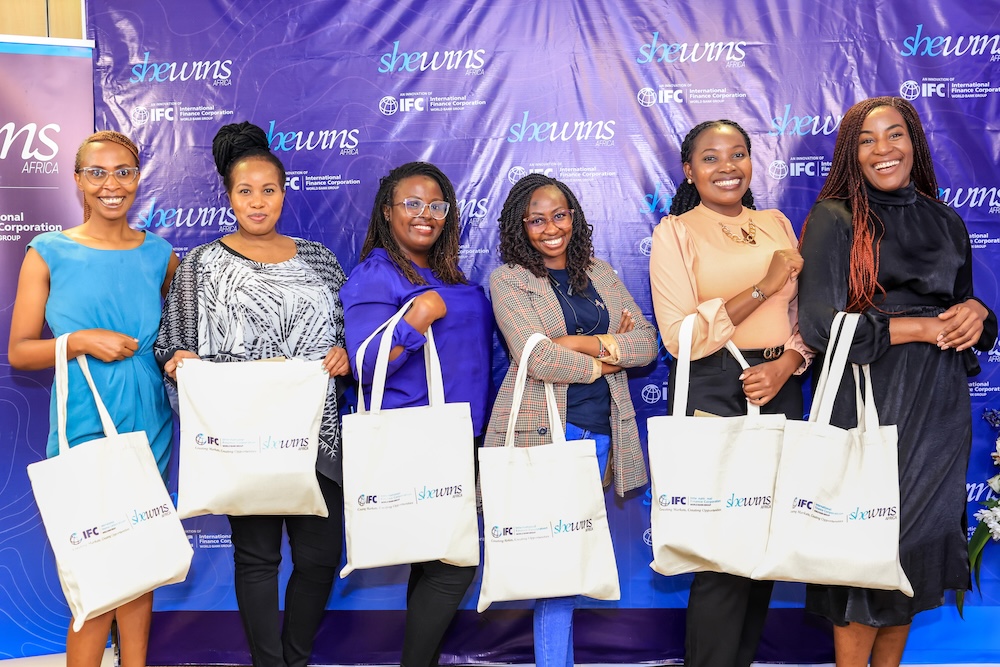
When the International Finance Corporation commits equity capital, it usually does so with an unusually long memory. The institution tends to avoid momentum trades and prefers investments that can absorb time, friction, and imperfect outcomes. That context matters as IFC prepares to invest up to $30 million into Adenia Entrepreneurial Fund I at a moment when global capital remains hesitant.

The number itself is not extraordinary by international standards. Within African private equity, it carries weight. The commitment lands as many global investors continue to slow deployments, reduce exposure, or insist on clearer exit visibility before writing cheques.
IFC equity investment in African SMEs arrives less as enthusiasm than as insistence that the asset class still functions.
This is not a vote for speed. It is a bet on endurance.

Why the Middle of the Market Still Struggles
Kenya’s capital markets have developed unevenly over the past 10 years. Early-stage venture funding expanded rapidly, while large infrastructure financing retained institutional support. Between those poles, small and medium sized enterprises often found themselves stranded.
Companies generating steady revenue but requiring $10 million to $20 million in equity frequently faced limited options. Commercial banks remained conservative. Large funds needed scale. Venture investors preferred faster growth curves. The result was a persistent capital gap that narrowed only sporadically.
Adenia’s model is designed to operate inside that space. Its fund targets 10 to 12 companies across several African markets, with equity sizes that are substantial enough to change operations but modest enough to avoid excessive valuation pressure. For Kenyan firms, that range often determines whether expansion happens deliberately or not at all.
Adenia’s Portfolio Reflects an Older Playbook
Adenia is not a new entrant experimenting with the continent. The firm has operated for more than 22 years and has raised a cumulative $950 million across multiple funds. Its Kenyan investments include companies such as QuickMart Limited, Red Land Roses, and Africa Biosystems Limited, all of which operate in sectors where margins, logistics, and execution matter more than narrative.
In October 2024, Adenia announced the acquisition of insurance broker Minet as part of a broader pan-African transaction. That deal expanded an existing footprint rather than opening a speculative frontier. The pattern is consistent. Adenia tends to invest where operational leverage can be built incrementally.
IFC’s willingness to co-invest up to an additional $20 million alongside the fund suggests confidence in that discipline. Co-investment structures typically place greater responsibility on the fund manager, with less tolerance for passive oversight.
The Role of an Anchor Investor
IFC’s participation is not limited to capital volume. As an anchor investor, the institution helps Adenia move toward a first close as it targets a fund size between $150 million and $180 million. In current conditions, that signal often matters more than the cheque itself.
Many global investors remain interested in African private equity but hesitate at execution risk. An IFC-backed fund reduces that hesitation by proxy. Governance standards, reporting discipline, and exit planning become easier to defend internally when a development finance institution is involved.
This dynamic does not guarantee broader participation, but it lowers the threshold. For smaller limited partners and cautious family offices, IFC’s presence can justify re-entry without requiring a leap of faith.
Development Capital and Its Tensions
There is a persistent tension in development-backed private equity. Institutions like IFC can afford longer holding periods and moderate returns, while commercial investors often cannot. The open question is whether development capital attracts private capital or replaces it.
IFC’s disclosures argue for the former. The fund is positioned as a demonstration vehicle, one intended to show that small-cap private equity can still produce viable outcomes across Kenya, Morocco, Nigeria, Madagascar, and South Africa. If exits materialise within acceptable timelines, the case strengthens.
If they do not, the model risks becoming self-referential, supported primarily by institutions designed to absorb that outcome.
A Market Looking for Proof, Not Promises
African private equity does not suffer from a lack of ambition. It suffers from a credibility gap created by past cycles that overpromised and underdelivered. Investors now scrutinise cash flows, governance structures, and operational resilience more closely than growth projections.
In that environment, a fund deploying $10 million to $20 million per company may appear conservative. It may also be precisely what the market can support. Firms operating at that scale are often easier to stabilise, easier to professionalise, and easier to exit without distorting the market around them.
IFC equity investment African SMEs fits this narrower, more disciplined logic. It does not attempt to revive enthusiasm wholesale. It attempts to rebuild confidence transaction by transaction.
A Slower Path Back to Confidence
For Kenya’s mid-sized companies, the immediate implication is straightforward. Capital that understands their constraints, accepts uneven progress, and remains present beyond initial expansion phases remains scarce. This fund aims to meet that need without pretending the environment is benign.
The broader implication is subtler. If Adenia’s fund reaches its $150 million to $180 million target and begins to deploy consistently across 10 to 12 companies, it may offer something the market has been missing. Not momentum, but proof of work.
In a capital environment defined by caution, that may be enough.
[Secure Your Seat at Africa Tech Summit Nairobi 2026 | February 11–12 here] Use code TTRENDS10 at checkout to save 10% on your pass and join the leaders building Africa’s $1 trillion cross-border payment future.
Go to TECHTRENDSKE.co.ke for more tech and business news from the African continent.
Follow us on WhatsApp, Telegram, Twitter, and Facebook, or subscribe to our weekly newsletter to ensure you don’t miss out on any future updates. Send tips to editorial@techtrendsmedia.co.ke

