
How Kenya’s digital payments boom is leaving some agents behind
Mobile money did not slow down, it simply stopped needing cash as often

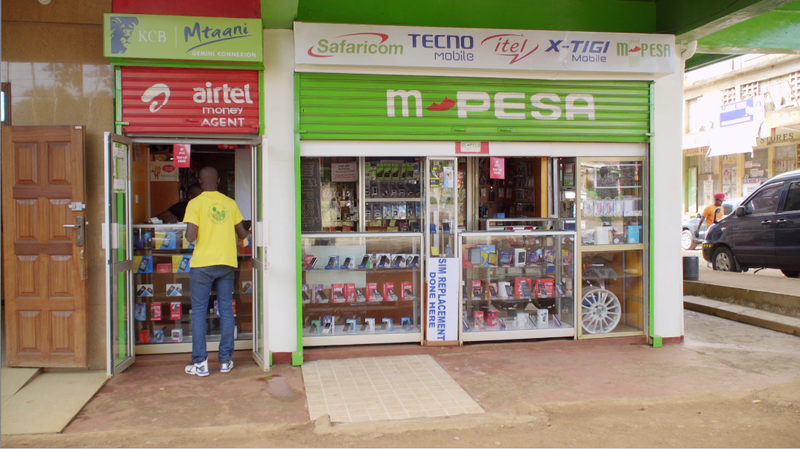
The small wooden counter at a mobile money kiosk still looks busy. Stickers on the glass promise speed and convenience. Yet the drawer beneath the counter tells a different story.

Less cash moves through it than it used to. Not by a little. By hundreds of billions of shillings.
Data from the Central Bank of Kenya shows a record fall in the value of cash handled by mobile money agents over the first eleven months of last year.
The drop is large enough to feel structural rather than cyclical. It points to a reordering of how money moves in daily life, who touches it, and who watches it.


This is not a collapse of mobile money. Account numbers keep rising. Agent networks keep expanding. What is thinning out is the cash in and cash out traffic that once defined the business. The contradiction is the story.
From cash conduits to digital rails
For more than a decade, agents were the physical joints of Kenya’s digital economy. They turned wages into phone balances and phone balances back into notes. Every school fee, matatu fare, and grocery purchase passed through their hands at some point.
That role is eroding. Small value payments that once required a stop at an agent are now settled phone to phone.
Banks, once spectators to this ecosystem, now compete inside it. Lower fees on digital transfers and app based payments have narrowed the gap that telecom operators enjoyed for years. For a user, the distinction between bank money and mobile money feels less important than it once did. For an agent, that distinction was income.
The numbers behind the thinning cash
The scale of the change becomes clearer when the figures are laid out plainly. Central Bank of Kenya data shows that mobile money agents handled Sh7.514 trillion in cash between January and November last year. Over the same period a year earlier, that figure stood at Sh7.944 trillion, leaving a decline of Sh430.3 billion. It is the steepest drop recorded since mobile money and agency banking became embedded in daily transactions.
What makes the fall harder to dismiss as a slowdown is what happened elsewhere in the system. By November, the number of mobile money accounts had risen to 89.1 million, an increase of 7.21 million within eleven months. Agent networks also expanded sharply, with active agents climbing by 26 percent to about 4.7 million.
Historically, cash handled by agents has been remarkably resilient. Since the launch of M-Pesa in 2007, volumes have declined only once before, in 2023, and then by a comparatively modest Sh35 billion. The current contraction sits outside that pattern, arriving alongside stable exchange rates, improved output growth, and rising transaction activity across other parts of the economy.
Taken together, the figures point less to a slowdown in economic life and more to a reworking of how money moves, where it pauses, and when it no longer needs to become cash at all.
Liquidity has a cost again
The interest rate environment matters more than it did during the easy money years. Holding funds in cash carries an opportunity cost that is suddenly visible. Households and traders with surplus balances are parking them in interest earning accounts rather than pulling them out in notes.
This is a subtle behavioral change, but it compounds. Fewer withdrawals mean fewer commissions. Lower float turnover makes it harder for agents to justify large cash positions. Some respond by running leaner tills. Others walk away altogether.
The numbers tell that story without drama. Agent counts rise. Cash volumes fall. The business model bends.
The long shadow of traceability
There is another force at work, harder to quantify and easier to feel. Digital payments leave trails. Trails attract attention.
Tax authorities have grown more adept at using transaction data, especially among small and medium enterprises. For many traders, the phone has become a ledger that talks back. Some respond by limiting withdrawals. Others reroute transactions through channels that feel less exposed.
The result is not a return to a cash only economy. It is a selective retreat. High value, high visibility flows stay digital. Marginal transactions find ways to stay off the grid. Agents sit in the middle of that tension, exposed to both sides and protected by neither.
Growth without cash
The fall in cash handled by agents sits awkwardly beside broader economic indicators. Output growth improved compared to the previous year. The exchange rate steadied. The stock market showed life. Cement moved.
Economic activity did not shrink. It rerouted.
This matters because it challenges an old assumption. Less cash at agent counters does not equal distress. It can also reflect efficiency, consolidation, and a payment stack that no longer needs physical waypoints for routine exchanges.
The pandemic years were the exception. Emergency measures and fee waivers pushed volumes through mobile wallets at scale. That moment passed. The baseline reset.
Agents at a crossroads
For agents, the path forward is uneven. Cash handling remains necessary, but it no longer anchors growth. The money is shifting toward merchant payments, embedded finance, and services that live entirely inside apps.
Those areas demand different skills, different capital, and different risk appetites. Some agents will adapt and become service hubs rather than cash counters. Many will not.
Regulators face a balancing act. Digital payments promise transparency and efficiency. Push too hard, and parts of the informal economy recoil. Ease off too much, and the gains of the last decade thin out.
Kenya’s mobile money story is entering a less romantic phase. Fewer queues. Fewer notes. More code. The drawer under the counter is lighter, but the economy around it is still moving. The question is who gets paid for making that movement possible.
[Secure Your Seat at Africa Tech Summit Nairobi 2026 | February 11–12 here] Use code TTRENDS10 at checkout to save 10% on your pass and join the leaders building Africa’s $1 trillion cross-border payment future.
Go to TECHTRENDSKE.co.ke for more tech and business news from the African continent and across the world.
Follow us on WhatsApp, Telegram, Twitter, and Facebook, or subscribe to our weekly newsletter to ensure you don’t miss out on any future updates. Send tips to editorial@techtrendsmedia.co.ke
TechTrends Media Podcasts

