OPPO Sets January 23 for the Reno15 Launch as Design and Durability Take Center Stage
The Reno15 enters a market shaped by long replacement cycles, heavier use, and growing attention to what survives daily wear


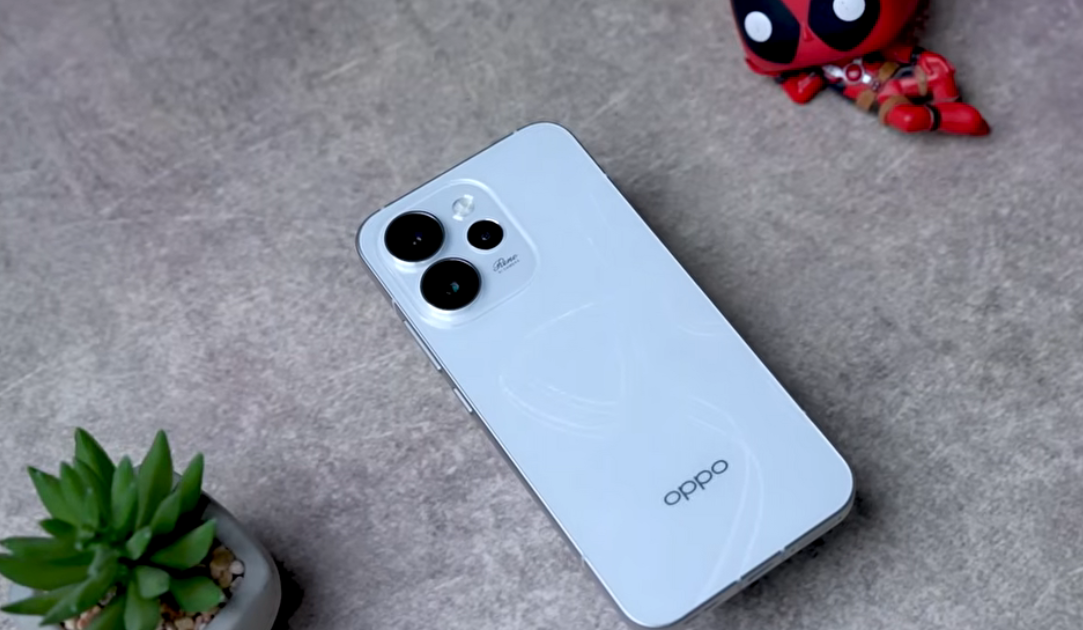
OPPO is set to launch the Reno15 series on 23 January 2026 with little interest in surprise and no visible appetite for disruption. The lineup, which is arriving globally and is expected in Kenya, reflects a company focused on calibration rather than spectacle. In a market saturated with exaggerated claims and short upgrade cycles, the Reno15 series positions itself as an exercise in control.
The range arrives in three core variants, the Reno15 Pro, the Reno15, and the Reno15 F. Visually, they speak the same language. Slim frames, restrained finishes, and an absence of ornamental excess run across the lineup. OPPO does not use design to signal hierarchy here. Continuity appears to be the point.
That continuity is reinforced internally through what OPPO describes as its All-Round Armour Body. Beneath the exterior, the OPPO Reno15 series integrates a shock-absorbing structure inspired by the porous resilience of sea sponges, paired with an aerospace-grade aluminium frame. The emphasis is subtle. Durability is treated as an internal discipline rather than a visual statement, aimed at extending usable life without changing the phone’s outward character.
The reinforced structure allows the Reno15 Pro to remain slim at 7.65mm while weighing about 205 grams. The standard Reno15 measures 7.77mm thick and weighs roughly 197 grams. Color options lean toward muted depth rather than visual flare, with the Pro offered in Aurora Blue and Dusk Brown, while the Reno15 adds Aurora White and Twilight Blue.


Protection against the elements is unusually comprehensive for the segment. Across the series, OPPO lists IP66, IP68, and IP69 certifications, covering splashes, immersion, and high-pressure water exposure. Even the USB port receives attention, finished with a platinum coating designed to resist corrosion. These details suggest a design brief shaped by daily use rather than launch-day optics.
Displays remain central to the Reno identity. The Reno15 Pro features a 6.78-inch AMOLED panel with 1.15mm bezels on all sides, achieving a 95.5 percent screen-to-body ratio. Protected by Corning Gorilla Glass Victus 2, it supports adaptive refresh rates up to 120Hz. Brightness scales from 600 nits in standard use to a peak of 3,600 nits under extreme conditions.
The standard Reno15 steps down slightly with a 6.59-inch AMOLED display and a 93.4 percent screen-to-body ratio, protected by Gorilla Glass 7i. It retains adaptive refresh behavior and 10-bit color depth, preserving experience consistency across the lineup rather than creating sharp experiential divides.
Camera hardware introduces clearer separation. The Reno15 Pro carries a 200-megapixel wide-angle sensor supported by a balanced set of telephoto, ultrawide, and front-facing cameras. The emphasis is on coverage rather than excess, with autofocus and optical stabilization distributed across the system. The wide 18mm selfie lens continues a Reno hallmark, prioritizing context and group framing.
The Reno15 reduces the main camera to 50 megapixels and pares back the ultrawide, though telephoto and selfie capabilities remain closer to the Pro models. The result feels like differentiation without penalty, noticeable on a spec sheet but less so in everyday use.
Performance follows a familiar structure. The Reno15 Pro runs on MediaTek’s Dimensity 8450, while the Reno15 adopts Qualcomm’s Snapdragon 7 Gen 4. Storage remains non-expandable across the range, topping out at 512GB of UFS 3.1. These choices aim for stability rather than experimentation.
Battery capacity across the lineup reflects shifting expectations. The Reno15 Pro houses a 6,200mAh battery, while the Reno15 increases that to 6,500mAh. Both support 80W fast charging. Endurance is treated as baseline infrastructure rather than a headline feature.
The Reno15 F sits slightly apart. Powered by a Snapdragon 6 Gen 1 chipset and built around a 7,000mAh battery, it prioritizes longevity and predictability. Its camera system is simpler, but it retains the same aluminium frame, AMOLED display, and IP69 rating. OPPO appears intent on keeping it within the Reno identity rather than framing it as a peripheral addition.
Software completes the launch picture. The Reno15 series ships with ColorOS 16, alongside a promise of five major OS updates and six years of security patches. Cross-device features extend compatibility beyond Android, reinforcing longer ownership cycles.
As OPPO is set to launch the OPPO Reno15 series on 23 January 2026, the message remains restrained. These phones are not designed to dominate attention. They are designed to hold their place. In a market crowded with loud releases and rapid turnover, the Reno15 arrives quietly, focused on staying viable long after the launch cycle moves on.
[Secure Your Seat at Africa Tech Summit Nairobi 2026 | February 11–12 here] Use code TTRENDS10 at checkout to save 10% on your pass and join the leaders building Africa’s $1 trillion cross-border payment future.
Go to TECHTRENDSKE.co.ke for more tech and business news from the African continent and across the world.
Follow us on WhatsApp, Telegram, Twitter, and Facebook, or subscribe to our weekly newsletter to ensure you don’t miss out on any future updates. Send tips to editorial@techtrendsmedia.co.ke
TechTrends Media Podcasts

