
Airtel Money Climbs to 10.3 Percent as M-PESA Drops Below 90 Percent in Kenya’s Mobile-Money Market
A market that once looked settled now carries a harder edge as Airtel Money presses upward and M-PESA absorbs the weight of its first real squeeze

The latest sector statistics from the Communication Authority of Kenya now show that Airtel Money has climbed to 10.3% marking the telco’s clearest entry into meaningful scale in Kenya’s mobile money market. This is the first time M-PESA’s subscription share has fallen below 90%, now at 89.7%. This number is part of a longer narrative. 2 years ago, M-PESA commanded roughly 975 of mobile money subscriptions. This figure eased to about 90.8% in early 2025 before dipping below 90% for the first time.

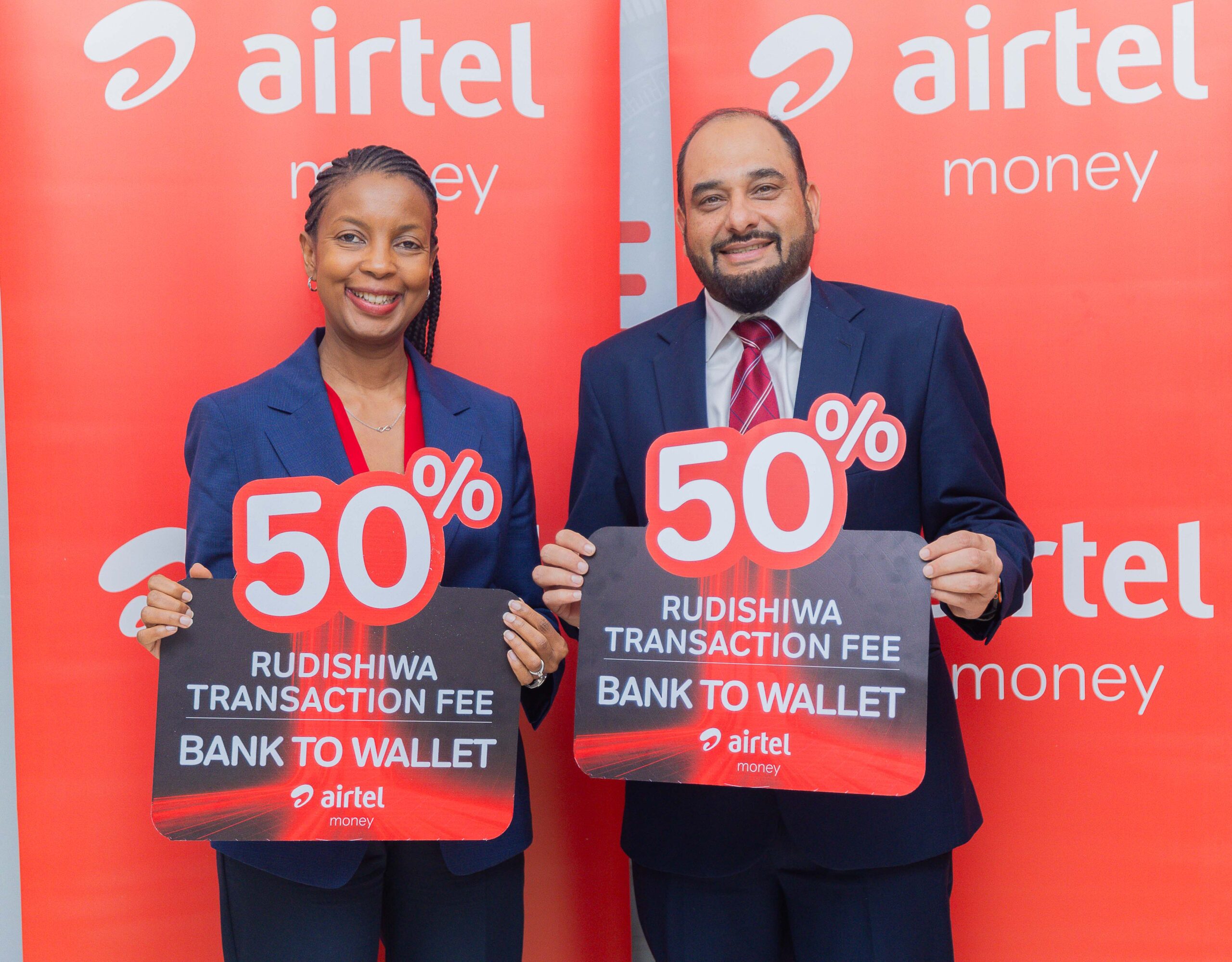
This progression didn’t happen in isolation. Airtel Money has been contesting the margins of M-PESA’s dominance since 2023 with a set of practical levers, lower tariffs, recurring cashback and refunds under the “Rudishiwa” campaign, and an expanded agent presence. The agent network alone grew from 182,472 outlets in 2018 to 381,116 in 2024, creating visibility for the brand and reducing frictions for customers who rely on cash pickup and float availability.
The structural environment also favours any provider able to meaningfully participate in Kenya’s digital-payments ecosystem. Device penetration has continued to rise with 75.0 million connected devices and 44.65 million smartphones, according to CA data. Market-wide penetration is now around 138 to 139 percent once multi-SIM usage is accounted for. At the end of June 2025 the Communications Authority counted 47.7 million active mobile-money subscriptions and a 91 percent penetration rate for mobile money. The long-run trajectory illustrates how deeply the service has become embedded in the economy. Monthly mobile-money transactions grew from 1.3 million in 2007 to 309 million in 2024, while monthly transaction value rose from KSh 3.8 billion to KSh 753.5 billion.
Against this backdrop, Airtel Africa’s continental fintech performance provides another layer of context. Airtel Money’s pan-African base reached 49.8 million users by September 2025, up 20 percent year on year. Nearly half of those customers use smartphones, a group responsible for higher transaction frequency and higher average revenue per user. Airtel Africa processed 193 billion dollars in annualised transaction value during the period, up nearly 36 percent. Only MTN Mobile Money and M-PESA process more value. With a planned 2026 IPO and an expected valuation in excess of 4 billion dollars, Airtel Africa has an incentive to support growth in high-value markets such as Kenya.

In Kenya, the result is visible in the new CA chart. Airtel Money now reads at 10.3 percent. T-Kash remains negligible. The market operates as a two-provider structure even though the addressable population has expanded. Growing the overall base no longer produces the commercial outcomes it once did. Growth now depends on pricing, service reliability, agent liquidity, merchant acceptance and the range of digital-financial tools offered through mobile apps and USSD platforms.
M-PESA still dominates the categories that matter most for economic activity. It leads in value processed, merchant payments, high-value transfers and breadth of ecosystem integrations. Its merchant network remains unmatched. Yet the movement in subscription share points to a more contested front. Airtel Money’s rise from 2.9 percent in early 2024 to 10.3 percent in September 2025 creates a competitive environment that requires incumbents to respond on product experience rather than relying on network scale alone.
From a policy perspective, the new numbers matter because market outcomes may influence debates around interoperability, fraud management, consumer pricing and agent regulation. A competitor with ten percent participation commands a different hearing in regulatory and commercial discussions than one at two or three percent. The sector is now mature enough that transaction behaviour depends more on the day-to-day realities of service quality and less on headline accounts logged by operators.
The overall picture is of a market that has moved into an era defined by usage depth rather than raw subscription growth. Airtel Money’s ten percent and M-PESA’s slip below ninety percent are numerical markers of that transition. They illustrate a marketplace where product evolution, digital channels and operational reach matter more than early-era network effects.
Go to TECHTRENDSKE.co.ke for more tech and business news from the African continent and across the world.
Follow us on WhatsApp, Telegram, Twitter, and Facebook, or subscribe to our weekly newsletter to ensure you don’t miss out on any future updates. Send tips to editorial@techtrendsmedia.co.ke

