
The iPhone 17 Pro Is a Camera Upgrade — and a Market Statement About Apple’s Next Decade
Apple’s latest Pro models are designed not just to impress creators but to anchor a strategy that could define the company’s next decade.

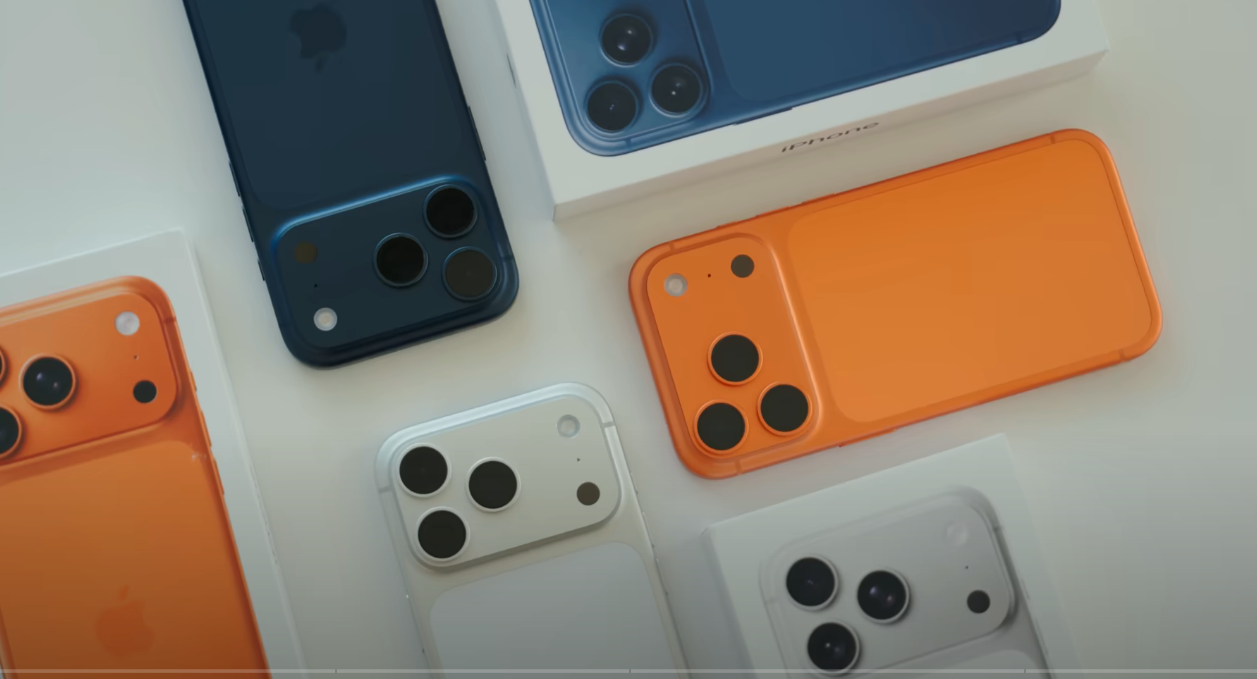
Apple’s iPhone 17 Pro and Pro Max are more than incremental upgrades.

They arrive as part of a carefully orchestrated strategy that speaks not only to creators and general users but also to the shifting balance of the global smartphone market. On one hand, they deliver meaningful improvements for photographers, filmmakers, and everyday users. On the other, they anchor Apple’s broader push to trigger a massive upgrade cycle and defend its dominance in the premium tier.
Apple in a Crowded Market
The 2025 smartphone landscape is unforgiving. Android OEMs control over 80% of shipments, pushing the limits with foldables, AI-driven features, and megapixel races. Apple, meanwhile, commands roughly 20% of unit share — but nearly 40% of market value — and continues to dominate the $1,000+ segment with about 70% share.
The iPhone 17 family, especially the new iPhone Air, is Apple’s latest move in this game. By combining design differentiation, pricing restraint, and upgrade incentives, Apple is positioning itself not just for sales in 2025 but for ecosystem lock-in well into the next decade.

The Devices in Focus
Main & Ultra-Wide Cameras
Apple’s 48MP main sensor, enhanced by the Photonic Engine, continues to deliver strong low-light results and natural color rendering. The ultra-wide now outputs 24MP stills — a subtle change but one creators will notice when cropping or shooting wide landscapes.
Telephoto That Finally Matters
The 4× telephoto lens (100mm, 48MP) is one of the most impactful upgrades. Unlike the underwhelming 5× lens on the 16 Pro, this version offers sharper detail, better low-light performance, and usable 8× cropped zoom. For photographers, this is finally an iPhone telephoto worth relying on.
Selfie Camera: A Creator’s Leap
Apple’s new 18MP square sensor with Center Stage reframes the front camera’s role. For vloggers, interviewers, and casual storytellers, it’s a dramatic improvement: more resolution, better low-light, and smarter autoframing for multi-subject content.
Video Powerhouse
Video has long been Apple’s bragging right, but on the iPhone 17 Pro it feels like the company leaned in even harder. This isn’t just a phone camera that happens to shoot video — it’s a full creative toolkit.
- ProRes RAW recording now pushes up to 8K at 30fps, which means filmmakers can pull incredible detail for post-production. If you’re color grading a short film or cropping without losing resolution, this is the mode you’ll reach for.
- Open Gate capture (4:3) also records at 8K/30fps, giving editors extra space to reframe or adapt footage for different platforms — whether that’s cinema, YouTube, or social verticals.
- Standard ProRes in 4K/60fps works with external drives, perfect for longer shoots where storage is a concern.
- Dual Capture lets vloggers or interviewers shoot both themselves and their subject in 4K, no second camera needed.
- Action Mode stabilization has matured. It now handles 4K/60fps smoothly, even zoomed in 8× — turning chaotic clips into something cinematic.
Here’s how it breaks down in practice:
| Recording Mode | Max Resolution | Max Frame Rate | Real-World Use Case |
|---|---|---|---|
| ProRes RAW | 8K | 30fps | Indie filmmakers needing cinematic flexibility in post-production. |
| Open Gate (4:3) | 8K | 30fps | Creators who want to reframe content across cinema, YouTube, and vertical apps. |
| ProRes (Standard) | 4K | 60fps | Long shoots or events where external drives handle heavy storage. |
| Dual Capture | 4K | 30fps | Vloggers, podcasters, or interviewers capturing both perspectives at once. |
| Action Mode | 4K | 60fps | Travel or sports footage that needs stabilization without sacrificing resolution. |
It’s clear Apple doesn’t just want the iPhone 17 Pro to be a “good video phone.” It wants it to be the default camera for anyone creating content in 2025.
Workflow and Usability
The 3,000-nit display is transformative for reviewing shots outdoors, a longtime pain point for photographers. Add in vapor chamber cooling and a larger battery with 40W fast charging, and the 17 Pro/Pro Max sustain longer sessions without throttling or battery anxiety. For creators who shoot on location, this is as much about workflow confidence as it is about hardware specs.
The General User vs Creator Lens
Not everyone will care about ProRes RAW or 8× crop, but Apple has made sure every buyer feels the benefits.
| Feature | General User | Photographer / Videographer | details |
|---|---|---|---|
| Display Brightness | Easier outdoor use | Critical for judging exposure | 3,000 nits ensures accuracy in sunlight |
| Telephoto | Occasional zoom for events | Major creative tool | 4× optical + 8× crop makes portraits and reach usable |
| Selfie Camera | Sharper calls & selfies | Essential for vlogging | 18MP with Center Stage reframes group capture |
| Video Tools | Smooth family clips | Pro workflows unlocked | ProRes RAW, Open Gate, Dual Capture |
| Battery & Cooling | All-day comfort | Long shoots possible | 40W charging, vapor chamber stability |
| AI Enhancements | Better casual shots | Subtle pro-level refinements | On-device ML for tracking & exposure |
This dual framing highlights Apple’s balance: the iPhone 17 Pro is both approachable and specialized, depending on what you need it for.
Apple’s Strategic Bets
Design as Differentiation
The iPhone 17 Air fills the void left by the weak-selling Plus line. Ultra-thin (5.6mm) and lightweight, it sells not on specs but on feel — an emotional hook Android rivals can’t easily replicate. The Pro models, meanwhile, embrace aluminum again, enabling bold colors and better thermals, while the baseline iPhone 17 inherits once-exclusive Pro features. The result: a lineup that feels cohesive, desirable, and aspirational across tiers.
Pricing Restraint
Despite inflation and supply pressures, Apple held pricing steady, doubled storage, and positioned the Air under the $1,000 psychological barrier. This strengthens loyalty among existing users and makes Apple more accessible in price-sensitive markets. Crucially, Apple can afford this because services and ecosystem profits offset slimmer margins on hardware.
The Upgrade Engine
Apple is targeting 430M+ iPhone users from 2020–21 whose devices are aging. With sharper design hooks, and pricing stability, the iPhone 17 family is built to trigger one of the biggest upgrade waves in Apple’s history.
The Android Counterpoint
Android OEMs chase innovation through specs and form factors — foldables, satellite texting, 200MP cameras. Apple instead leans on simplicity and psychology: lighter, thinner, brighter, easier to own.
The trade-off: Android brands often erode their margins by racing to the bottom, while Apple’s ecosystem model lets it play the long game. Samsung remains a credible threat at the top end, but in the $1,000+ tier, Apple’s grip is still unmatched.
Implications Beyond the Specs
- Ecosystem Lock-In: Every upgrade strengthens Apple’s services revenue (iCloud, Music, Vision Pro integration).
- Cultural Capital: The iPhone Air, slim and striking, is positioned to become a design icon — and design virality is free marketing.
- China’s Question Mark: Regulatory pushback may limit adoption there, making the Air’s performance in China a litmus test for Apple’s strategy.
- Flat Global Growth: With units plateauing, Apple’s play is not to grow share but to extend ARPU and lock loyalty.
Final Verdict
The iPhone 17 Pro and Pro Max deliver real-world upgrades that matter most to photographers, filmmakers, and heavy users: brighter displays, better telephoto, more powerful front cameras, and video features that blur the line between phone and cinema tool. For general users, the improvements feel like polish rather than revolution — but they still benefit from the trickle-down of once-Pro-exclusive features.
The bigger story, however, is Apple’s discipline. By resisting fads and doubling down on design, pricing, and ecosystem pull, Apple has engineered not just devices but an upgrade machine.
Android rivals may win the spec war. Apple is betting it will win the mindshare war — and with the iPhone 17 family, it has built the arsenal to do exactly that.
Go to TECHTRENDSKE.co.ke for more tech and business news from the African continent.
Mark your calendars! The TechTrends Pulse is back in Nairobi this October. Join innovators, business leaders, policymakers & tech partners for a half-day forum as we explore how AI is transforming industries, driving digital inclusion, and shaping the future of work in Kenya. Limited slots – Register now – here.
Follow us on WhatsApp, Telegram, Twitter, and Facebook, or subscribe to our weekly newsletter to ensure you don’t miss out on any future updates. Send tips to editorial@techtrendsmedia.co.ke
TechTrends Media Podcasts

