
Global Markets Are No Longer Out of Reach for African Investors
As fintech opens the door, more Africans are finding their way into global markets

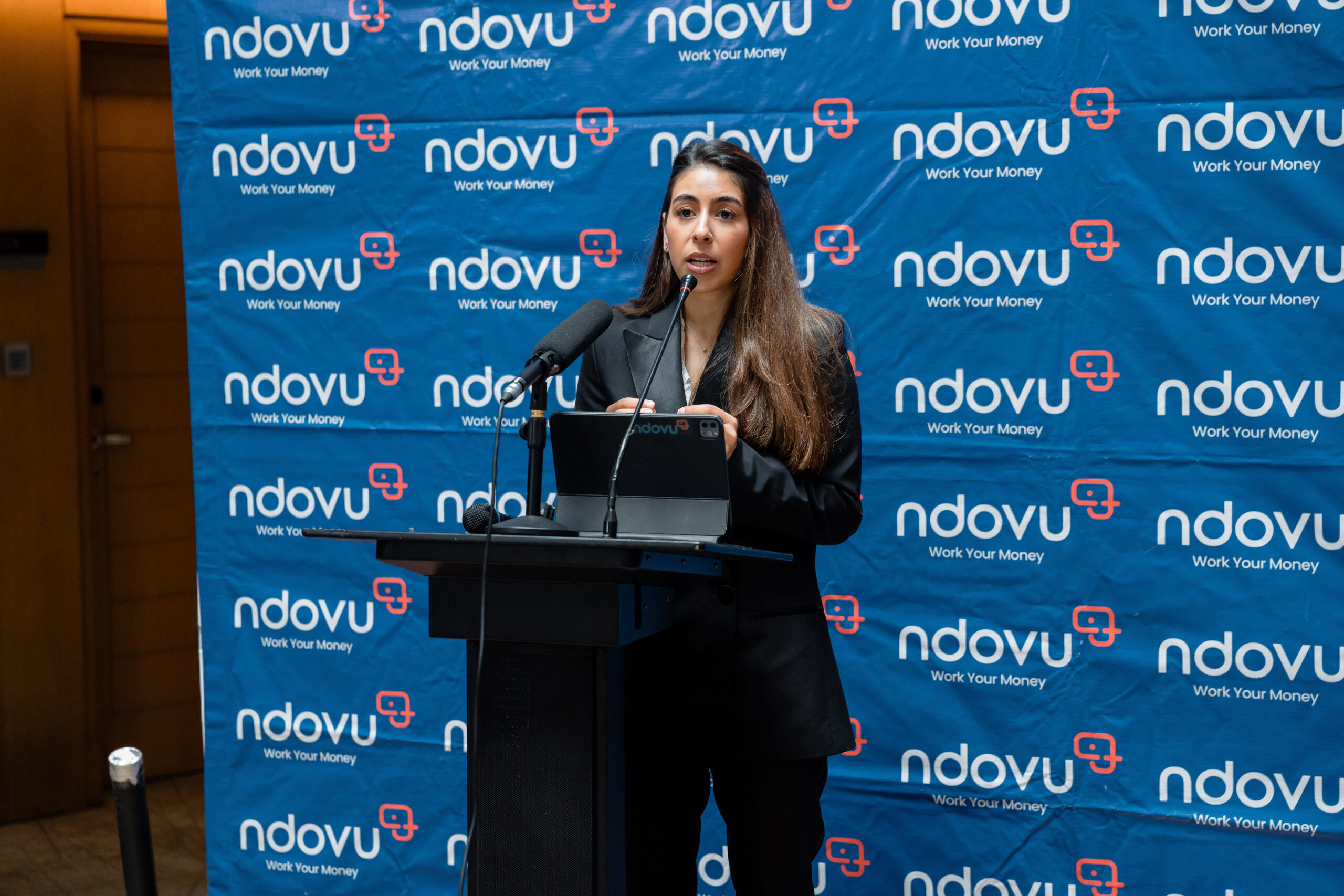
African consumers have for years participated in the global economy without sharing in its returns.

The services are familiar, the brands are embedded in daily life, and the pricing often tracks the dollar. Ownership, however, has remained elsewhere.
Ndovu Wealth has built its model around that imbalance. Since 2021, the platform has opened access to international markets for retail investors starting from $50.
At the centre is CEO Radhika Bhachu, whose argument is direct: if Africans consume globally, they should also hold assets globally.


Access Was the Constraint, Not Appetite
The expansion of Kenya’s investor base from 172,000 to 3.2 million participants reflects a release of pent-up demand rather than a sudden change in behaviour. Investment did not become attractive overnight. It became accessible.
Digital distribution removed layers that had historically limited participation. Brokerage processes, paperwork, and minimum thresholds gave way to mobile onboarding and fractional entry points. Ndovu’s 200,000 users sit within that wider expansion.
What emerges is a clearer reading of the market. The constraint was structural. Once access aligned with how people already transact, participation followed.
From First-Time Investors to Structured Allocators
The story does not end at access. It evolves into segmentation.
At one end, platforms like Ndovu lower entry points to bring first-time investors into global markets. At the other, more structured products are beginning to define how larger pools of capital are allocated.
The recently launched Kibaba Multi-Asset Special Fund, also under Ndovu, sits in that second category. With a minimum investment of KES 250,000 or $2,500 and a 6-month lock-in period, it introduces a different kind of discipline. Investors are no longer testing the waters. They are committing capital to a managed strategy that spans equities, bonds, REITs, ETFs, and commodities across currencies.
This creates a progression. Entry-level access builds familiarity. Structured funds absorb complexity. The gap between the two is where behaviour begins to change.
Small Tickets, Long Horizons
The $50 entry point is often treated as a headline feature. Its deeper effect is behavioural.
Lower thresholds allow new investors to participate without significant exposure. The process becomes iterative. Small allocations, repeated over time, create both confidence and habit. Ndovu reports that 83 per cent of its users are first-time investors, reinforcing this pattern.
The introduction of higher-threshold products like Kibaba adds a second layer. Capital is not just accumulated. It is organized. The 6-month lock-in and pooled allocation model shift the focus from short-term reaction to medium-term positioning.
This dual structure reflects a broader transition. Participation begins informally. It matures into intentional allocation.
The Trust Problem Cannot Be Engineered
Growth tactics in fintech are well understood. Trust remains resistant to acceleration.
Bhachu’s framing places trust at the centre of the business. It is built through consistency in reporting, direct engagement with clients, and restraint in how returns are communicated. In financial services, credibility is cumulative.
“When someone hands you their first shilling, they are handing you their future.”
The scale Ndovu has reached, over 200,000 clients, rests on that accumulation rather than on acquisition mechanics. Trust forms slowly and, once established, becomes the basis for deeper products such as managed funds.
Regulation as Institutional Backbone
Trust also extends beyond the platform itself. It is reinforced by regulatory structure.
Products like the Kibaba Fund operate under the oversight of the Capital Markets Authority, with custodial and trustee arrangements embedded into the framework. This architecture does more than ensure compliance. It defines how risk is contained and how investor interests are protected.
For firms expanding across markets, including Uganda and Rwanda, regulatory alignment becomes a prerequisite for scale. It sets the boundaries within which innovation can occur while maintaining institutional credibility.
Return Expectations and the Question of Risk
Projected returns introduce a different kind of tension.
Kibaba targets around 20 per cent in KES and 18 per cent in USD, net of fees and taxes. These figures sit above recent Kenyan Treasury bill yields of roughly 15 to 16 per cent and well above long-term averages for indices such as the S&P 500.
The spread raises a quieter question. How much additional risk is being priced in, and how will investors respond when returns diverge from projections.
For many Kenyan investors accustomed to relatively stable fixed-income returns, volatility can feel unfamiliar. The transition to global markets introduces variability that is structural, not incidental.
Technology Is Expanding the Investment Habit
Technology’s role now extends beyond access into decision-making.
Ndovu integrates AI into onboarding, risk profiling, and portfolio recommendations. This reduces the cognitive burden for new investors and standardizes how portfolios are constructed. The result is not just participation, but guided participation.
For younger users already earning through digital channels, investing becomes an extension of existing behaviour. Income generation and capital allocation begin to operate within the same ecosystem.
The Cultural Constraint: Time
The most persistent constraint is not access or even trust. It is time preference.
Economic volatility has historically pushed households toward immediate consumption. Long-term investing requires a different orientation, one that accepts delayed outcomes and interim fluctuations.
Platforms can lower barriers and provide tools. They cannot compress the timeline required for compounding. The adjustment is behavioural and unfolds gradually.
From Participation to Ownership at Scale
What is taking shape is not a single product category, but an ecosystem.
Low-barrier platforms bring new investors into the market. Structured funds channel larger allocations into diversified strategies. Regulation underpins both layers. Technology connects them.
The result is a gradual expansion of ownership. Not as a sudden transformation, but as a series of incremental decisions made across millions of users.
Ndovu’s trajectory offers a view into that process. It is less about a single company’s growth and more about whether digital infrastructure can normalize global investing across income levels.
The outcome will depend on consistency. Investors will need to stay through cycles, trust systems they do not directly control, and adjust expectations around time and risk.
Ownership, in this context, is not an event. It is a habit that forms slowly and, once established, becomes difficult to reverse.
Mark your calendars! The GreenShift Sustainability Forum is back in Nairobi this August. Join innovators, policymakers & sustainability leaders for a breakfast forum as we explore sustainable solutions shaping the continent’s future. Limited slots – Get your early bird tickets now – here. Email info@techtrendsmedia.co.ke for partnership requests.
Go to TECHTRENDSKE.co.ke for more tech and business news from the African continent and across the world.
Follow us on WhatsApp, Telegram, Twitter, and Facebook, or subscribe to our weekly newsletter to ensure you don’t miss out on any future updates. Send tips to editorial@techtrendsmedia.co.ke


