
Samsung’s Grip on Gaming Monitors Stretches Into a Seventh Year as OLED Demand Lifts Its Share
Samsung’s seventh year at the top of gaming monitors comes through in revenue share as OLED demand keeps building

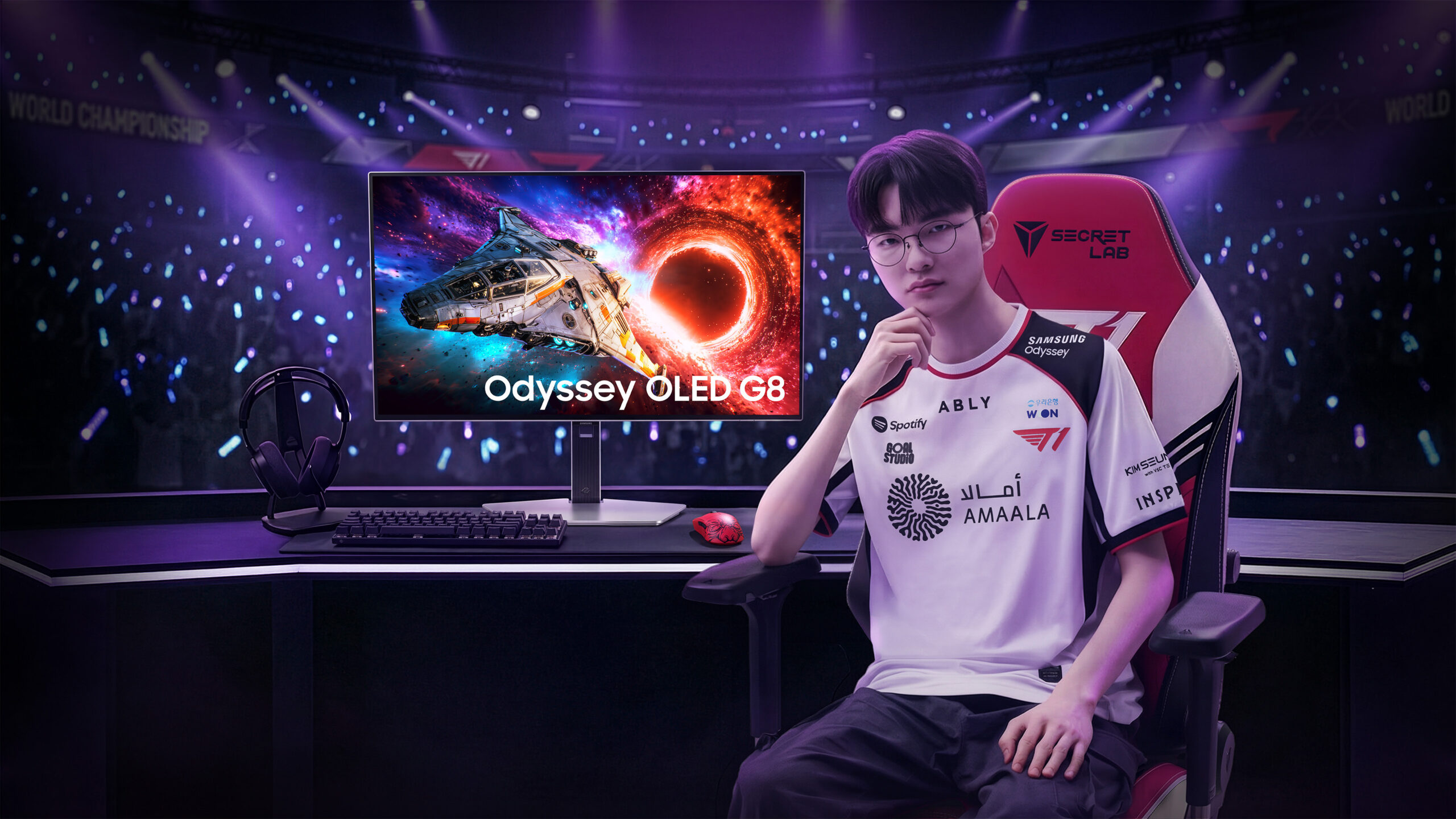
Samsung Electronics has maintained its position as the world’s top gaming monitor brand for the seventh consecutive year, according to new figures from International Data Corporation. The company accounted for 18.9% of global gaming monitor revenue, extending a run that began in 2019.

The same dataset places Samsung at the top of the OLED gaming monitor segment for a third year in a row, with a 26% share. The figures reflect sustained demand for high-end display formats as refresh rates and panel technologies continue to define competitive gaming hardware.
OLED and high refresh rates anchor Samsung’s strategy
Samsung’s current lineup leans heavily on OLED and ultra-high refresh rate displays, areas where the company has concentrated its recent product development. Its Odyssey series, updated for 2026, includes configurations targeting both esports players and high-fidelity gaming setups.
Among the latest models is a 27-inch glasses-free 3D monitor built around eye-tracking, alongside a 32-inch OLED panel running at 240Hz with 4K resolution. The company is also pushing into higher resolution territory with a 6K gaming monitor capable of 165Hz, with a dual-mode option that scales to 330Hz at lower resolution.
At the performance edge, a 27-inch model reaches 1,040Hz, aimed at competitive players where motion clarity and response time are decisive.
Developer alignment and ecosystem expansion
Samsung has tied its display roadmap to closer collaboration with game developers. Demonstrations at the 2026 Game Developers Conference in San Francisco focused on compatibility and feature integration, including HDR10+ Gaming and support for glasses-free 3D titles.

The company says its ecosystem now includes a growing catalogue of supported games, with over 120 titles expected to integrate with its 3D display platform within the year.
Industry voices reinforce competitive positioning
Lee Sang-hyeok, widely known as Faker of T1, pointed to consistency in professional adoption as a marker of reliability in competitive environments. His remarks reflect the role brand trust plays in esports hardware, where marginal performance differences can influence outcomes.
Market context and next phase of competition
The global gaming monitor market has become increasingly segmented, with OLED, mini-LED, and high refresh rate LCD panels competing across price tiers. Samsung’s lead suggests that premium segments, particularly OLED, are shaping revenue distribution more than unit volume alone.
With display standards continuing to evolve and GPU capabilities expanding, competition is expected to center on how well manufacturers align hardware with game engine capabilities and platform ecosystems. Samsung’s current position places it ahead, but the pace of iteration across the sector remains high.
Mark your calendars! The GreenShift Sustainability Forum is back in Nairobi this August. Join innovators, policymakers & sustainability leaders for a breakfast forum as we explore sustainable solutions shaping the continent’s future. Limited slots – Get your early bird tickets now – here. Email info@techtrendsmedia.co.ke for partnership requests.
Go to TECHTRENDSKE.co.ke for more tech and business news from the African continent and across the world.
Follow us on WhatsApp, Telegram, Twitter, and Facebook, or subscribe to our weekly newsletter to ensure you don’t miss out on any future updates. Send tips to editorial@techtrendsmedia.co.ke


