
AfriQloud: Reimagining Africa’s Digital Future Through Sovereign Infrastructure

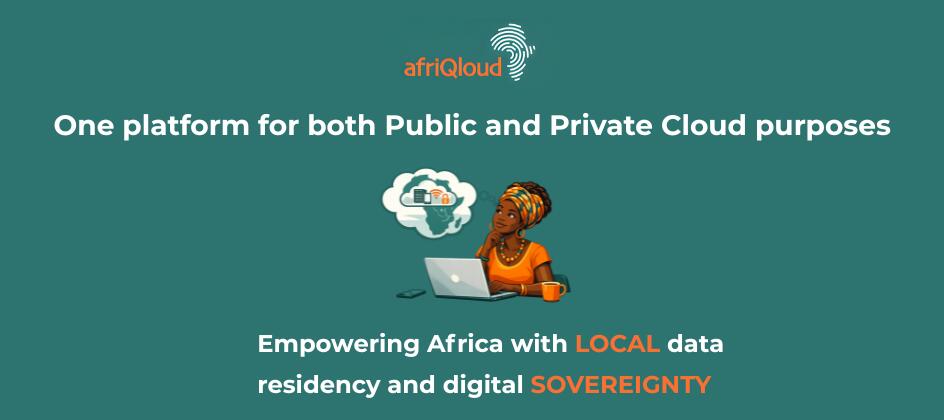
Across Africa, a new vision for digital infrastructure is emerging – one that challenges long-standing dependencies and redefines how the continent participates in the global digital economy. At the center of this shift is AfriQloud, an initiative that positions itself not as a single product, but as a sovereign, distributed, AI-powered ecosystem built by Africa, for Africa.

Africa’s technological story has never followed a conventional path. Rather than replicating legacy systems developed elsewhere, the continent has consistently demonstrated an ability to leapfrog. It moved directly to mobile connectivity, bypassing fixed-line infrastructure and connecting millions at unprecedented speed. It then redefined financial inclusion through mobile money, with platforms such as M-Pesa and MTN Mobile Money transforming how value is stored and exchanged. Today, Africa stands on the edge of what may be its most consequential leap yet: a transition toward distributed cloud infrastructure and agentic AI.
This next phase is driven by a growing recognition that the dominant global cloud model – centered around Infrastructure-as-a-Service, Platform-as-a-Service, and Software-as-a-Service – was not designed with Africa in mind. Platforms such as Amazon Web Services, Microsoft Azure, and Google Cloud have built powerful systems, but these systems are rooted in the economic, regulatory, and infrastructural realities of North America and Western Europe. When adopted wholesale, they introduce a set of challenges that extend beyond cost.
One of the most pressing concerns is sovereignty. Data stored on foreign infrastructure becomes subject to foreign jurisdictions and policies, raising critical questions about national security and control. At the same time, there is the issue of economic leakage, where significant portions of digital spending flow outward to international providers rather than strengthening local economies. The model also reflects a design mismatch, often assuming stable power, consistent connectivity, and deep technical talent pools – conditions that vary widely across the continent. Over time, these factors contribute to dependency lock-in, where switching away from entrenched providers becomes prohibitively complex.

AfriQloud emerges as a direct response to these challenges. It proposes a different path – one where Africa does not rent its digital future, but builds and owns it. At its core, AfriQloud is a Pan-African ecosystem designed to deliver next-generation cloud and AI capabilities across all African Union member states. Its guiding principle is straightforward yet transformative: sovereign ownership, local control, and continental interoperability.
Through a Build-Operate-Transfer model, AfriQloud enables governments to develop digital infrastructure that they will ultimately own and govern. This approach ensures that while expertise and operational support may be introduced in the early stages, long-term control remains firmly within national borders. It also emphasizes local ownership, ensuring that economic value, skills development, and operational capacity are retained within each country, while maintaining interoperability across the continent to support cross-border services and trade.

Central to this vision are two enabling technologies: distributed cloud and agentic AI. Unlike traditional centralized cloud systems, distributed cloud architecture places computing resources closer to where data is generated. This reduces latency, lowers bandwidth costs, and enhances resilience, while ensuring that sensitive data remains within national jurisdictions. Complementing this is agentic AI – autonomous software systems capable of planning, executing, and adapting to complex tasks. These systems move beyond passive analytics, enabling governments and institutions to automate services, streamline operations, and deliver responsive digital experiences at scale.
Together, these technologies are particularly well suited to Africa’s context. Distributed systems are more tolerant of intermittent connectivity, while agentic AI reduces reliance on large, highly specialized workforces. The result is a model that makes world-class digital services achievable at African price points, without compromising on performance or sovereignty.
To translate this vision into reality, AfriQloud is structured as an interconnected ecosystem comprising three core components. The first is a ThinkTank, an independent, non-profit body that provides strategic guidance to governments. It brings together global experts in cloud infrastructure, artificial intelligence, public policy, and digital governance to help shape informed, sovereign decision-making. By bridging the gap between international expertise and local capacity, the ThinkTank ensures that adoption is aligned with long-term national interests rather than short-term commercial incentives.
The second component is a Capital Fund, designed to mobilize the financial resources required for deployment at scale. This includes grants from development partners, equity from aligned investors, and concessional financing from institutions such as the African Development Bank and the World Bank Group. Beyond infrastructure, the fund also supports a broader ecosystem of innovation, investing in local startups, developers, and service providers that contribute to Africa’s digital economy.
The third component is the Consortium, the operational engine that brings AfriQloud to life within each country. It is a coalition of local and regional partners – including telecommunications providers, data center operators, system integrators, and developer communities – working together to build, deploy, and manage infrastructure. This model ensures that implementation is not only technically robust but also locally grounded, fostering job creation, skills transfer, and sustainable growth.
What emerges from this structure is more than a technological platform; it is a coordinated effort to reshape the foundations of Africa’s digital landscape. AfriQloud reflects a broader shift toward digital self-determination, where infrastructure is no longer an imported utility but a strategic asset owned and governed by the continent itself.
Yet, this is only part of the story. The true measure of AfriQloud’s impact will lie in how it translates from vision to implementation – how it reshapes public services, enables new forms of commerce, and supports innovation across diverse sectors.
In the next article, we will explore these practical dimensions in greater detail, examining how AfriQloud can be deployed at the national level, the sectors most likely to be transformed, and the opportunities that lie ahead.
…to be continued
Mark your calendars! The GreenShift Sustainability Forum is back in Nairobi this August. Join innovators, policymakers & sustainability leaders for a breakfast forum as we explore sustainable solutions shaping the continent’s future. Limited slots – Get your early bird tickets now – here. Email info@techtrendsmedia.co.ke for partnership requests.
Go to TECHTRENDSKE.co.ke for more tech and business news from the African continent and across the world.
Follow us on WhatsApp, Telegram, Twitter, and Facebook, or subscribe to our weekly newsletter to ensure you don’t miss out on any future updates. Send tips to editorial@techtrendsmedia.co.ke


