
Safaricom Decode Ethics and Representation Panel Puts Creator Ownership Back at the Center
At Decode, the ethics and representation panel circles back to who really owns Kenyan stories once they scale

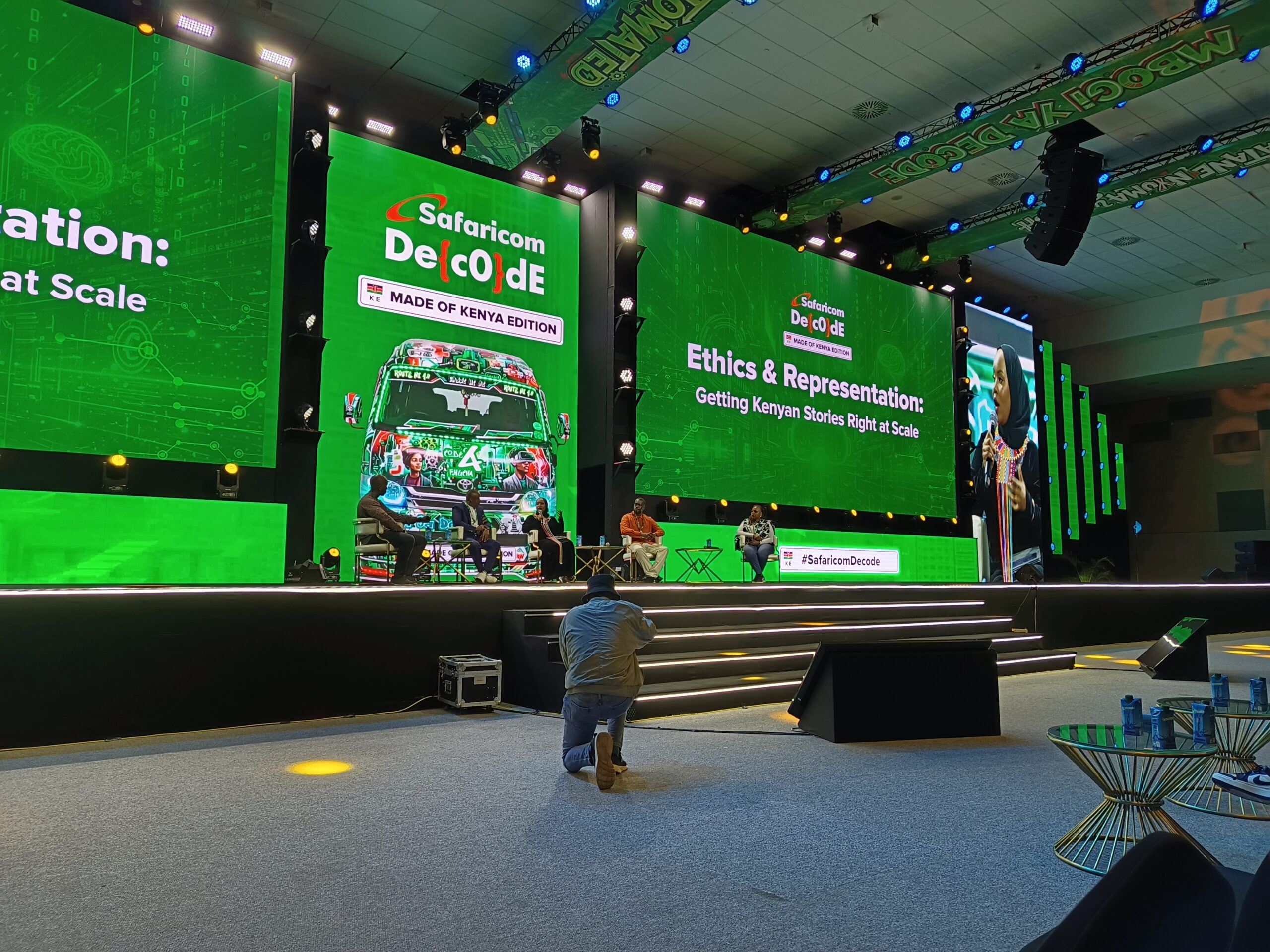
At Day 3 of Decode 4.0, the Safaricom Decode ethics and representation panel turned to a central question facing Kenya’s creative economy: how to scale storytelling without losing authorship, accuracy, or value for creators.

The session brought together voices from film, gaming, and platform development to examine how technology is reshaping both distribution and responsibility.
Moderated by Peter Kuria of Safaricom PLC, the panel featured Ellein Nasieku of SemaBOX Africa, Philip Karanja of Phil-it Productions, James Ahere of Weza Interactive Entertainment, and Pauline Kieleko, Safaricom’s Digital Services Tribe Lead.
Infrastructure Before Scale
Discussion moved quickly beyond content creation to the systems enabling it. Kieleko pointed to Safaricom’s role in building the underlying infrastructure, citing 98% 4G population coverage and over 21,000 km of fibre as critical to distribution.


For creators, the issue is practical. Availability, speed, and reliability determine whether content reaches audiences and generates income. Safaricom’s platforms, including the upcoming Baze 2.0, are positioned as distribution layers designed to connect creators directly to consumers.
From Visibility to Participation
Panelists argued that access alone is no longer the constraint. The concern has shifted to who participates in building the platforms that shape visibility and monetization.

Nasieku framed scale as the distribution of culture, memory, and lived experience. She emphasized that creators must be present in the design of systems, not only as users but as contributors to how those systems function.
“Representation has moved from being seen to being involved,” she said, calling for co-creation between developers, platforms, and creators across regions including Turkana and Kisumu.
Algorithms and the Value Gap
The panel also addressed the tension between popularity and value. Platforms often reward engagement metrics such as views and watch time, which can distort what content gets amplified.
Kieleko acknowledged the need to build systems that go beyond surface engagement. This includes incorporating additional metrics that surface authenticity and cultural relevance, alongside performance indicators.
The risk, as discussed, is that creators chase algorithmic visibility while losing both identity and income.
AI and the Question of Ownership
The closing segment focused on artificial intelligence and its impact on authorship. Nasieku rejected the idea of AI replacing human creativity, positioning it instead as a collaborator.
“AI should support creation, not become the author,” she said.
Panelists raised concerns about AI systems trained on existing creative work, potentially reproducing content without compensating original creators. Proposed solutions included stronger copyright enforcement, unique creator identifiers, and systems that track and return revenue to original sources.
Philip Karanja emphasized the need for creators to secure intellectual property early through copyright and trademark protections.
Monetization Remains Unresolved
Despite advances in distribution, monetization remains uneven. Creators continue to report visibility without corresponding income, a gap the panel linked to both platform design and broader ecosystem challenges.
Safaricom positioned itself as an enabler working across connectivity, platforms, and partnerships to address this gap. The company also called for collaboration across regulators, including the Kenya Copyright Board, and industry stakeholders to build protections without overregulation.
What Comes Next
The discussion closed with a call for deeper collaboration across the ecosystem. Platform builders, policymakers, and creators are expected to play a role in defining how Kenyan stories are produced, distributed, and monetized at scale.
A feedback process tied to the Decode platform is expected to inform future iterations of Safaricom’s creator-focused products.
“You can be visible and still be broke. The system has to change.”
Mark your calendars! The GreenShift Sustainability Forum is back in Nairobi this August. Join innovators, policymakers & sustainability leaders for a breakfast forum as we explore sustainable solutions shaping the continent’s future. Limited slots – Get your early bird tickets now – here. Email info@techtrendsmedia.co.ke for partnership requests.
Go to TECHTRENDSKE.co.ke for more tech and business news from the African continent and across the world.
Follow us on WhatsApp, Telegram, Twitter, and Facebook, or subscribe to our weekly newsletter to ensure you don’t miss out on any future updates. Send tips to editorial@techtrendsmedia.co.ke


