

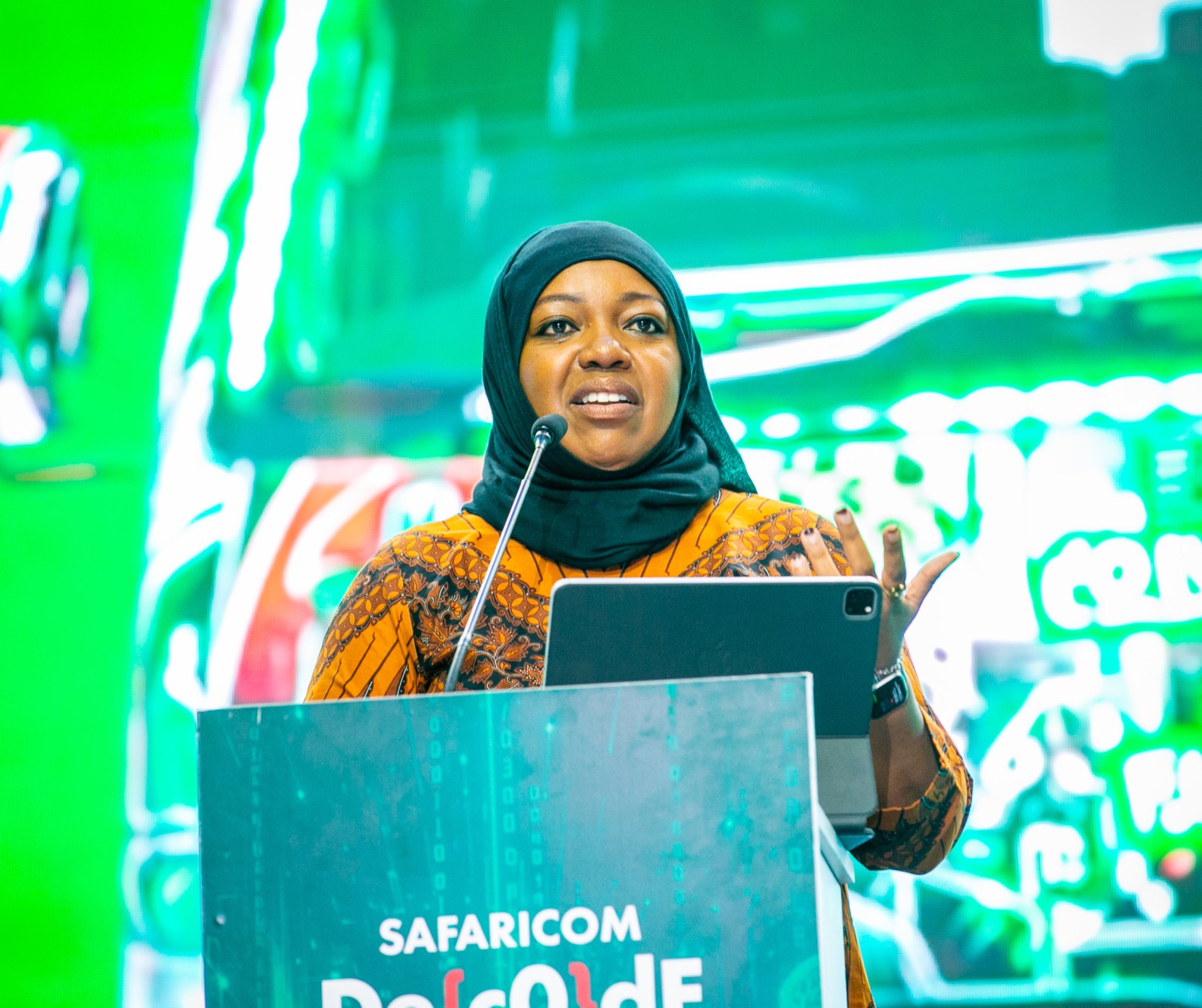
At Day 3 of Decode 4.0, Safaricom, through remarks delivered by Fawzia Ali, outlined a clear direction for its creative economy strategy. The emphasis is not on content alone, but on the systems that determine how content is created, distributed, and monetized.

The Safaricom creative economy strategy is anchored in enabling participation at scale. With nearly 1 in 4 young Kenyans engaged in digital content creation, the company is positioning itself as a foundational layer across connectivity, payments, platforms, and skills development. The objective is to turn fragmented creative output into structured economic activity.
“The future of Africa’s creative economy will be defined by the systems that support it.”
From connectivity to participation
The starting point is access. Safaricom’s model treats connectivity and device affordability as prerequisites for any creative economy to function. Without widespread access to data and devices, the rest of the ecosystem cannot scale.


This is where infrastructure and financing intersect. Device access, data pricing, and network reliability sit upstream of content creation. The strategy acknowledges that participation is constrained long before monetization becomes relevant.
Payments infrastructure as the backbone
The second layer is financial infrastructure, led by M-PESA alongside GlobalPay, Ziidi, and Bonga. These are positioned as transaction rails that allow creators to earn, receive, and scale income streams.

In practical terms, this links content consumption directly to payment systems. Monetization becomes embedded within the ecosystem rather than dependent on external platforms.
The implication is structural. Payment integration reduces friction between audience and creator, tightening the feedback loop between content and revenue.
Distribution platforms and the fight for discoverability
Safaricom’s platform layer is increasingly defined by Baze, which is being positioned as both a distribution channel and a monetization environment.
The issue here is not content supply. It is discoverability. As more creators enter the market, visibility becomes the constraint.
By aggregating music, gaming, and video into unified environments, Safaricom is attempting to influence how audiences find content. This moves the company closer to controlling attention flows, not just enabling access.
Talent pipelines are being industrialized
The strategy extends into skills and pipeline development. Programs like Safaricom Hook and the Spark Accelerator, delivered in partnership with iHub, are designed to produce creators, developers, and startups at scale.
This is not incidental. It reflects a recognition that supply must be continuously replenished and upgraded.
Training in software development, AI, and digital production feeds directly into the ecosystem. The result is a controlled pipeline where talent is not only developed but aligned with existing platforms and monetization channels.
Gaming, animation, and global exposure
Gaming and digital entertainment are treated as growth sectors within the broader creative economy. Safaricom’s involvement spans infrastructure, partnerships, and talent exposure.
The company is working to improve performance conditions through network investments, including capacity expansion and local optimization. At the same time, it is supporting competitive pathways for gamers and creatives to enter international markets.
This dual approach, infrastructure plus exposure, suggests a long-term view of creative exports. Local production is being tied to global visibility.
A platform-led model of the creative economy
- What emerges is a layered system:
- Connectivity and devices enable access
- Payments enable monetization
- Platforms enable distribution
- Training enables supply
- Partnerships enable scale
Safaricom sits across each of these layers. The strategy is less about owning content and more about structuring the environment in which content becomes economically viable.
This creates a form of vertical integration without direct content ownership. Influence is exercised through infrastructure and ecosystem design.
Where the strategy leads
The Safaricom creative economy strategy points toward a more coordinated digital ecosystem. Music, gaming, and animation are being brought into shared monetization and discovery systems.
The outcome depends on execution. Scale already exists. The next phase is whether these layers integrate effectively enough to convert activity into sustained income for creators.
The underlying premise remains consistent. Talent is abundant. The constraint is the system around it.
Mark your calendars! The GreenShift Sustainability Forum is back in Nairobi this August. Join innovators, policymakers & sustainability leaders for a breakfast forum as we explore sustainable solutions shaping the continent’s future. Limited slots – Get your early bird tickets now – here. Email info@techtrendsmedia.co.ke for partnership requests.
Go to TECHTRENDSKE.co.ke for more tech and business news from the African continent and across the world.
Follow us on WhatsApp, Telegram, Twitter, and Facebook, or subscribe to our weekly newsletter to ensure you don’t miss out on any future updates. Send tips to editorial@techtrendsmedia.co.ke


