
Safaricom’s APIs and AI Ecosystem Are Pulling Developers Toward More Autonomous Systems
From Google Cloud’s perspective, Safaricom’s infrastructure is becoming a working environment for deploying AI in production

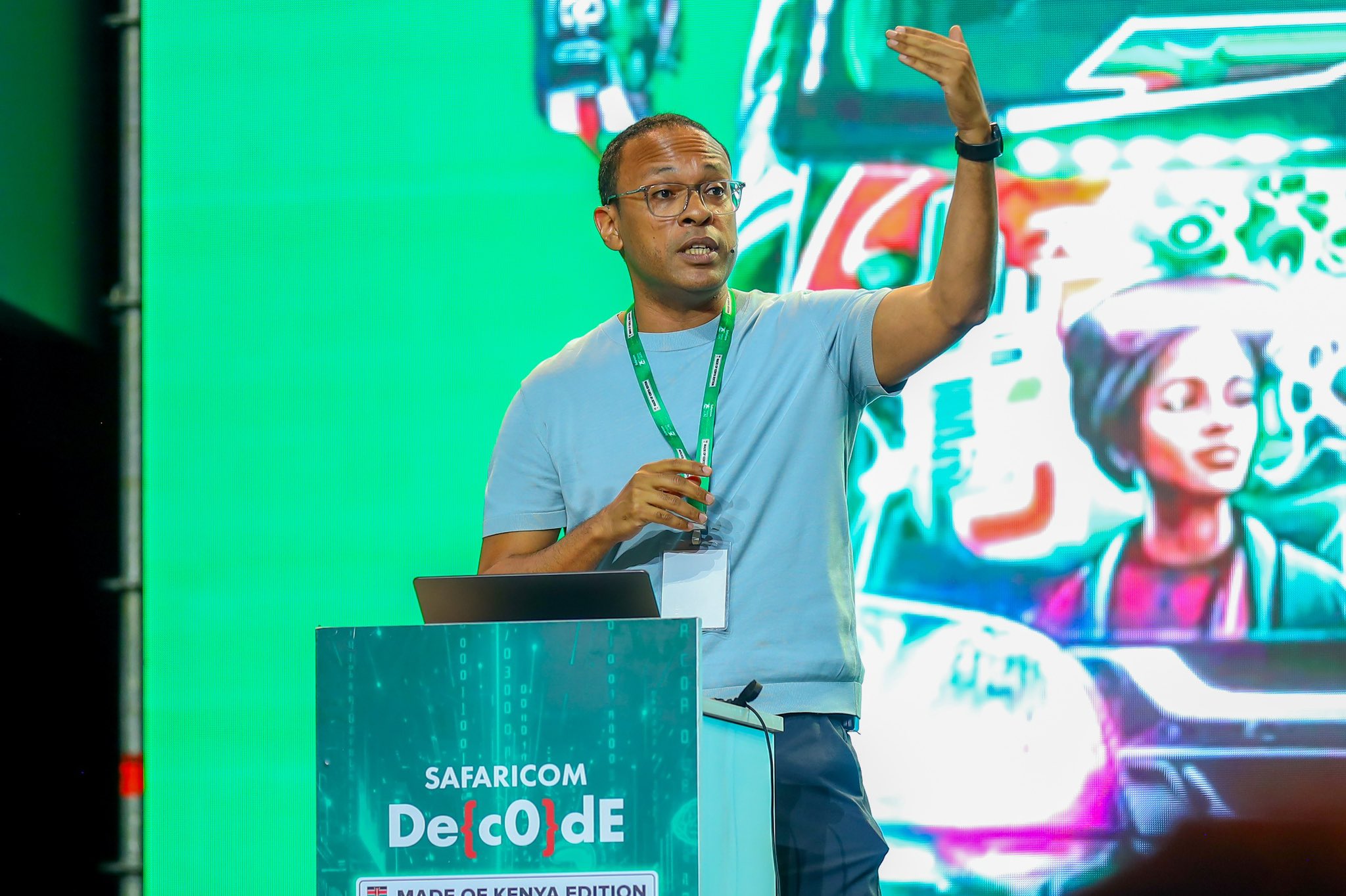
Safaricom’s APIs and AI ecosystem are emerging as a core layer for developers building financial and digital services, as highlighted during day 2 of Safaricom Decode 4.0 in a session titled “The API Singularity: When Every Transaction Talks.”

The session, delivered by Google Cloud Technical Director Jack Ngare, framed Safaricom’s infrastructure, particularly M-PESA and Daraja APIs, as more than a payments layer. It is increasingly being used as a foundation for AI-driven systems that interact with real-world transactions.
Ngare pointed to rapid growth in the global API market, projected to expand from $63 billion to $246 billion by 2030, with similar momentum visible in Kenya’s telecom and mobile money integrations. Within that trajectory, Safaricom’s API stack is positioned as a gateway into deterministic systems that can anchor AI models.
APIs as the grounding layer for AI systems
The Safaricom APIs and AI ecosystem sit at the intersection of two computing approaches. AI models operate probabilistically, generating outputs based on patterns. APIs execute precise, rule-based actions tied to real systems.


Ngare framed this interaction as essential. AI systems may generate outputs, but APIs connect those outputs to actual transactions such as payments, identity checks, and service requests. This grounding reduces errors and makes AI usable in production environments.
“AI gives you intelligence. APIs give you execution,” he said during the session.

That interaction is already shaping how applications are built. Developers are combining AI-generated logic with Safaricom’s APIs to automate workflows that previously required manual steps.
From apps to autonomous systems
The direction outlined during the API Singularity session moves beyond traditional applications. Developers are now building AI agents capable of reasoning, planning, and executing tasks through APIs.
In this model, Safaricom’s infrastructure becomes part of an orchestration layer. An AI agent interprets a request, determines the steps required, and triggers API calls across services such as payments, messaging, and account verification.
Ngare described a near-term environment where systems handle deployment, execution, and error management with minimal human intervention. Oversight remains necessary, particularly in regulated sectors, but the operational burden is already shifting.
Developer behavior is already changing
The shift is visible in how software is written. According to figures shared during the Decode 4.0 session, 92.6% of developers now use AI tools, with 26% of production code generated by AI systems.
For developers working within the Safaricom APIs and AI ecosystem, this changes the nature of development. Boilerplate code, integration logic, and error handling are increasingly automated. The focus moves toward system design, orchestration, and defining operational constraints.
This has implications for how Safaricom’s platform is used. Instead of building isolated applications, developers are assembling modular systems where APIs serve as execution layers for AI-driven workflows.
Local infrastructure as a global testbed
Ngare also pointed to a broader implication. Systems built on Safaricom’s infrastructure are contributing to global research and product development.
He cited internal work at Google that drew from M-PESA usage patterns to develop neural network approaches for financial systems. Some of this work is being incorporated into future AI models.
Safaricom’s ecosystem offers high transaction volumes and real-world complexity. That combination creates conditions where new technical approaches can be tested at scale and applied beyond the local market.
The diminishing role of middleware
One of the more direct observations from the session was the declining importance of traditional middleware. As AI models become capable of interacting directly with APIs, the need for intermediary layers is reducing.
Instead of writing glue code to connect systems, developers can rely on AI to interpret intent and execute API calls. Error handling and response management are increasingly handled within the model layer.
For platforms like Safaricom’s, this raises the importance of well-structured APIs that can be consumed not just by developers, but by AI systems.
What comes next
The Safaricom APIs and AI ecosystem is moving toward a model where multiple specialized agents handle different functions. One agent may manage payments, another compliance, and another customer interactions.
This introduces new design considerations. Developers must define guardrails, ensure compliance, and maintain system reliability as automation increases.
Ngare’s closing point was directed at local developers working within ecosystems like Safaricom’s.
“The capabilities are already here. The question is how far you’re willing to push them.”
Mark your calendars! The GreenShift Sustainability Forum is back in Nairobi this August. Join innovators, policymakers & sustainability leaders for a breakfast forum as we explore sustainable solutions shaping the continent’s future. Limited slots – Get your early bird tickets now – here. Email info@techtrendsmedia.co.ke for partnership requests.
Go to TECHTRENDSKE.co.ke for more tech and business news from the African continent and across the world.
Follow us on WhatsApp, Telegram, Twitter, and Facebook, or subscribe to our weekly newsletter to ensure you don’t miss out on any future updates. Send tips to editorial@techtrendsmedia.co.ke


