
Kenya’s NSE Opens to Retail Investors but Activity Tells Another Story
Retail investor access at the NSE is widening across Kenya through mobile platforms and new products, yet most accounts remain inactive and the harder task now is turning entry into habit

There is a number that refuses to move in Kenya’s capital markets. About 3,000,000 accounts sit on the books of the Nairobi Securities Exchange. Fewer than 200,000 trade with any regularity.

That gap is not administrative clutter. It is history that never fully resolved. Much of that base was built in 2008, when the Safaricom IPO pulled in first-time investors at a scale the market has not repeated since. The accounts opened. The participation did not last.
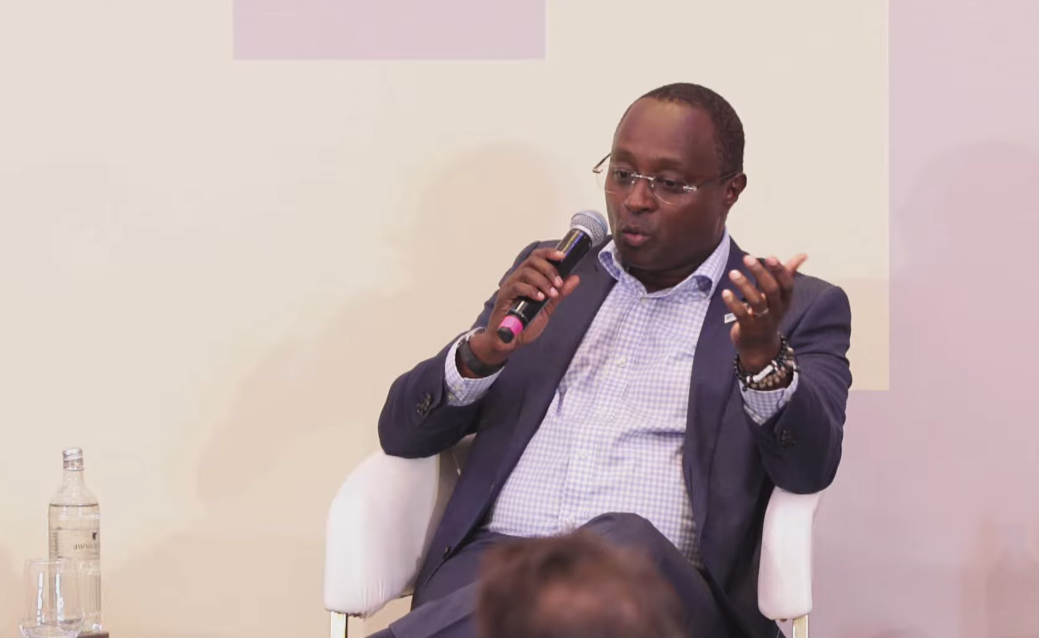
Frank Mwiti, chief executive of the exchange, does not try to smooth over that reality. He treats it as the starting point.
“Direct retail investment in our market, we have about 3 million accounts. However, of those 3 million, less than 200,000 are active.”


The definition of active is strict. Trading at least 2 times a week. It is a high bar, and perhaps deliberately so. It draws a line between presence and participation, between holding an account and actually using it.
For years, the exchange functioned as what Mwiti describes, with some understatement, as an “exit outfit.” Companies came to raise capital or provide liquidity for early investors. Ordinary participation was secondary. The structure reflected its origins, going back more than 70 years to a colonial-era framework that was never designed for mass access.

That legacy shows up in the data. It also shows up in behaviour. Younger Kenyans are trading, just not here. Activity in foreign markets, from US equities to Asian exchanges, has grown through digital brokerage channels. The domestic market is not competing for attention in the same way it once did.
The response now is not cosmetic. It is structural.
Access is being rebuilt around the phone, not the broker’s desk
The exchange’s current strategy runs from 2025 to 2029. Its central claim is blunt. The market has to be open to everyone, or it becomes irrelevant.
That ambition is expressed in a specific target. 9,000,000 retail investors by 2029.
It reads like an overreach until you look at how the market is being rewired. Technology sits at the centre, but not in the abstract sense that often accompanies institutional plans. The change is practical. It removes steps.
In 2008, opening an account often meant travelling to Nairobi, filling out physical forms, and navigating a brokerage process that assumed familiarity with financial systems. Today, participation is being routed through mobile infrastructure.
The collaboration with Safaricom produced ZIIDI, a mobile-linked trading pathway that collapses much of that friction. It is not presented as a premium product. It is positioned as a baseline.
Mwiti frames it without embellishment.
“Ziidi was actually born out of the need to enable the general public to access our market.”
The phrasing is telling. Not to enhance, not to optimize. To enable.
There is also timing. A new IPO, Kenya Pipeline, entered the market as a fully electronic offer. No paper forms. Pricing structured to draw in local participation. It stands in contrast to the long drought that followed 2008, when no offering reached comparable scale or visibility.
The expectation is that access, once simplified, will start to reactivate dormant accounts. It is not a given. Easier entry does not automatically produce sustained engagement. It does, however, remove one of the more obvious barriers.
Betting habits haunt the market in plain sight
There is an uncomfortable comparison that comes up in the conversation, and Mwiti does not avoid it.
Retail investors trade infrequently. Bettors do not.
“If you compare that, for example, it’s not a fair comparison. But if you compare that to betting, people are betting probably 10 times a week.”
The numbers are not presented as a moral argument. They point to behavioural reality. Frequency, not just access, defines engagement.
The market has struggled to match that cadence. Part of it is structural. Equity investing is episodic by nature. It does not generate the same constant feedback loop. But part of it is design. Platforms that hold attention tend to simplify decisions and reduce perceived risk, even when the underlying risk remains.
This is where the exchange’s strategy begins to move away from traditional investor education. Not because education is dismissed, but because its limits are clear.
Financial literacy is no longer the central promise
There is a shift in tone when Mwiti discusses financial literacy. Earlier assumptions placed it at the centre of retail participation. Teach people the mechanics, the thinking went, and engagement would follow.
That view has softened.
“Financial literacy starts with awareness rather than trying to get my mom to be a financial analyst.”
It is a pragmatic adjustment. Large-scale technical education is difficult to deliver, and even harder to sustain. The alternative being explored is product design that reduces the need for deep expertise.
Exchange traded funds are a clear example. Instead of selecting individual stocks, an investor can buy into a basket that tracks a sector or a segment of the market.
Mwiti puts it in practical terms.
“With a banking ETF, you buy that one ETF, you get exposure to all the banks that are in that basket.”
There are 11 listed banks on the exchange. Without such instruments, participation requires multiple decisions, each with its own uncertainty. ETFs compress that process into a single choice.
This approach mirrors developments in other markets, where passive investing has grown faster than active stock picking. It lowers the cognitive load. It also changes how risk is perceived, though not necessarily how it behaves.
Alongside this, there is movement toward automated guidance. The Capital Markets Authority is working on frameworks to license robo-advisors. The pricing point being discussed, around KES 10 per day, places advisory tools within reach of small-scale investors.
There is also a longer horizon effort. Integrating financial literacy into the national curriculum, under coordination with the Central Bank of Kenya and other institutions, suggests an attempt to normalize engagement with capital markets from an early age.
Still, none of these interventions resolve a deeper tension. Simplification can broaden access, but it can also obscure risk.
The exchange is positioning itself as a funding engine, not just a marketplace
Beyond retail participation, there is a broader institutional claim being made. Capital markets are being framed as central to economic development, not peripheral.
Mwiti’s language here is direct.
“We are the real solution to three things. One, mobilizing domestic and foreign capital… number two, supporting government to raise capital… number three is to catalyze funding ourselves.”
The composition of the market supports part of that argument. Roughly 50% of investors are domestic, 50% foreign. That balance provides a degree of resilience, but also exposes the market to external sentiment.
Government financing is another layer. Infrastructure bonds and securitized instruments have increasingly moved through the exchange. It offers a structured channel to reach capital that might not otherwise be accessible at scale.
Then there is a more interventionist role. The exchange has set up a Sustainable Finance Centre of Excellence, aimed at structuring and promoting instruments tied to climate, energy, and water.
This is not a passive listing function. It is closer to market-making in a developmental sense. There is an explicit attempt to attract capital from regions such as the Nordics and the Caribbean, where demand for sustainable investments has been building.
The logic is straightforward. Capital exists. Instruments need to meet certain standards to access it.
The SME problem remains unresolved, but no longer ignored
Small and medium enterprises dominate Kenya’s economy. Their access to financing remains constrained.
The exchange is trying to insert itself into that gap, though the pathway is indirect. Programs are being developed to prepare SMEs for listing, or at least for investor readiness.
This involves more than financial statements. Governance structures, compliance frameworks, and risk management processes all need to be in place before capital markets become a viable option.
Partnerships with government and multilateral entities are part of that effort. De-risking SMEs is not just about reducing financial exposure. It is about making them legible to investors.
The challenge is scale. Preparing a handful of firms is manageable. Preparing thousands is a different exercise entirely.
A market trying to catch up with its own potential
There is a sense, running through the conversation, that the capital market has been peripheral to Kenya’s economic planning.
Mwiti puts it plainly.
“The capital market has not been necessarily seen as… in the kitchen when the economic agenda has been put together.”
That positioning appears to be changing. Policy support has increased. Regulatory frameworks are evolving. There is more deliberate integration between financial institutions.
At the same time, expectations are being raised. Returns are part of that narrative. In 2024, the exchange ranked as the best performing in Africa according to Morgan Stanley. In 2025, it placed second, with returns of 51% in dollar terms.
Those figures attract attention. They do not guarantee continuity.
The contradiction at the centre of access
The push to widen participation is clear. The tools are being built. The infrastructure is improving. The targets are ambitious.
What remains unsettled is behaviour.
Access can be expanded quickly. Engagement tends to move slower. Risk tolerance, trust in institutions, and competing financial habits all shape how people interact with markets.
There is also the question of depth. A larger number of participants does not automatically translate into a more stable or more efficient market. If activity remains sporadic, volatility can increase rather than decline.
The exchange is aware of this, even if it does not frame it in those terms. The emphasis on product design, automation, and reduced friction points to an attempt to influence behaviour, not just access.
The outcome is not predetermined. The ingredients are being assembled, but the interaction between them is still playing out.
For now, the gap between 3,000,000 accounts and 200,000 active participants remains the clearest measure of the work ahead.
Mark your calendars! The GreenShift Sustainability Forum is back in Nairobi this August. Join innovators, policymakers & sustainability leaders for a breakfast forum as we explore sustainable solutions shaping the continent’s future. Limited slots – Get your early bird tickets now – here. Email info@techtrendsmedia.co.ke for partnership requests.
Go to TECHTRENDSKE.co.ke for more tech and business news from the African continent and across the world.
Follow us on WhatsApp, Telegram, Twitter, and Facebook, or subscribe to our weekly newsletter to ensure you don’t miss out on any future updates. Send tips to editorial@techtrendsmedia.co.ke

