
Kenya’s Fintech Story Faces a More Demanding Audience
Kenya has learned how to build around innovation, now it has to prove that structure holds when the demands move beyond payments

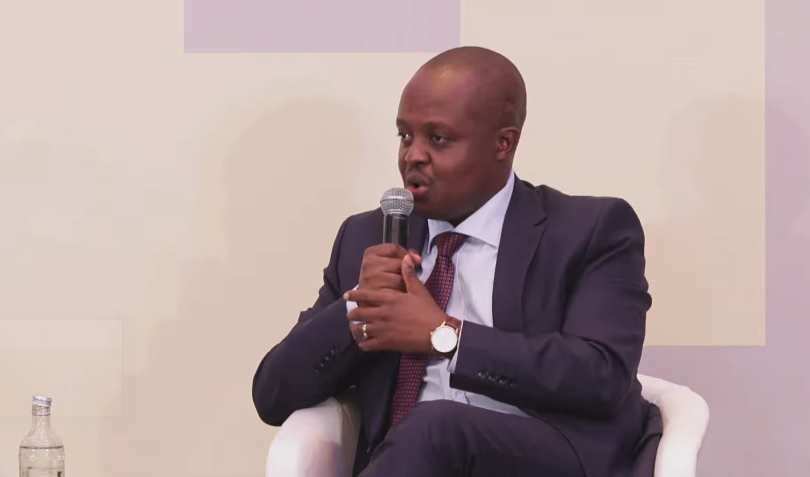
“All M-Pesas are born here,” said John Wenwa, who leads Invest Kenya and is overseeing this year’s Kenya International Investment Conference, did not hedge the claim. Kenya, in his telling, is not waiting for the next mobile money story. It is still producing them.

That confidence rests on a record that is difficult to dismiss. M-Pesa processes over $300 billion annually, a volume built less on headline transactions than on daily use across households and small businesses. It is infrastructure now, not a novelty.
But Wenwa’s argument goes further. The system that enabled M-Pesa did not close after its success. It stayed open. Regulation adapted instead of retreating. That openness, he suggests, is why replication keeps happening within Kenya rather than elsewhere.
It is a bold framing. It also sets a high bar. If every new cycle of innovation is expected to originate locally, the pressure on the system compounds.


Inclusion widened, but not settled
The numbers tell part of the story. Financial exclusion in Kenya has dropped from above 50% to about 20%. Digital finance sits at the center of that change.
Yet Wenwa places Kenya inside a wider context. Around 1.5 billion people globally remain outside formal financial systems. Progress in one market does not resolve the underlying problem.

There is also a quieter complication. Access has expanded faster than capability. A mobile wallet can store value and move money. It does not automatically build resilience against shocks or improve credit terms. The gap between access and stability is still visible, even in a market often held up as a model.
That tension runs through the system. Expansion is measurable. Depth is harder to pin down.
Capital follows the rules, not just the story
Kenya now draws 32% of Africa’s startup funding. Wenwa pairs that with another figure that carries more weight than it first appears. Over 85% of startups in this space are based in Kenya.
That concentration is not accidental. It reflects a regulatory environment shaped by the Central Bank of Kenya, where early flexibility allowed new models to take hold before formal rules caught up.
Investors read that history as a form of assurance. Not certainty, but a sense that policy will not close in abruptly. That perception matters as much as any tax incentive.
Still, concentration creates its own exposure. When capital, talent, and infrastructure cluster this tightly, the system becomes sensitive to policy changes that might otherwise be absorbed elsewhere.
The conference as a marketplace, not a stage
The Kenya International Investment Conference brings this positioning into focus. This year, about 700 participants from 68 countries are expected to attend.
Wenwa is explicit about the intent. The conference is not only about narrative. It is about projects, deals, and policy direction. The President, he notes, acts as the country’s “chief investment officer,” a line that captures how central investment has become to the state’s economic posture.
There is a practical edge to this. Investors are not arriving for a general story about innovation. They are looking for bankable opportunities and clarity on returns. The distinction between financial inclusion and financing ecosystems shows up here. One speaks to access. The other to capital deployment.
Whether those two align is less certain.
Public and private interests rarely move in step
Wenwa does not present collaboration as smooth. Government balances competing demands. Private firms pursue returns. Friction is expected.
What holds the system together is not agreement but continuity. Dialogue continues even when outcomes stall. Some issues get resolved. Others circle back.
That process has allowed reforms to accumulate over time. It has also kept the system from locking into a fixed model. The cost is slower movement on harder questions, especially where fiscal pressures intersect with private investment incentives.
There is no clean resolution here. Only a pattern of adjustment.
Infrastructure stretches the model outward
The next layer is physical. Kenya plans to lay 100,000 km of fiber to extend connectivity across the country. The aim is straightforward. Bring more people into the digital economy, not just as users but as participants.
The implications run beyond finance. A worker in a remote region can take on clients abroad. Agricultural distribution can move through digital channels. Financial inclusion begins to attach itself to production rather than circulation alone.
Execution is less straightforward. Infrastructure at that scale requires sustained funding and coordination. Returns are uneven, especially in areas where commercial demand is thin.
The ambition is clear. The delivery will take longer to judge.
AI enters with contested rankings
There is an ongoing debate about Kenya’s position in artificial intelligence. One report places the country at number 3 globally in readiness. Within the local ecosystem, there is resistance to that ranking, with some arguing it should be number 1.
Companies such as Microsoft, Google, and IBM are already embedded in parts of the ecosystem, often linked to fintech operations.
The connection to finance is direct. AI can refine lending decisions, detect anomalies, and streamline services. It can also widen gaps if access to data and infrastructure remains uneven.
The pattern is familiar. New capability arrives before the system fully absorbs the last one.
A system expected to keep producing
Kenya’s financial innovation economy is now being presented to the world as both proof and promise. Proof that digital finance can scale. Promise that the same conditions will generate what comes next.
That expectation sits at the center of Wenwa’s argument. It is also where pressure builds.
Extending inclusion to the last mile requires more than connectivity. It requires trust, literacy, and products that match irregular incomes. Attracting investment requires policy that stays predictable under strain. Expanding into AI requires governance that keeps pace with capability.
The system has held together so far. The next phase asks more of it.
Mark your calendars! The GreenShift Sustainability Forum is back in Nairobi this August. Join innovators, policymakers & sustainability leaders for a breakfast forum as we explore sustainable solutions shaping the continent’s future. Limited slots – Get your early bird tickets now – here. Email info@techtrendsmedia.co.ke for partnership requests.
Go to TECHTRENDSKE.co.ke for more tech and business news from the African continent and across the world.
Follow us on WhatsApp, Telegram, Twitter, and Facebook, or subscribe to our weekly newsletter to ensure you don’t miss out on any future updates. Send tips to editorial@techtrendsmedia.co.ke

