
The Next Phase of Financial Inclusion in East Africa Is Messier
Banks in East Africa are no longer on the sidelines of mobile money, they are inside the system and adapting as they go

In Kenya, the interface tends to get the attention. A payment goes through in seconds. A loan arrives before the message confirming it is even read. The impression is of a system that has already settled its hardest questions.

Yet underneath that familiar ease sits a more complicated arrangement, one that still feels unfinished. Banks, telecom operators, regulators, and the state are all involved in ways that are less visible but more consequential. The surface experience, shaped by mobile money, has moved faster than the deeper work of building durable financial participation.
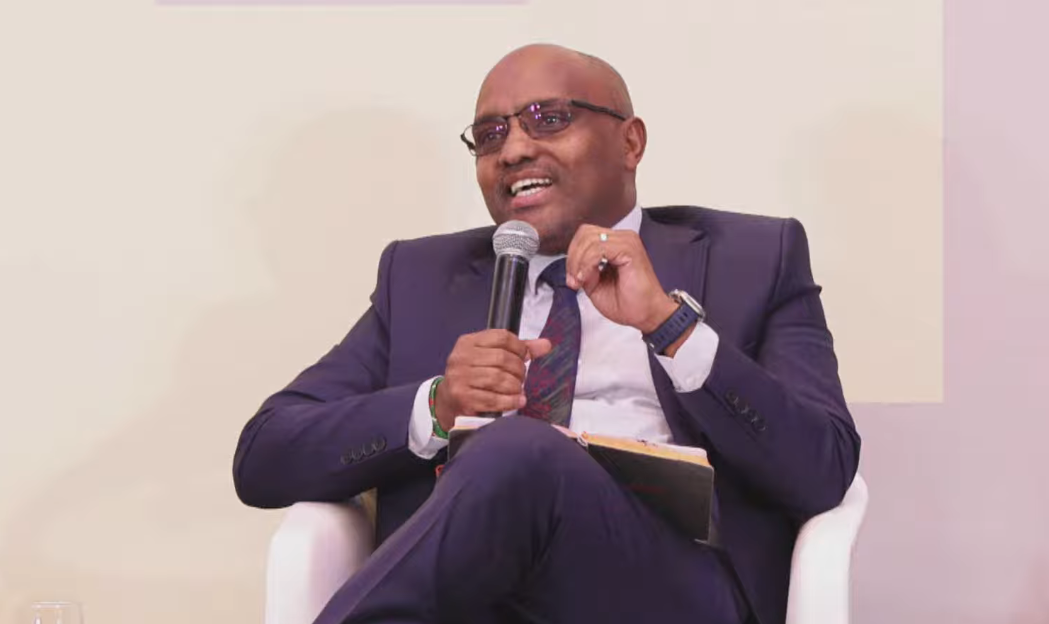
“A collaboration of telcos, regulators, banks and government is what is going to make financial inclusion successful in this country,” said Paul Russo, Group CEO of KCB, framing the foundation of inclusion as a shared system rather than a single institution’s effort.
That gap is where the current conversation sits. Access is no longer the headline. The harder question is whether access translates into something that holds, something that compounds over time.


KCB’s Long View Meets a Short-Cycle Economy
At KCB Group, the institutional memory runs long. The bank traces its history back 130 years, across different economic systems and regulatory environments. That kind of continuity tends to produce a certain instinct, one that favours infrastructure over hype.
But the environment it operates in now is anything but slow. Kenya’s financial system runs on high-frequency activity. Digital lending alone is pushing about KSh 1.5 billion per day through mobile channels.

“We’re lending about KSh 1.5 billion per day through our digital systems,” added Paul, quantifying the scale of digital credit already in motion.
That volume does not come from traditional banking rhythms. It comes from compressed decision cycles, automated scoring, and distribution that sits inside telecom networks.
There is a tension here. A bank built for durability is operating inside an ecosystem that rewards speed. The question is not whether it can keep up. It already has. The question is whether that speed produces outcomes that justify it.
Partnership Is Not Optional Anymore
The older framing of competition between banks and telecom operators has worn thin. It does not reflect how the system actually functions. Safaricom and banks like KCB operate on overlapping rails, often serving the same customers through different entry points.
What emerges instead is a layered model. Telecoms provide distribution and interface. Banks provide balance sheet strength and regulatory cover. Fintech firms bring product ideas that often originate outside formal institutions.
That arrangement only works if each layer opens up.
“For you to scale to the next level, you have to open up those systems for commercialization.” shared Paul pointing to structural openness as the next step beyond infrastructure build-out.
APIs, once treated as technical infrastructure, have become commercial gateways. A fintech startup does not build a product for its own sake. It builds with the expectation that it can plug into an existing system, reach customers, and generate revenue.
Without that access, the idea stalls.
“Fintechs don’t come up with ideas for charity. They come to commercialize, and they need your APIs and rails to do that,” he adds about the commercial logic behind fintech innovation:
Banks have begun to accept this. Not entirely out of generosity. More out of necessity. The scale already exists in the system. What is missing is the ability to recombine it.
Buying Capability Instead of Building It
KCB’s acquisition of Riverbank Solutions, at a 75% stake, reflects a different approach to transformation. Instead of building new digital capabilities internally, the bank brought them in from the outside. Riverbank had already spent over 10 years working with KCB on agency banking. The relationship was not new. The decision was about speed.
“We were the first local institution to acquire a fintech. It was about accelerating transformation,” he adds, citing the bank’s fintech acquisition strategy to institutional urgency
There is a pattern here. Large institutions often reach a point where internal development becomes too slow for the environment they operate in. Acquiring a fintech is not just about technology. It is about importing a different operating logic.
That logic now shows up in places that are easy to overlook. Internal processes, for instance. Staff can query policies from anywhere across the group and receive standardized responses. Procurement has been simplified. Reconciliation processes have been automated across multiple markets.
None of this is particularly visible to customers. But it changes how the institution functions. And it hints at something else. The next phase of financial infrastructure may be shaped as much by internal systems as by customer-facing products.
The State Steps In Where Markets Hesitate
There are limits to what private institutions will do on their own. Pricing risk remains one of them. Lending to customers with poor or non-existent credit histories is rarely attractive at commercial rates.
“You needed government to backstop if you want to lend to people with past credit issues at a lower rate.,” Paul said, underscoring the state’s role in underwriting risk that markets avoid.
This is where the state enters. The Hustler Fund is often discussed in political terms. It is, after all, tied to a manifesto. But its design reveals something more structural.
It brought regulators, banks, and telecom operators into a shared framework. It extended credit to borrowers, including those listed on CRB databases, with a built-in mechanism for credit repair.
“It created a credit repair mechanism to allow individuals one more opportunity to fix their credit score,” added Paul, highlighting the structural intent behind public credit programs
It accepted that some level of default risk would exist and created a backstop to absorb it.
At one point, roughly 9 million individuals fell into the category of impaired credit. Traditional lending models would not accommodate them easily. The fund created a parallel track, one that allowed these individuals to re-enter the system gradually.
There is a data layer to this as well. The information generated through such programs does not disappear. It feeds back into credit scoring models, pricing decisions, and risk assessments. Over time, it alters how institutions understand their own market.
Cost Remains the Constraint No One Has Solved
Despite the progress, the cost problem persists. It appears in different forms. Cost of funds. Technology investment. Human capital. Each layer adds pressure, and eventually that pressure reaches the customer.
“We still have a cost problem,” said Paul, bringing the conversation back to a persistent constraint.
Interest rates have come down. From levels above 20% to the 13%–14% range within 12 months, following multiple rate cuts by the Central Bank. That movement reflects coordination between regulators and financial institutions. It also reflects macroeconomic conditions that allowed for easing.
But lower rates do not automatically translate into meaningful access. The structure of lending still matters. Microloans, disbursed quickly, often end up funding consumption rather than productive activity. That limits their long-term impact.
There is a recognition of this within the system. Volume alone is not enough. Lending needs to flow into small enterprises that generate income, create employment, and sustain repayment cycles. That is harder to engineer. It requires more than technology.
Credit Growth and the Edge of Momentum
Private sector credit growth has started to recover, moving from negative territory of around -2% to roughly 6%–7% in recent readings. It is an improvement. It suggests that lending is beginning to pick up again.
But it is not yet where it needs to be.
“If you don’t get to double-digit growth in private sector lending, we have a problem,” Paul said, setting a clear benchmark for economic traction
Double-digit growth remains the threshold that would indicate a more robust expansion of credit into the economy. Without that, the system risks plateauing.
There are external pressures as well. Global events, including geopolitical tensions, have a way of feeding back into domestic financial systems. Funding costs can rise. Risk appetite can contract. Progress can stall without warning.
The system is moving in the right direction. It is not yet stable.
Access Was the First Chapter. Use Is the Harder One
The narrative around financial inclusion often leans on percentages. Kenya has reached levels above 80% in terms of access to financial services. On paper, that suggests success.
But access is only the entry point. The more difficult question is whether that access changes outcomes.
“Microloans must be directed to meaningful impact, not just consumption, ” added Russo questioning how credit is being used on the ground
Does it help individuals build assets. Does it support businesses that last. Does it create pathways out of vulnerability.
The answer is uneven. Some users move up the ladder. Others remain in cycles of short-term borrowing and repayment, with little accumulation.
This is where the system faces its next test. It has built reach. It now has to build depth.
A System Still in Negotiation With Itself
What emerges from all this is not a finished model. It is a system still negotiating its own terms. Banks are opening up, but not entirely. Telecom operators dominate distribution, but rely on banking infrastructure. The state intervenes where markets hesitate, but does not replace them.
There is no single centre of control.
“It’s not government responsibility alone. It’s not banks. Every single person has to play their role,” said Russo, broadening responsibility beyond institutions.
That may be a strength. It may also be a source of friction.
The direction is clear enough. More integration. More data flowing across institutions. More emphasis on pricing that reflects real risk without excluding large segments of the population.
But the endpoint remains uncertain. Financial inclusion, in this context, is less about reaching a final state and more about managing a continuous process. One where access, cost, and utility are constantly being recalibrated.
For now, the system holds together. Whether it can deliver something more durable depends on how those recalibrations unfold in the years ahead.
Mark your calendars! The GreenShift Sustainability Forum is back in Nairobi this August. Join innovators, policymakers & sustainability leaders for a breakfast forum as we explore sustainable solutions shaping the continent’s future. Limited slots – Get your early bird tickets now – here. Email info@techtrendsmedia.co.ke for partnership requests.
Go to TECHTRENDSKE.co.ke for more tech and business news from the African continent and across the world.
Follow us on WhatsApp, Telegram, Twitter, and Facebook, or subscribe to our weekly newsletter to ensure you don’t miss out on any future updates. Send tips to editorial@techtrendsmedia.co.ke

