
Access is Not Inclusion: The Unfinished Story of East Africa’s Digital Finance
Access is widespread across East Africa, but the real story sits in how people use it, where cost and trust quietly shape who moves beyond transactions into something more stable


In Nairobi, it is no longer remarkable to pay for tea with a phone. What still catches attention is how often that same phone sits idle when it comes to saving, borrowing, or building any kind of financial cushion. Access is everywhere. Use is selective.

That tension came through clearly in Nairobi, where Nanjira Sambuli, who leads Africa advocacy on inclusive financial systems and digital public infrastructure at the Gates Foundation, put it plainly: “Access is significantly outpacing active use.”
East Africa’s reputation as the world’s mobile money stronghold rests on solid ground. Kenya has hovered in the high 90s in account access for years. Uganda is not far behind. Rural uptake no longer feels like a footnote. The infrastructure has reached deep into places where formal banking once never bothered.
But the headline numbers conceal a thinner layer beneath. Many accounts exist. Fewer are active in ways that build resilience. Payments dominate. Savings lag. Credit remains uneven. The system works, but not always in ways that extend beyond the next transaction.

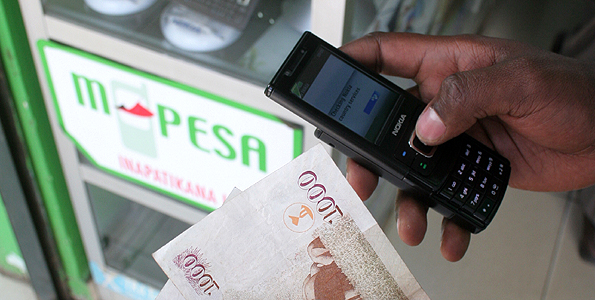
That gap between access and use has become harder to ignore. It complicates the narrative that once felt straightforward.
The Smartphone as Both Gateway and Constraint
The smartphone now sits at the center of two systems at once. It is the entry point to the internet and the main interface for financial services. In East Africa, it often doubles as the only financial account a person will ever hold.

Sambuli described the device in more precise terms: “The smartphone is both a digital connectivity indicator as well as a financial infrastructure indicator.”
That dual role brings efficiency. It also concentrates risk.
Device ownership tracks closely with financial inclusion. Where phones go, accounts follow. But ownership is not evenly distributed. Women, lower-income households, and some rural users still trail behind. A shared device might enable basic transactions, yet it introduces friction around privacy, security, and consistent use.
There is also the cost. Devices are expensive relative to income. Data is not trivial. Transaction fees, especially in Kenya, remain a point of friction. The system is widely admired, but it is not cheap to participate fully.
“It’s great, but it’s expensive,” Sambuli said, with little need for elaboration.
The result is a layered access model. On paper, inclusion looks broad. In practice, it is stratified by who owns a device, who controls it, and who can afford to use it frequently.
When Access Stops Short of Financial Life
The harder question now is not how many people have accounts. It is what those accounts are actually doing.
Peer-to-peer transfers dominate transaction volumes. They are fast, reliable, and familiar. They also keep users in a narrow loop. Money comes in, money goes out. The system facilitates movement, not accumulation.
The policy challenge, Sambuli argued, is how to translate access into active use and financial health.
Savings through digital channels remain inconsistent. Credit is available, but often in small, short-term forms that do not always translate into longer-term stability. Capital markets participation is still at the margins, despite new products attempting to lower entry barriers.
Financial resilience, in this context, becomes difficult to measure. Having an account does not mean being able to absorb a shock. It does not mean planning beyond the immediate.
The system has solved access. It has not fully solved what comes after.
Cost as a Structural Barrier, Not a Side Issue
It is tempting to treat cost as a secondary concern, something that will resolve itself with scale. That assumption no longer holds.
Transaction fees accumulate. Device costs remain high. Data charges add another layer. For lower-income users, these are not marginal expenses. They shape behavior directly.
There is a familiar pattern. Users adopt mobile money for essential transfers. They limit additional usage to avoid fees. They hesitate to experiment with savings or investment products that carry perceived or actual costs.
Lowering these costs is not a technical detail. It is central to whether the system evolves beyond basic transactions.
Policy has a role here. So does market design. Competition, interoperability, and pricing structures will determine how far inclusion can extend into everyday financial life.
Trust, Fragility, and the Weight of a Single Incident
Digital systems depend on trust. In East Africa, that trust has been built over time through reliability and familiarity. It can also unravel quickly.
A single experience can push a user out of the system entirely. Sambuli noted that it takes one fraudulent incident to knock people off these systems altogether.
Consumer protection mechanisms exist, but their effectiveness varies. Speed of redress matters. Clarity matters. The ability to recover funds or resolve disputes can determine whether users stay or leave.
There is also a behavioral dimension. Data shows that security practices differ across groups. Password use, for instance, is lower among some women, partly due to shared devices. That creates exposure that cannot be addressed through technology alone.
Trust is not static. It requires constant maintenance, often in ways that are less visible than infrastructure buildout.
Gender Is Not a Subcategory. It Shapes the System
The gender gap in financial inclusion remains one of the most persistent features of the landscape. Globally, women make up a large share of the unbanked. East Africa reflects that pattern, even with high overall access rates.
The reasons are not abstract. Device ownership is lower among women. Income disparities limit purchasing power. Social norms influence how technology is used, who controls it, and for what purpose.
Treating women as a distinct user group is not sufficient. The system needs to account for how daily realities shape access and use. That includes shared devices, irregular income, and different risk tolerances.
Data patterns reflect that reality. “Use of passwords on mobile phones was lower among women,” Sambuli observed, adding that devices are often shared.
Design choices matter here. Sales strategies, product interfaces, and distribution channels can either reinforce existing patterns or challenge them. Small adjustments, even at the point of sale, have shown measurable effects on who ends up with a device or a financial account.
Without that, the gap persists, even as overall numbers improve.
Interoperability and the Limits of Closed Loops
Much of the next phase of development rests on how systems connect with each other.
Interoperability has been discussed for years. Its practical implications are now more visible. When users can move money seamlessly across networks, usage tends to increase. When providers can plug into shared rails, innovation becomes less constrained.
Closed systems create friction. They limit where money can go and what it can do. They also reinforce dominant players, making it harder for smaller providers to compete.
Opening up these systems is not just a technical exercise. It involves regulatory coordination, commercial incentives, and sometimes political will. Cross-border considerations add another layer, especially within the context of regional trade frameworks.
If interoperability deepens, it changes how digital finance functions at a basic level. It expands possibilities beyond transfers into broader economic participation.
From Transactions to Participation
The direction of travel is becoming clearer, even if the pace remains uneven.
Digital merchant payments are gaining attention. Moving from person-to-person transfers to everyday commercial use expands the role of mobile money. It brings informal businesses into a more structured financial environment. It creates data trails that can support credit assessment and other services.
There is also growing interest in linking users to savings, credit, and investment products that extend beyond short-term needs. Initiatives that lower entry points into capital markets are part of this effort, though uptake remains limited.
None of this happens automatically. It requires coordination across providers, regulators, and policymakers. It also depends on whether users see tangible value in moving beyond familiar transaction patterns.
Participation, in this sense, is not just about access to services. It is about integration into a broader economic system.
Policy as the Next Arena of Experimentation
Technology drove the first phase of financial inclusion in East Africa. The next phase leans more heavily on policy.
Regulatory frameworks will determine how easily systems connect, how costs evolve, and how risks are managed. Cross-border coordination, particularly within regional trade agreements, will influence whether digital finance can scale beyond national markets.
There is also a question of balance. Too much friction slows innovation. Too little oversight increases vulnerability. Finding that middle ground is not straightforward.
The conversation has already moved beyond infrastructure. It now sits in the space where policy, market design, and user behavior intersect.
The Unfinished Story of Inclusion
East Africa’s digital finance story is often told as a success. That is not wrong. It is incomplete.
Access has reached levels that were difficult to imagine 15 years ago. The system works at scale. It has changed how money moves, how people transact, how governments deliver payments.
But inclusion, in a fuller sense, remains uneven. Usage patterns reveal limits. Cost structures constrain behavior.
“If I don’t have money, I can’t buy a phone. So I can’t see the case for a mobile money account,” Sambuli said.
The next phase will not be defined by how many new accounts are opened. It will be shaped by how existing ones are used, who benefits from them, and whether they translate into something more durable than convenience.
That is where the real work sits now.
Mark your calendars! The GreenShift Sustainability Forum is back in Nairobi this August. Join innovators, policymakers & sustainability leaders for a breakfast forum as we explore sustainable solutions shaping the continent’s future. Limited slots – Get your early bird tickets now – here. Email info@techtrendsmedia.co.ke for partnership requests.
Go to TECHTRENDSKE.co.ke for more tech and business news from the African continent and across the world.
Follow us on WhatsApp, Telegram, Twitter, and Facebook, or subscribe to our weekly newsletter to ensure you don’t miss out on any future updates. Send tips to editorial@techtrendsmedia.co.ke

