
Infinix NOTE 60 Pro in Kenya Runs on Snapdragon 7s Gen 4 and Leans Into Creator Workflows
The Infinix NOTE 60 Pro pairs dual 4K video with steady performance, giving creators a tool that holds up outside controlled conditions

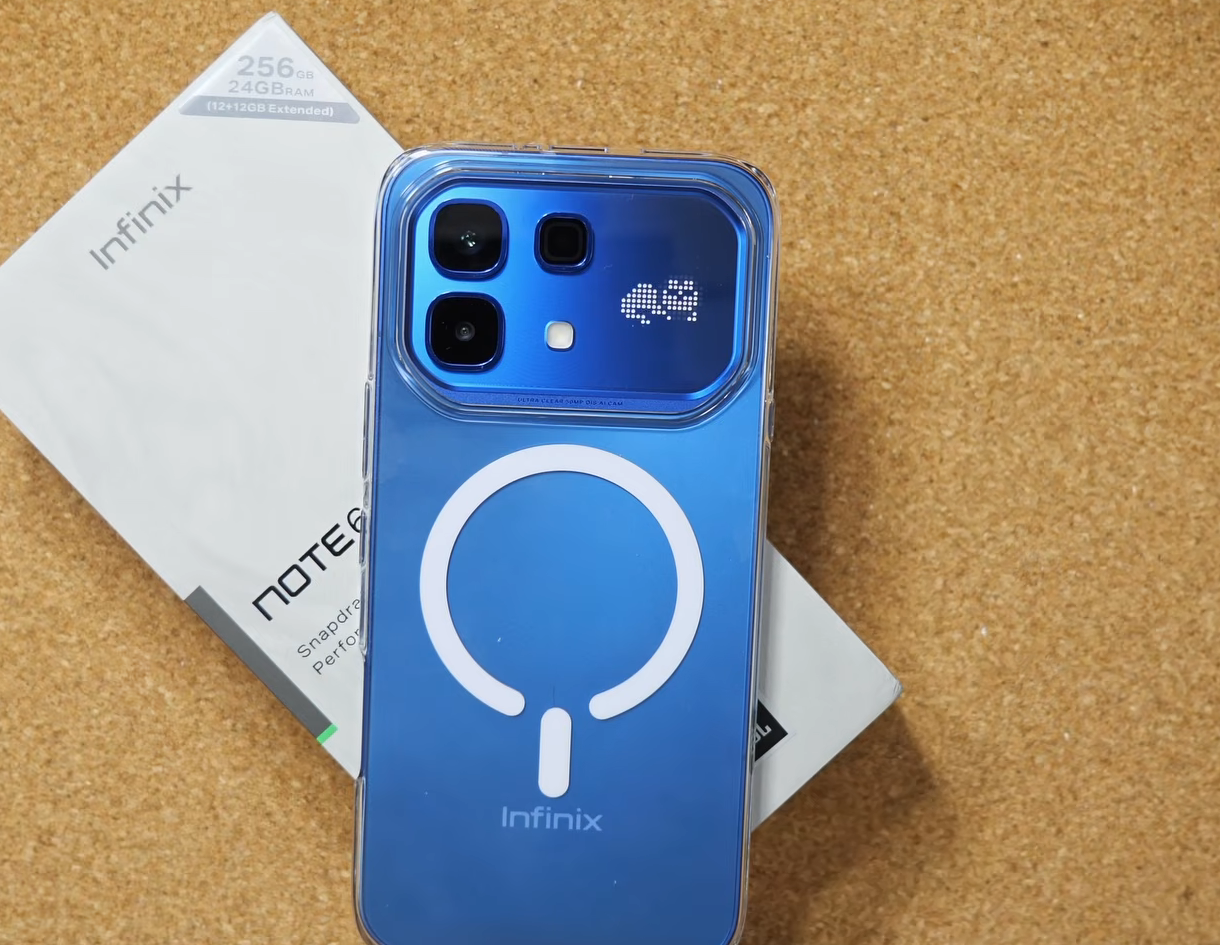
The launch of the Infinix NOTE 60 Pro in Kenya earlier today signals a departure from the brand’s traditional reliance on MediaTek architecture.

By moving to the Snapdragon 7s Gen 4 chipset, the device shifts its focus toward long-term asset value rather than seasonal specs. It ties the device to a different ecosystem of optimization, from camera processing to network handling. It also raises expectations. Once you lean on silicon as a selling point, it has to carry the experience over years, not weeks.
This transition is anchored by two operational pillars: Joy Tech, which drives the interactive rear matrix, and Create Pro, which provides a high-resolution pipeline for the local creator economy.
Hardware Longevity and the 4nm Advantage
The choice of the Snapdragon 7s Gen 4 is a strategic play for device endurance. Built on a 4nm process, the chip offers a 75% improvement in CPU performance and a 210% jump in GPU capabilities over the previous NOTE 50 Pro. In the heat of Nairobi, this smaller transistor size allows for better thermal efficiency, which is further supported by a 3D IceCore vapour chamber cooling system that reduces temperatures by up to 3°C during heavy load.


Battery science has also been recalibrated for a 6-year lifecycle. The 6,500 mAh cell features “Self-Healing” technology designed to maintain over 80% health after 2,000 charge cycles. With 90W wired charging reaching 50% in 16 minutes and the inclusion of 30W wireless charging, the hardware is engineered to remain viable through the 3 major Android OS updates promised by Infinix.
The Create Pro Imaging Pipeline
While the internal power provides stability, the “Create Pro” suite targets the specific needs of Kenyan digital content creators. The Infinix NOTE 60 Pro introduces a dual 4K workflow, supporting 4K video recording at 30 frames per second on both the 50MP Night Master rear camera and the 13MP front sensor. This parity allows vloggers to switch between lenses without losing resolution or bitrate consistency.

The Snapdragon ISP handles an Ultra HDR display standard that reaches a peak brightness of 4,500 nits. This is a critical metric for outdoor usability, ensuring that creators can review high-contrast footage in direct sunlight. To streamline the “on-the-go” workflow, Infinix has integrated AI-driven editing tools that allow for object removal and steady-state stabilization directly within the XOS 16 gallery.
Interactive Utility on the Back Panel
The Active-Matrix Display on the rear panel serves as the emotional interface of the device. It remains invisible when idle but activates to show notifications, mini-games, and “Pixel Pet” interactions. While it adds a distinct aesthetic layer, it also provides discrete utility, allowing users to monitor timers or alerts without turning the phone over during meetings or filming sessions.
A Device Shaped by How It Will Be Used
There is a certain realism in how this phone is put together. The 1.5K AMOLED display reaches 4,500 nits, which sounds excessive until you try reviewing footage under direct sun. Then it becomes practical.
The 256GB storage accommodates large video files without immediate offloading. The system updates, promised for 3 years, sit alongside hardware designed to last longer.
All of this points to a device built around continuity. Shoot, edit, upload. Repeat. Not occasionally, but daily.
Connectivity That Tries to Keep Up
The Qualcomm modem bundled with the Snapdragon chip brings improved carrier aggregation. In practice, that means more stable transitions between 4G and 5G in areas where coverage fluctuates.
Networks in Kenya are uneven. Strong in some zones, inconsistent in others. The benefit here is not peak speed. It is continuity. Fewer dropped uploads, fewer interruptions when sending large video files.
For a creator pushing 4K clips, that stability can be the difference between finishing a post on location or waiting until later.
Pricing
Retailing at KES 41,999 for the 8GB and 256GB configuration, the NOTE 60 Pro is positioned as a professional tool. The combination of Qualcomm silicon, a high-cycle battery, and a dual-4K camera system reflects a market where the mid-range buyer now demands the same production standards and longevity once reserved for flagships.
Go to TECHTRENDSKE.co.ke for more tech and business news from the African continent and across the world.
Follow us on WhatsApp, Telegram, Twitter, and Facebook, or subscribe to our weekly newsletter to ensure you don’t miss out on any future updates. Send tips to editorial@techtrendsmedia.co.ke

