
Kibaba Fund Opens a New Route Into Global Markets From Kenya
Kenyan investors are starting to look beyond Treasury bills as the Kibaba Fund brings global markets into focus

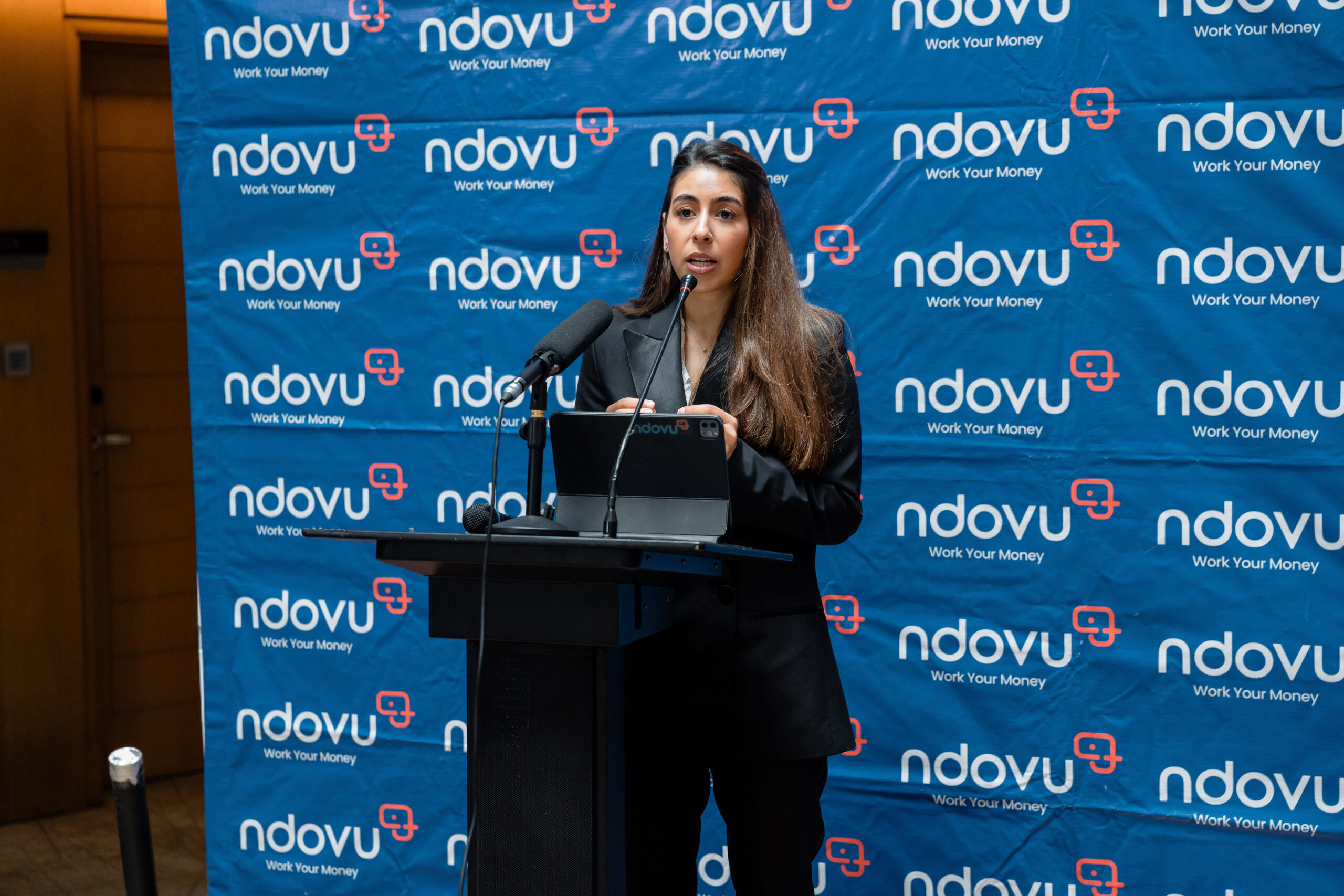
Kenyan retail portfolios have tended to circle the same terrain for years.

Treasury bills, SACCO shares, a piece of land somewhere on the edge of a growing town. It has been a pattern shaped as much by access as by habit. Global markets sat at a distance, not entirely out of reach, but wrapped in cost, complexity, and a certain mistrust.
The launch of the Kibaba Multi-Asset Special Fund from Ndovu Wealth Limited lands in that space between aspiration and constraint. It proposes something simple on the surface. A pooled structure that moves money across borders, across asset classes, across currencies. Beneath that, it carries a more pointed claim about where Kenyan investing is headed.
This is not just another fund entering a crowded market. It is a bet that local investors are ready to look outward in a more deliberate way, even as the domestic economy remains unpredictable.


A Product Built Around Friction
The structure of the Kibaba Fund tells its own story. Entry starts at KES 250,000 or $2,500. That is not entry-level by any stretch. It draws a line between casual saving and intentional allocation. The 6-month lock-in reinforces that boundary. Money placed here is meant to stay put, at least for a while.
There is also the dual currency design. A KES option for those staying close to home. A USD option for those hedging against currency swings or simply seeking exposure to a different monetary environment. It reflects a growing unease around the shilling, which has seen extended pressure in recent years.

What stands out is not just the menu of assets. Equities, bonds, REITs, ETFs, commodities. Those are familiar ingredients. The friction sits elsewhere. In access. In decision-making. In the question of how an individual investor moves from a reactive stance to something more structured.
The fund positions itself as a buffer against that reactive instinct. It absorbs the burden of timing, allocation, and rebalancing. Investors buy into a process rather than a position.
Key Specifications of the Kibaba Multi-Asset Special Fund
| Feature | KES Fund Specification | USD Fund Specification |
| Minimum Investment | KES 250,000 | $2,500 |
| Projected Net Return | 20% | 18% |
| Lock-in Period | 6 Months | 6 Months |
| Asset Universe | Global Equities, Bonds, REITs, ETFs, Commodities | Global Equities, Bonds, REITs, ETFs, Commodities |
| Structure | Multi-Asset Special Fund | Multi-Asset Special Fund |
Regulation as Architecture, Not Ornament
The involvement of Capital Markets Authority, alongside a custodian in DTB Kenya Limited and trustee oversight from Kingsland Court, is not incidental.
Kenya’s regulatory framework for collective investment schemes has been tightening in recent years. Not dramatically, but steadily. More structure, more disclosure, more emphasis on governance. Funds like Kibaba sit within that scaffolding, which does two things at once. It builds confidence for investors wary of opaque products. It also narrows the room for improvisation by fund managers.
That tension matters. A fund that promises active allocation across global markets needs room to move. Regulation ensures discipline but can also slow response time. The balance between those forces will determine whether such products deliver on their stated aims or drift into cautious middle ground.
The Psychology of Offshore Exposure
There is a deeper layer beneath the mechanics. Kenyan investors have long operated within a local bias, not entirely by choice. The infrastructure to access offshore assets directly has been thin, and where it exists, it often carries high barriers.
The Kibaba Fund attempts to package that offshore exposure into something digestible. Not just accessible, but legible. Investors do not need to track global indices or currency cycles in real time. They outsource that complexity.
Still, the psychology is not easily rewritten. Trust in local, tangible assets runs deep. Land can be visited. A SACCO has a physical presence. A global ETF is abstract by comparison.
That gap between familiarity and abstraction will shape uptake more than any marketing effort. It is one thing to offer access. It is another to change how investors think about risk, distance, and control.
Return Promises and the Weight of Expectation
Projected annual returns of 20% for the KES fund and 18% for the USD fund sit at the center of the proposition. They are stated as net figures, after fees and tax. On paper, they outpace conventional bank yields by a wide margin.
The comparison becomes sharper closer to home. Kenyan Treasury bills have recently traded in the 15–16% range, offering a baseline that many investors still treat as near risk-free. The margin between that and a 20% target is not especially wide once fees, volatility, and lock-in constraints are factored in. It raises a quieter question about how much additional risk investors are truly being paid to take.
Comparative Yields: Local Benchmarks vs. Global Projections
| Asset Class | Typical / Target Return | Liquidity / Accessibility |
| KES T-Bills | 15% – 16% | High (Weekly/Monthly) |
| Kibaba (KES) | 20% (Projected) | Medium (6-month lock) |
| S&P 500 (USD) | ~10% (Long-term avg) | High (Daily via ETFs) |
| Kibaba (USD) | 18% (Projected) | Medium (6-month lock) |
But projections carry their own burden. They set expectations that may not align with market cycles. A fund positioned for medium to long-term horizons will inevitably encounter periods of underperformance. The question is how investors respond when those periods arrive.
In Kenya’s market, where many investors are accustomed to relatively stable, if modest, returns from fixed income products, volatility can feel like failure rather than a feature of the system.
There is also the global benchmark to contend with. Long-run returns for broad indices like the S&P 500 tend to hover around 10% annually. Setting an 18% net target in USD places the fund in a different category altogether. It suggests a mandate that leans into higher-yield instruments or more aggressive positioning, which carries its own trade-offs when conditions turn.
A Founder’s Framing, and What It Leaves Out
Radhika Bhachu frames the fund as a response to evolving investor demands. There is truth in that. Digital platforms have widened access, and younger investors in particular are more open to global exposure.
Yet there is also an element of supply shaping demand. Products like Kibaba do not just respond to investor interest. They help create it. They introduce new categories, new expectations, new benchmarks for what a portfolio can look like.
What is less clear is how broad that demand really is. The minimum investment levels alone suggest a target audience that is already somewhat financially literate and relatively well-capitalized. This is not mass market territory.
That raises a question about scale. Can such funds move beyond a narrow segment and reshape the broader investment culture, or will they remain niche vehicles for a specific class of investors?
The Active Bet, and Its Edges
The fund leans on active management, backed by a team with over 90 years of combined experience. That experience will be tested less by favorable conditions and more by downturns, when allocation decisions become less forgiving.
The comparison does not stop within the local market. Passive global funds, particularly those tracking large indices, have set a relatively high bar for consistency. If an actively managed portfolio fails to keep pace over time, the argument for higher fees begins to thin out. That tension rarely shows up in strong markets. It becomes harder to ignore when returns flatten or fall behind simpler benchmarks.
The Timing Question
The fund arrives in a period marked by global uncertainty. Inflation pressures have not fully settled. Interest rates in major economies remain elevated. Geopolitical tensions continue to ripple through markets.
At the same time, local conditions are far from stable. Currency volatility, fiscal pressures, and uneven growth create a backdrop that pushes investors to look outward, even as it complicates decision-making.
Launching a multi-asset global fund in this environment is both logical and risky. Logical because diversification becomes more appealing when local conditions feel unstable. Risky because global markets themselves are far from predictable.
The outcome will depend less on timing a single cycle and more on how consistently the fund navigates overlapping ones.
Where This Leaves the Kenyan Investor
The Kibaba Fund does not arrive as a radical departure. It extends a trajectory that has been building over time. More digital access, more structured products, more engagement with global markets.
What it does is compress those elements into a single offering and place it within reach, at least for a certain segment of investors.
Whether that proves durable will depend on behavior as much as performance. Investors will need to sit through volatility, trust a process they do not directly control, and accept that global exposure brings its own forms of uncertainty.
There is a subtle recalibration taking place. From holding assets to allocating capital. From reacting to events to committing to a strategy.
The Kibaba Fund sits at an uncomfortable intersection. It asks investors to move beyond what they know, but offers no guarantee that the unfamiliar will behave any better. For some, that will be enough reason to stay where they are. For others, it will be the point where staying local starts to feel like its own kind of risk.
The Digital Onboarding Process
For the investor ready to cross the threshold, the process is defined by digital onboarding and regulatory compliance. The entry point is firm at KES 250,000 or $2,500. Access is managed through the Ndovu platform, where the initial step involves account creation and the submission of standard Know Your Customer (KYC) documentation. This includes a national identity card or passport and proof of address.
Once the account is verified, the investor selects between the KES or USD fund options. Funding is handled through bank transfers or mobile money for the local currency arm, while the USD fund typically requires a wire transfer or a domiciliary account link. The 6-month lock-in period begins the moment the capital is deployed. This is not a platform for day trading. It is a commitment to a managed strategy where the heavy lifting of global rebalancing is handled by the fund managers.
Onboarding Requirements Checklist
| Requirement | Detail |
| Minimum Capital | KES 250,000 or $2,500 |
| Identity Verification | Valid National ID or Passport |
| Proof of Residence | Utility bill or bank statement (less than 3 months old) |
| Funding Method | M-Pesa, EFT, or RTGS |
| Compliance | KRA PIN and FATCA declaration (for USD accounts) |
Go to TECHTRENDSKE.co.ke for more tech and business news from the African continent and across the world.
Follow us on WhatsApp, Telegram, Twitter, and Facebook, or subscribe to our weekly newsletter to ensure you don’t miss out on any future updates. Send tips to editorial@techtrendsmedia.co.ke


