
KCB’s Mobile Lending Surge Traces Back to a Simple Source, the Steady Flow of Hustler Fund Data
A government loan program meant to widen credit access is also producing a live archive of how millions of Kenyans borrow, repay, stall, and try again

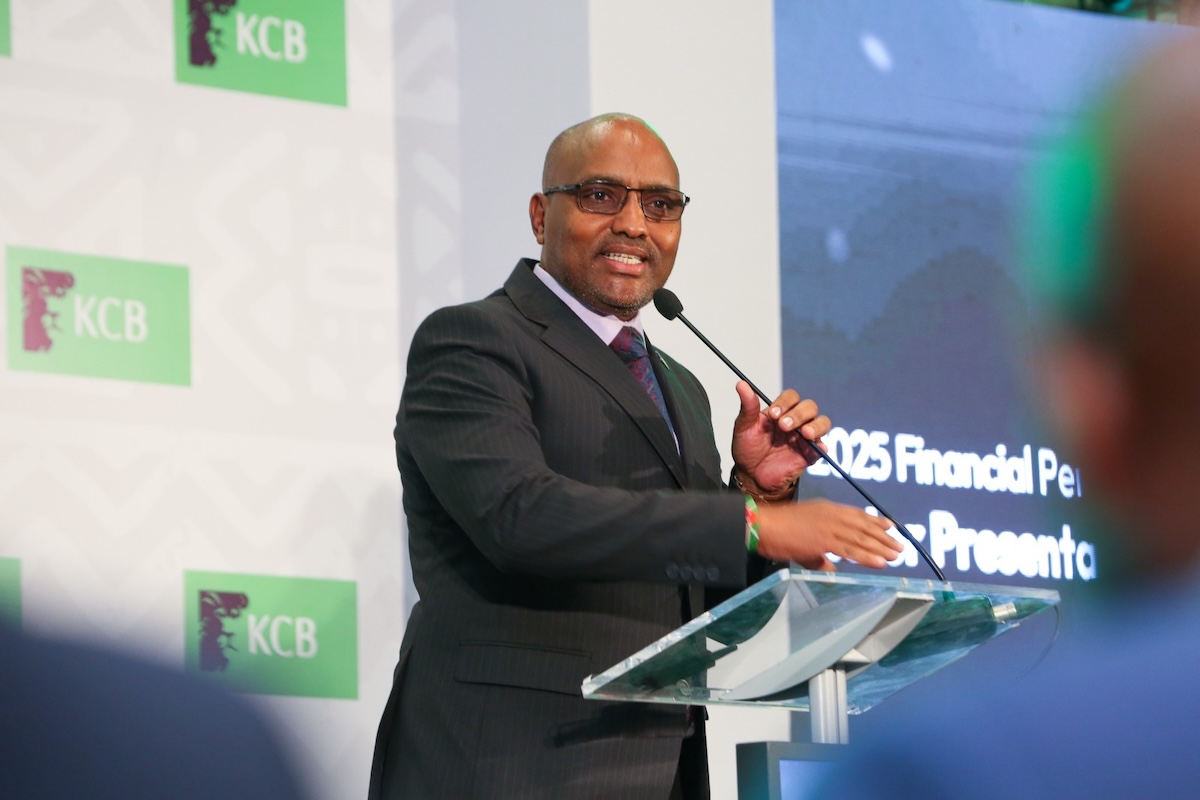
Kenya’s most political lending program is turning into something else entirely. The Hustler Fund was built as a retail credit pipeline for small borrowers. In practice it has become one of the country’s richest sources of behavioural financial data.

That information is now feeding directly into the banking system.
KCB Group says access to Hustler Fund data helped lift its mobile loan book by 30 percent in 2025 to Sh544 billion. Spread across the year, that works out to about Sh1.5 billion flowing through mobile credit every day.
The bank did not simply observe the data. It helped build the architecture that generates it. KCB developed the credit scoring model used by the fund and runs the underlying platform that processes loans issued by the government. The public side provides capital. The bank contributes infrastructure and analytics.

That arrangement offers a vantage point few lenders possess. Every loan request carries information about repayment behaviour, timing, device usage, and risk appetite. Aggregated across millions of borrowers, it forms a live dataset on how Kenyans borrow and repay small amounts of money.
For a country where formal credit files remain thin, that dataset carries real strategic value.

Credit Scoring for a Nation of Small Borrowers
The government introduced credit scores for Hustler Fund borrowers on 28 February 2023, about 3 months after the program launched. The intention was straightforward: build a risk ladder and allow borrowers with good repayment records to move up it.
The system sorts borrowers into 9 rating buckets. A1, A2 and A3 describe customers who repay on time. B1, B2 and B3 capture borrowers with minor delays but generally acceptable behaviour. C1, C2 and C3 cover those who are new or have struggled with repayment.
| Category | Rating | Borrower Profile |
| High Tier | A1, A2, A3 | Consistent, on-time repayers. High trust. |
| Mid Tier | B1, B2, B3 | Minor delays; generally acceptable behavior. |
| Low Tier | C1, C2, C3 | New entrants or those struggling with defaults. |
That framework mirrors traditional retail lending logic, although the scale is unusual. The Hustler Fund’s personal loan product alone has enrolled 27.42 million borrowers since November 2022 and disbursed Sh71.84 billion.
Numbers like that rarely appear in conventional credit systems.
They describe a lending ecosystem operating almost entirely through phones. Loans range from Sh100 to Sh50,000 with a repayment window of 14 days. Interest is set at 8 percent annually, calculated daily. A mandatory savings component diverts 5 percent of each loan into a deposit account.
The data trail grows with every transaction.
Banks have spent years trying to reconstruct consumer behaviour from fragments: salary accounts, airtime purchases, sporadic mobile payments. The Hustler Fund creates a direct ledger of borrowing behaviour at the base of the income pyramid.
That changes how risk can be measured.
A Lending Map Built from Millions of Micro Transactions
The scale of Hustler Fund participation means the program doubles as a national borrowing laboratory.
Each transaction contains small clues about financial life: the time of day borrowers request loans, how often they roll over balances, whether they repay early or stretch the 14 day window to its edge. Some borrowers return every week. Others vanish after one loan cycle.
Patterns emerge quickly when the population reaches tens of millions.
For banks, this becomes a predictive tool. Someone who consistently repays a Sh1,000 loan within 10 days may qualify for larger credit through a commercial lender. Someone who delays repayment until day 14 each time tells a different story.
The banking sector has long sought ways to extend credit beyond salaried workers. Hustler Fund data provides behavioural evidence rather than paperwork.
In effect, millions of borrowers are building credit histories without realizing it.
When Public Finance Feeds Private Lending
The Hustler Fund sits inside government policy. The analytics layer around it belongs largely to a bank.
That relationship creates a feedback loop. Data generated through public lending informs private lending decisions. Those decisions influence how commercial banks expand mobile credit products.
KCB’s mobile lending figures offer a glimpse of that loop in action. A 30 percent rise in mobile loans within a single year rarely comes from marketing alone. It usually reflects improved risk modelling.
Better information reduces uncertainty. Reduced uncertainty encourages larger lending volumes.
The structure also illustrates how digital finance initiatives evolve once they reach scale. Programs launched as political commitments often develop a secondary function as infrastructure. In this case, infrastructure for credit analytics.
The Expanding Footprint of the Group Loan Market
Beyond individual borrowers, the Hustler Fund also operates a group loan product. The scheme targets registered associations with at least 10 members through the Micro and Small Enterprises Authority.
Since 1 June 2023, the program has enrolled 58,710 groups and issued Sh196.68 billion in loans.
The amounts can reach Sh1 million per group with a repayment window of 30 days.
Group lending has deep roots in East African finance. Savings groups and rotating credit associations existed long before digital banking arrived. What changes now is the digital trace.
Every repayment. Every missed deadline. Every borrowing cycle.
That record becomes part of the broader dataset feeding credit scoring models.
Banks watching the data gain insight into how small enterprises manage short term liquidity. Some groups repay quickly and borrow again within weeks. Others treat the loans as occasional emergency funding.
Those distinctions carry weight when lenders consider which businesses may handle larger credit lines.
A Borrower Ladder Emerging Inside the System
Another Hustler Fund product sits above the standard loans. The Bridge Loan offers larger limits and lower borrowing costs to customers with strong repayment histories.
It functions as a reward mechanism. Good borrowers climb the ladder. Their access to credit widens.
Programs like this reveal something about the philosophy behind digital lending in Kenya. Rather than relying on collateral, lenders rely on behaviour. Repayment history becomes the currency of trust.
The approach works well in mobile ecosystems where transactions are continuous and traceable.
Over time, borrowers who began with Sh500 loans may graduate to far larger facilities from banks or fintech lenders. The transition can happen gradually, sometimes without borrowers noticing the moment they enter formal credit markets.
The Contradictions Inside a Mass Lending Experiment
The Hustler Fund’s numbers tell two different stories at once.
On one side sits the scale of participation. More than 27 million borrowers in the personal loan segment alone. Hundreds of billions of shillings circulating through group lending. A credit scoring system tracking behaviour in real time.
On the other side sits the issue of repayment discipline. Reports from within the program indicate that more than half of borrowers have at some point defaulted or delayed repayment.
That tension sits at the heart of digital lending models.
High participation expands financial inclusion. Weak repayment patterns complicate sustainability. The system survives because loan sizes remain small and interest accrues daily.
Banks studying the data must weigh both sides. The same borrower may appear risky at one moment and reliable the next. Behaviour evolves.
That unpredictability becomes part of the analytics.
Mobile Credit as the New Frontline of Banking
Mobile lending already dominates Kenya’s consumer credit landscape. Traditional branch lending plays a smaller role for everyday borrowing needs.
Platforms connected to mobile wallets handle transactions instantly. Borrowers request funds through a handset and receive approval within seconds.
KCB’s mobile loan figure of Sh544 billion in 2025 reflects how large that channel has become.
For banks, the economics look different from traditional loans. Individual transactions are small. The volume is immense. Automation carries most of the operational workload.
Data sits at the center of the model. Without accurate risk scoring, the system collapses under defaults.
That is why access to large behavioural datasets carries strategic weight.
The Politics of Data Ownership
A deeper question hovers beneath the lending statistics. Who ultimately controls the information generated by the Hustler Fund?
The loans originate from government resources. The analytics infrastructure relies on a private bank. Borrowers interact through mobile networks.
Each layer produces data.
In financial systems around the world, ownership of consumer financial data has become a policy debate. Regulators examine whether banks should retain exclusive access to datasets generated through public programs.
Kenya may face similar questions as the Hustler Fund matures. The data gathered through millions of microloans has clear commercial value. Other lenders may eventually seek access to it.
The outcome will shape competition in the digital credit market.
The Long View of Kenya’s Digital Credit Economy
Kenya’s financial sector often evolves through unexpected combinations of public policy and private technology.
Mobile money laid the foundation. Digital lending built on top of it. The Hustler Fund adds another layer by introducing a national credit dataset built from millions of borrowers.
KCB’s mobile lending growth shows how quickly banks can convert that information into commercial advantage.
Yet the system remains fluid. Borrower behaviour continues to change. Repayment habits evolve as credit limits rise. Regulatory scrutiny tends to follow rapid expansion in digital finance.
The Hustler Fund began as a political promise to widen access to credit. It now doubles as a large scale experiment in behavioural finance.
What emerges from that experiment may shape the next decade of lending in Kenya. Not through new slogans or policy announcements, but through the accumulation of millions of small transactions recorded every day.
Go to TECHTRENDSKE.co.ke for more tech and business news from the African continent and across the world.
Follow us on WhatsApp, Telegram, Twitter, and Facebook, or subscribe to our weekly newsletter to ensure you don’t miss out on any future updates. Send tips to editorial@techtrendsmedia.co.ke


